


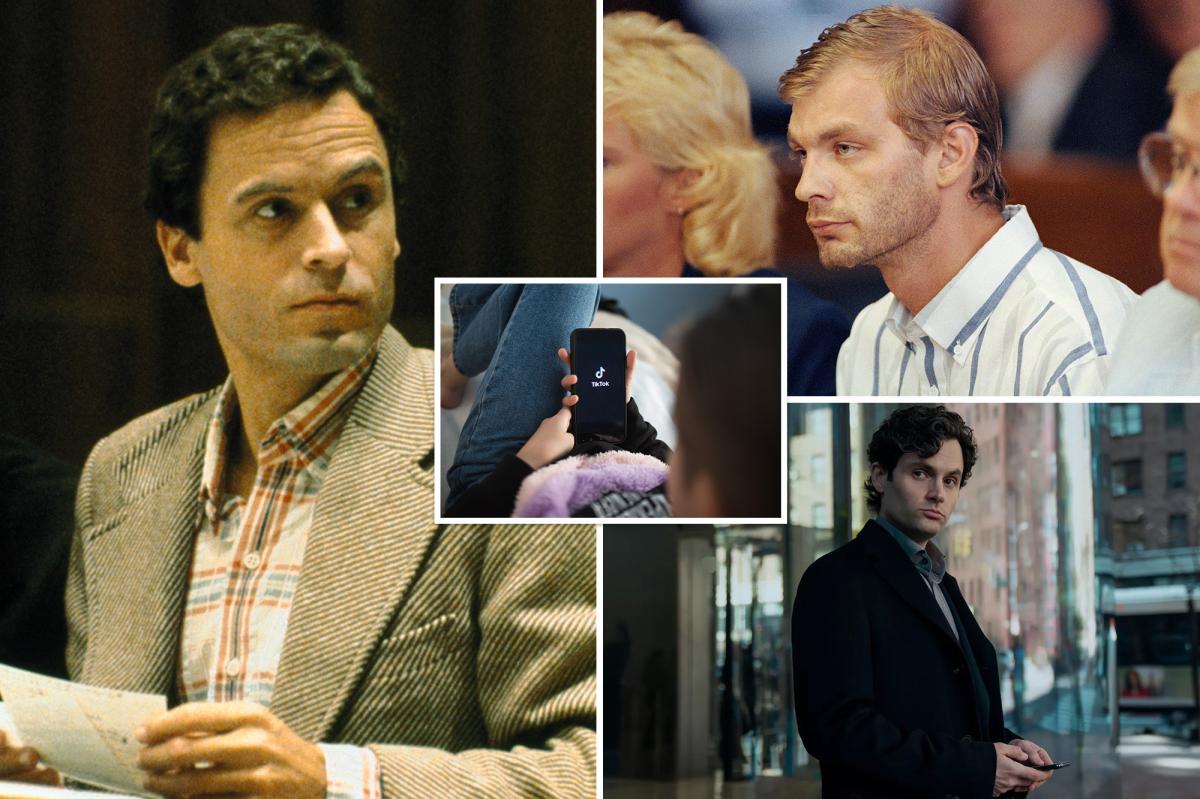
Recent research has revealed that Gen Z women are increasingly drawn to romanticized portrayals of criminals on platforms like TikTok. A study published in Deviant Behavior highlights how engagement with specific content can influence psychological attraction to offenders.
The phenomenon known as hybristophilia—a condition where individuals are sexually attracted to people who commit crimes—was found to be more prevalent among young women who regularly watched or interacted with TikTok videos glorifying notorious figures, such as serial killers Ted Bundy and Jeffrey Dahmer.
These TikTok clips often characterize serial killers or fictional villains as misunderstood or protective, transforming violent behavior into expressions of loyalty and love. Some users have described these men as “ideal partners,” while others casually use terms like “Daddy” or “Smash,” indicating attraction, under posts featuring these offenders.
The study, conducted by psychologists from the University of Huddersfield, analyzed 66 TikTok videos and 91 viewer comments from 2020 to 2024. It surveyed nearly 100 female users aged 18 to 27, assessing their levels of hybristophilia, empathy, and traits linked to darker personality aspects.
The researchers noted a troubling trend dubbed “actor-offender transference,” where attraction to actors portraying killers, such as Zac Efron’s portrayal of Bundy, spills over into real-life attraction to the actual criminals.
According to lead researchers, Professor Maria Ioannou and Dr. Calli Tzani, TikTok’s format can significantly influence the empathy and moral boundaries of its users. They noted, “Instead of evoking empathy for victims, these narratives often redirect emotional identification toward offenders, softening perceptions of their actions.”
Furthermore, Michelle Drouin, a co-author of the study, emphasized how the platform’s algorithm fosters a deeper connection with criminal content. “Once a person shows interest in content, the algorithm learns that interest, so initial curiosity can feed hours of suggested content,” she said, underlining the potential for developing feelings of intimacy with reported offenders.
This intrigue with criminality has real-world implications, as demonstrated in December 2024 following the arrest of Luigi Mangione, who was implicated in the killing of a UnitedHealthcare CEO. Social media quickly erupted with admiration for Mangione’s appearance, prompting critiques that this behavior trivialized violence and glamorized accused killers.
Experts, including Pamela Rutledge from the Media Psychology Research Center, argue that TikTok’s design perpetuates obsession by presenting emotional clips that romanticize danger. She stated, “Virtual romance has become increasingly central to modern emotional life, particularly among younger generations immersed in hyperconnected digital environments.”
As these “romantasy” subcultures proliferate, they embed psychological conditions that could facilitate hybristophilic attraction, normalizing and romanticizing risky behavior among young users.
