


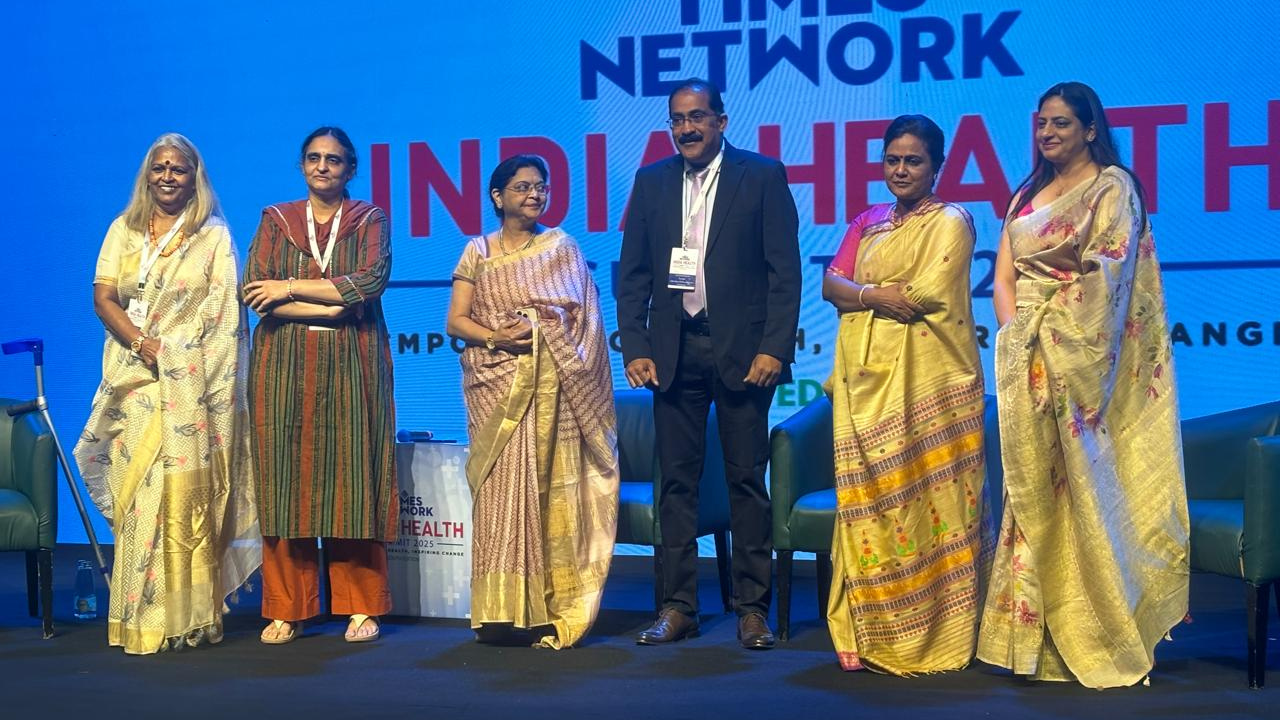
Reshaping Women and Child Care in India
The Times Network India Health Summit 2025—South Edition showcased a critical dialogue on enhancing women’s healthcare beyond the confines of pregnancy. The session, aptly titled “Reshaping Women and Child Care in India,” emphasized the importance of comprehensive care at all life stages.
Focus on Maternal Health
During the summit, Dr. Pranathi Reddy, Clinical Director of Obstetrics & Gynecology at BirthRight by Rainbow Hospitals, stressed the urgent need to rethink maternal healthcare. “Pregnancy should not be the starting point of care—it’s just one moment in a much longer journey,” she stated. Despite improvements, India still faces a pressing issue: approximately 35,000 maternal deaths occur annually during childbirth. Dr. Reddy pointed out that interventions should begin with antenatal care and continue towards ensuring long-term health outcomes, particularly highlighting disparities between states.
The Rise of Childhood Obesity
Addressing a growing concern, Dr. Sivaranjani Santosh, Pediatrician at Magna Centres, elaborated on the alarming trend of childhood obesity. “This issue often arises from seemingly innocuous habits, like introducing sugar or energy mixers into children’s diets,” she explained. These products can lead to serious health issues, including addiction to sugar and dental problems. Dr. Santosh emphasized that combating obesity involves more than dietary changes; it requires a cultural shift to challenge the normalization of unhealthy eating habits from an early age.
Barriers to Accessing Care
Dr. Jamuna Devi Gudidevuni, a Gynecologist at Yashoda Hospitals, highlighted the logistical and cultural obstacles that hinder women from obtaining timely healthcare, particularly in rural regions of India. Many women only consult gynecologists when their conditions have worsened, attributing this to inadequate infrastructure and societal stigmas. “We must create environments—both physical and social—where women can seek help without shame or fear,” she remarked.
Dr. Satish Ghanta, Neonatologist and founder of Little Stars and She Women and Children’s Hospital, discussed the disparities in neonatal care. “India exhibits a duality in neonatal healthcare—with both exemplary facilities and significant gaps,” he noted. He advocated for incorporating telemedicine into solutions to extend quality care to remote areas, thereby bridging the urban-rural divide.
Expanding the Definition of Women’s Health
In her closing remarks, Dr. Rooma Sinha, Gynecologist and Robotic Surgeon at Apollo Hospitals, urged a broader view of women’s health that encompasses various life stages. “Discussions often revolve around pregnancy and cancer, neglecting other critical phases such as menarche and menopause,” she pointed out. Dr. Sinha advocated for integrating technological advancements, such as minimally invasive surgeries, to improve recovery experiences for women while stressing the importance of awareness and policy changes.
Importantly, she called for male engagement in these conversations, highlighting the necessity for men to understand and advocate for women’s health issues. “Collective change is imperative,” she emphasized.
