


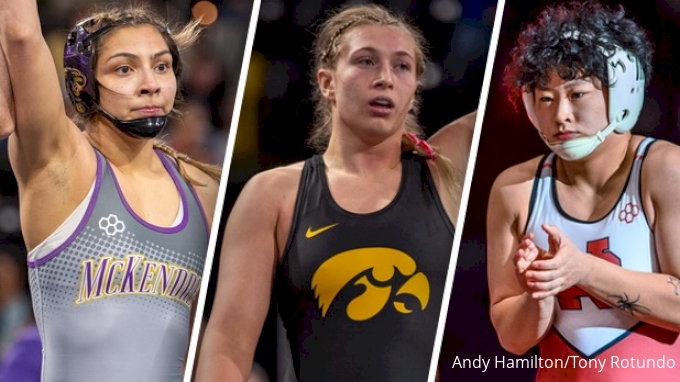
The NCAA has officially approved the format for the inaugural 2026 NCAA Women’s Freestyle Wrestling Championships, which will feature competition among NCAA Division I, II, and III teams.
Currently, there are 112 NCAA programs offering women’s college wrestling, broken down as follows:
- Division I: 6 programs
- Division II: 36 programs
- Division III: 70 programs
It’s important to note that while Division I and II programs provide athletic scholarships, Division III programs do not, placing them at a competitive disadvantage.
The forthcoming 2025 National Collegiate Women’s Wrestling Championships serve as a precursor to the NCAA Championships, allowing up to 15 national qualifiers per team and featuring a 32-woman bracket in each of the ten weight classes, totaling 320 participants.
In contrast, the NCAA has opted for a format that allows for 180 participants across ten weight classes for the 2026 Championships, assigning a maximum of 18 wrestlers per category and limiting each school to one qualifier per weight class. Teams can qualify a maximum of 10 wrestlers in each region, with six regions producing three qualifiers each, two weeks prior to the NCAA Championships.
The venue for the 2026 Women’s Wrestling Championships will be Xtream Arena in Coralville, Iowa.
Historical Context of Qualifier Numbers
The following table reflects the maximum number of qualifiers for the national championships since the NCAA first hosted them in 2020:
| Year | Tournament | Max. Qualifiers |
|---|---|---|
| 2020 | NCWWC | 200 |
| 2021 | NCWWC | 160 |
| 2022 | NCWWC | 200 |
| 2023 | NCWWC | 200 |
| 2024 | NCWWC | 240 |
| 2025 | NCWWC | 320 |
| 2026 | NCAA | 180 |
Potential Division Split
The disparity between Division III programs and their Division I and II counterparts raises questions about the future structure of women’s college wrestling. Since Division III schools do not offer scholarships, they compete at a disadvantage, particularly with a lower number of qualifiers. Given that D3 programs represent 62.5% of the overall women’s wrestling programs, a potential division into athletic scholarship (D1 & D2) and non-athletic scholarship (D3) categories seems likely.
Should this split occur, the anticipated allocation would be:
- D1/D2: 42 schools
- D3: 70 schools
North Central College, for example, is expecting a significant impact from this potential restructuring, especially after securing the championship title in 2023 and finishing as runners-up to the University of Iowa in the subsequent years.
Challenges for Elite Programs
Wrestling powerhouses such as Iowa, North Central, Grand Valley State, and McKendree face tough decisions regarding roster selections. For instance, during the 2025 season, Iowa featured multiple national title contenders at 110 pounds, presenting a dilemma for coaches like Clarissa Chun in choosing among top competitors, including national champions.
Impact on NAIA Recruiting
The NCAA’s new championship format may provide NAIA coaches with enriched recruiting opportunities. NAIA programs can qualify up to 12 wrestlers, all of whom can contribute points at their national championships. The disparity in qualifying numbers—210 for the NAIA versus 180 for the NCAA—might bolster NAIA’s attractiveness for prospective athletes.
Additionally, comparative success in women’s wrestling with notable achievements by NAIA members in national competitions could prove advantageous in recruitment efforts. NAIA coaches may emphasize to recruits the opportunity for impactful participation, even if they are not starters.
The Significance of NCAA Championships
Achieving NCAA champion status remains a primary aspiration for many wrestlers, with the NCAA programs enjoying reputations that attract new talent. The addition of women’s programs at institutions like Oklahoma State, Columbia, and Tarleton State signifies shifting dynamics within the sport.
While the transition to NCAA sanctioning is a pivotal achievement, the number of qualifiers—180—certainly raises discussions about fairness and competition levels compared to previous championships.
Looking Ahead
With the landscape of college athletics evolving rapidly, the upcoming years promise to attract significant changes. Stakeholders involved in women’s college wrestling—athletes, coaches, and institutions—should regulate their strategies and expectations as they navigate this shifting arena.
