


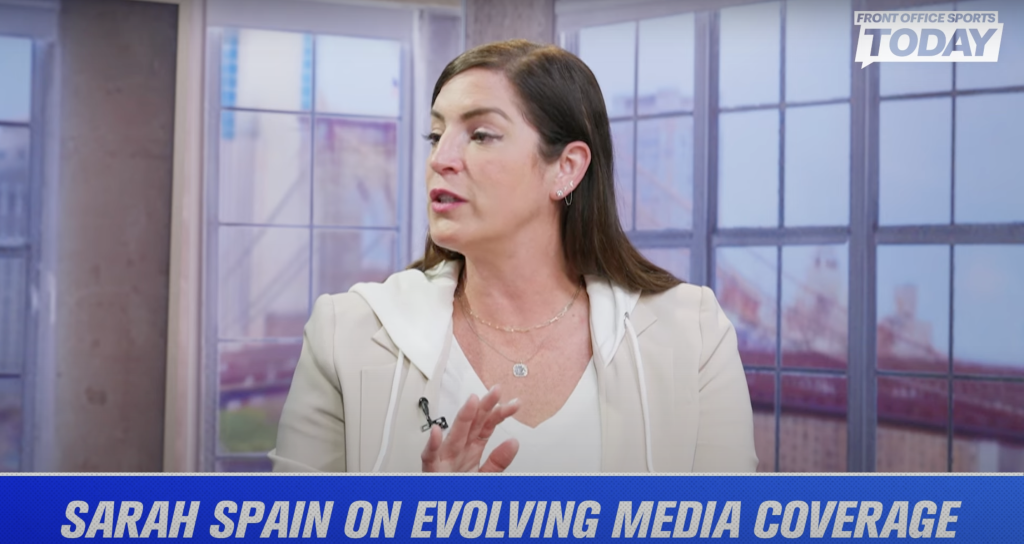
Transforming Women’s Sports Coverage: Insights from Sarah Spain
In recent years, athletes such as Caitlin Clark and Angel Reese have dramatically reshaped perceptions of women’s sports in mainstream media. ESPN’s Sarah Spain, a long-standing advocate for equitable coverage, sheds light on this evolution and the pivotal role women athletes play in changing the narrative.
The Historical Context of Women’s Sports Coverage
According to Spain, ESPN’s articles about women’s sports were once scarce, largely overlooked by program directors. Spain, who has been connected to espnW since 2010, has dedicated much of her career to championing the visibility of women’s athletics.
Current Endeavors at espnW and iHeartMedia
Today, Spain’s focus is on her work at espnW and her podcast, Good Game, which highlights women’s sports. She notes, “Right now, it’s great because I’m just working for espnW…for years, there was this balance of working for espnW and trying to get those stories into the mainstream.” This reflects the ongoing struggle for equal representation in sports media.
The Role of Gatekeepers in Sports Media
Spain emphasizes the importance of media gatekeepers—those who decide which stories gain airtime. Historically, these decision-makers have been a homogenous group, primarily comprised of middle-aged cisgender white men focused on major men’s sports leagues like the NFL, NBA, NHL, and MLB. She states, “They are the ones who ultimately decide what people are interested in.” This realignment of focus shows how much the landscape can change.
Shifting Perspectives: Caitlin Clark and Angel Reese
The rivalry between Clark and Reese has opened new avenues for women’s sports in media coverage. Spain points out, “What we found happened in the last couple of years…is that all of the sudden, they had a new tab to check.” This shift signifies that sports media is now beginning to recognize the appeal and value of women’s sports.
A Continuing Journey for Women’s Sports Coverage
While shows like First Take focus on mainstream stories, Spain highlights the necessity of platforms dedicated to women’s sports to ensure that these crucial narratives are not overlooked. “It is quite clear that mainstream coverage of women’s sports has taken a pretty drastic step forward,” she affirms, projecting that the future of women’s sports will only continue to grow as leagues like the WNBA and NWSL gain prominence.
Conclusion
Spain’s insights reflect an optimistic outlook for women’s sports as they gain more visibility and support. The changes already observed serve as a hopeful foundation for further advancements in equity and coverage.
