


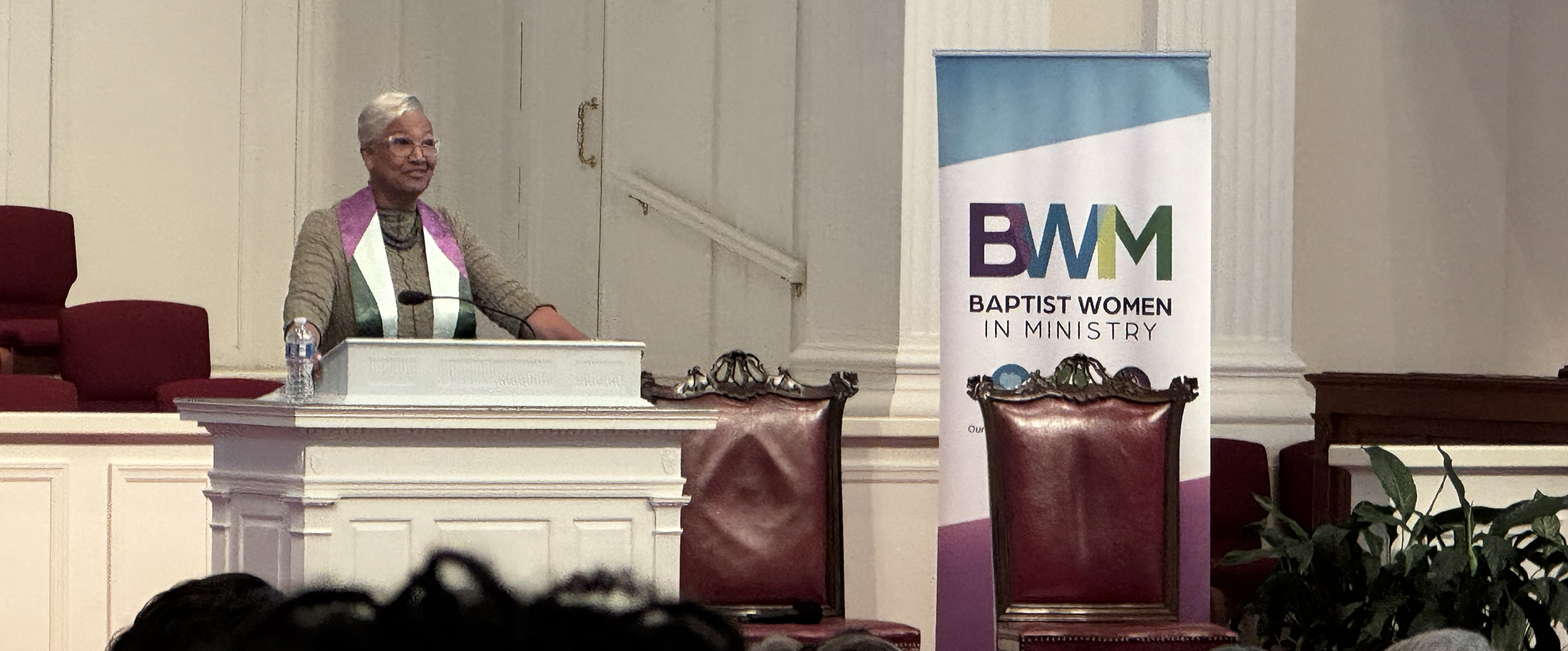
At the recent annual gathering of Baptist Women in Ministry, veteran pastor Cynthia Hale emphasized that the equality of women transcends social justice; it is fundamentally a gospel issue. Held at the Second Ponce de Leon Baptist Church in Atlanta on November 6-7, this event brought together a community committed to advancing women’s roles in ministry.
Cynthia Hale, the founding pastor of Ray of Hope Christian Church in Decatur, Georgia, presented her insights drawn from over fifty years in pastoral ministry, supported by biblical interpretation. The session concluded with an extensive question-and-answer segment, signaling a deep engagement from the audience.
The Gospel as a Foundation for Gender Equality
Hale argued that advocating for women’s equal value, dignity, and calling is not merely an issue of fairness; it is deeply embedded in the gospel. Quoting from Genesis, she underscored that both men and women were created in the image of God, stating,
“Since all humans are created in the image and likeness of God, there is no superiority of one gender over another.”
This interpretation challenges long-held beliefs and underscores a divine intention for gender equality.
She pointed out that if God intended to establish a hierarchy based on gender, it would have been explicitly documented in the creation narrative. “If ever there was a time that God could have settled the issue about female leadership, this would’ve been it,” Hale noted, highlighting that God created both genders equally with the ability to lead.
Women in Leadership: A Call for Recognition and Action
Despite being the majority in congregations, women remain underrepresented in church leadership roles. Hale revealed that in most Black Baptist churches, women constitute 75% to 80% of the attendees, yet only around 10% are leaders, with a mere 1% serving as pastors. While there has been progress, these figures indicate that substantial work remains.
Hale pointed to examples of denominations that have advanced further in recognizing women’s leadership, such as the African Methodist Episcopal Church, which began ordaining women in 1960. However, she cautioned that acceptance should not be mistaken for recognition of genuine calling. Positioning women as senior pastors should reflect the acknowledgment of their divine calling, not merely as an act of inclusion.
Women’s Role in Reconciliation and Community
The pastor noted that the New Testament reveals a broader gospel message that highlights women’s roles in reconciliation. She referenced the story of the Samaritan woman at the well, emphasizing it as one of the longest dialogues recorded between Jesus and anyone in the gospels. This encounter not only highlights women’s theological engagement but also illustrates their empowerment to minister within their communities.
In addition to advocating for formal roles in leadership, Hale expressed concern over how women are perceived when they are appointed to pastoral roles, often seen as a last resort in struggling churches. “In too many cases when we are called to pastor, we are still being sent to churches that are on their last leg,” she observed.
The Implications for the Church’s Witness
Hale challenged congregations to reflect on their treatment of women in ministry. She stated that limiting women’s involvement distorts the church’s witness to the gospel, which is centered on equality and mutual respect. “When women are denied full participation or treated as less than equal, the church’s witness to that gospel is distorted,” she remarked.
The pastor concluded by emphasizing that the church’s public perception is closely tied to how it treats women. “As believers, we are called to represent Christ in the world,” Hale said. Model practices of shared leadership and equal opportunity serve not only to affirm women but are also essential for the church’s integrity and credibility in its mission.
In light of these discussions, it is evident that advocating for women’s equality is not just a matter of justice but a reflection of the gospel’s transformative power.
