


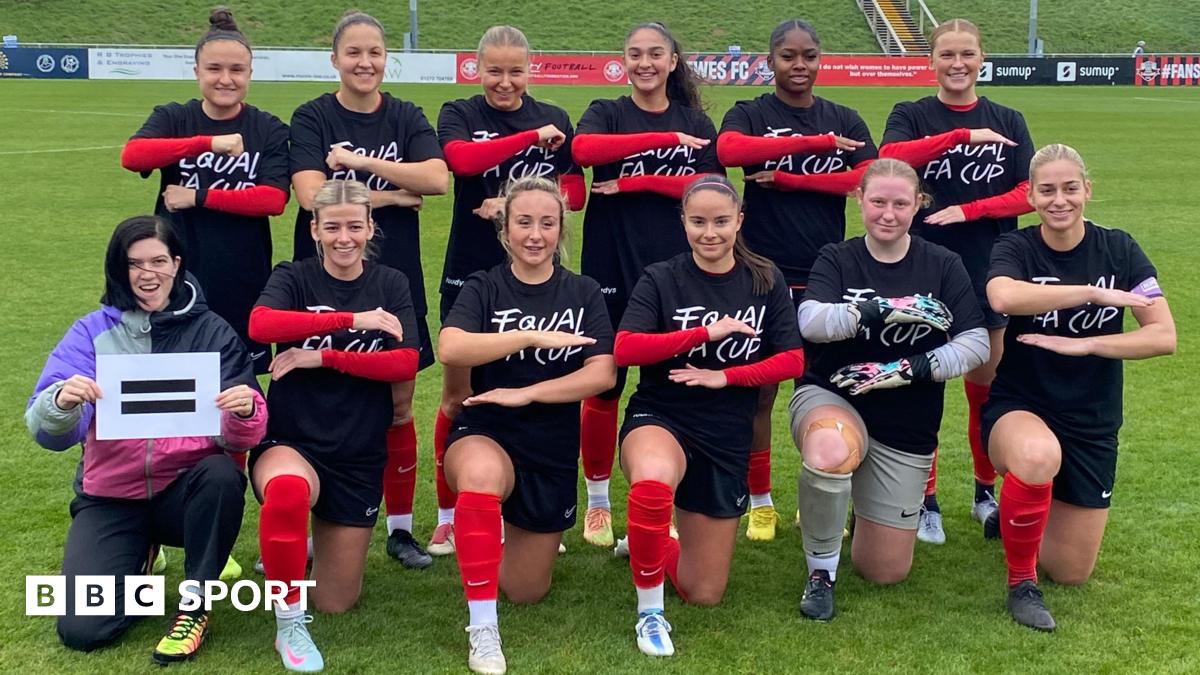
FA Cup: The Case for Equal Prize Money in Women’s and Men’s Competitions
This weekend marks the women’s FA Cup second round, a moment filled with anticipation as teams aspire for the coveted chance to compete at Wembley. Such dreams, while ambitious, reflect the growing importance of women’s football in the sporting landscape.
Equality in Football
In 2017, Lewes Football Club made a significant stride by becoming the first professional or semi-professional club in the UK to provide equal resources to both its women’s and men’s teams. This initiative set a precedent in the sport, aligning the operational support of both teams.
Since the club’s commitment to equality, they have experienced a shift towards equity. Thanks to grants from the Football Association (FA) and shared revenue, the women’s team has occasionally received more support, largely in line with their position in the higher league.
The Quest for Equal Prize Money
Since 2019, Lewes FC has actively campaigned for equal FA Cup prize money between the women’s and men’s competitions. This advocacy is not merely a symbolic gesture, but a strategic aim to address systemic disparities in funding.
The FA Cup, known as “the game’s great leveller,” boasts a substantial prize pool that, in the case of a second-round victory for a men’s team, amounts to £79,500. In stark contrast, the corresponding prize for a women’s team stands at just £8,000—a staggering disparity of £71,500.
Understanding the Discrepancy
The difference is equally pronounced in other rounds; men’s teams receive £41,750 for first-round victories, while women’s teams earn significantly less. In the third round, the gap widens to £86,500. Despite the shared competition format and governance by the same governing body, the financial recognition of players remains skewed.
Critics often cite arguments related to “commercial reality” and “revenue differences” as justifications for this disparity. However, these claims overlook the key fact that the FA has the authority to determine the prize funds for both competitions. Therefore, they could resolve this inconsistency with little effort.
The Importance of Equal Pay
Many dismiss calls for equal prize money by referencing attendance or broadcast revenue. While it is true that men’s matches tend to attract larger audiences and command higher television rights, it’s worth noting that the FA does not take a share of match receipts. This renders such arguments irrelevant in discussions about prize money equality.
Furthermore, the FA has a history of promoting equity, as evidenced by its decision in 2020 to standardize match fees and bonuses for both the women’s and men’s national teams. This move underscores their capacity to implement equality across various facets of the sport.
Future Directions
Even though the FA has previously overlooked requests for engagement on this issue, recent developments suggest a shift in their approach. Their strategy document, “Reaching Higher: Women’s & Girls’ Game Strategy 2024-28,” emphasizes commitments to equal opportunities and the establishment of robust competition structures.
In conclusion, as the women’s FA Cup unfolds, the campaign for equal prize money gains momentum. By reflecting on the fundamental principles underpinning the sport, the FA can initiate meaningful changes that enhance not only the game’s integrity but also its appeal to a broader audience.
