


Enhancing Abortion Referral Practices: A Call for Professionalism
The Importance of Professional Abortion Referral Practices
Inadequate abortion referral practices pose significant challenges to person-centred care for individuals seeking abortions. Research indicates that unprofessional referrals may contribute to misinformation, perpetuate stigma, and impede timely access to necessary services, resulting in distress for those seeking abortion care.
Current Guidelines and Professional Standards
While existing guidelines address the responsibilities of healthcare practitioners who have conscientious objections to abortion, the focus often remains on the mere act of referral. For instance, the Royal Australian and New Zealand College of Obstetricians and Gynaecologists emphasizes the importance of timely referrals without imposing distress on the patient. However, it lacks specific details on how to execute these referrals professionally.
In Australia, professional codes of conduct highlight the imperative for healthcare providers to ensure that personal beliefs do not interfere with patient care or referrals. The Medical Board of Australia’s guidelines encourage practitioners to act in their patients’ best interests, emphasizing respect and autonomy throughout the referral process.
Identifying Challenges in Referral Practices
Despite the guidance available, discrepancies frequently arise between recommended referral practices and real-world implementations. Two prominent issues contribute to these gaps:
- Refusal to Refer: Some practitioners, driven by personal beliefs or discomfort, may refuse to facilitate referrals, violating professional obligations and potentially hampering access to abortion services.
- Unprofessional Referrals: Even among those who do refer, some may engage in practices that obstruct access, including rude communication or directing patients to incorrect or unhelpful services. Such actions further complicate an already sensitive situation for abortion seekers.
Establishing Minimum Professional Standards
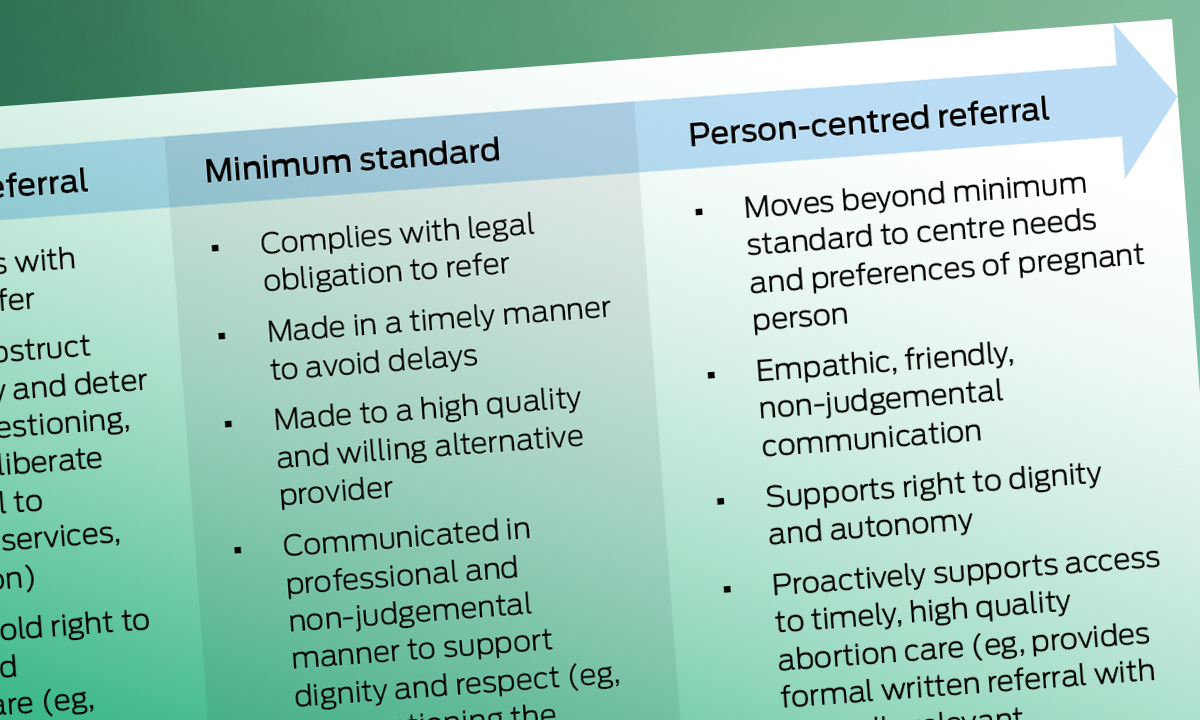
With a view to enhancing referral practices, a minimum standard can be proposed, emphasizing:
- Timeliness: Referrals should be made promptly to avoid unnecessary delays.
- Non-judgemental Communication: Communication should be respectful, without imposing judgment or personal beliefs on the patient.
- Quality Referrals: Practitioners must ensure referrals are made to competent and willing providers, in line with local legal requirements.
Systems should be established to provide healthcare practitioners with clear referral pathways, facilitating access to abortion services and reducing barriers.
Advancing Towards Person-Centred Referral Practices
A person-centred referral goes beyond just meeting minimum professional standards; it aligns the referral process with the needs and preferences of the abortion seeker. This approach promotes respect, dignity, and autonomy, ensuring individuals can access timely and empathetic care.
Healthcare providers should take proactive steps, such as:
- Directly reaching out to referral services to verify their ability to assist the patient.
- Providing detailed written referrals when necessary to ensure clarity in the care pathway.
Recommendations for Improvement
Enhancing referral practices should be a shared responsibility among healthcare practitioners, professional bodies, and regulatory agencies:
- Professional organizations should articulate clear standards for referral practices and ensure that medical education incorporates instruction on these principles.
- Healthcare policies must highlight the legal and ethical obligations related to abortion referrals, empowering practitioners to act in the best interest of their patients.
- Efforts should include training for empathy and respectful communication to better support patients during their care journey.
