


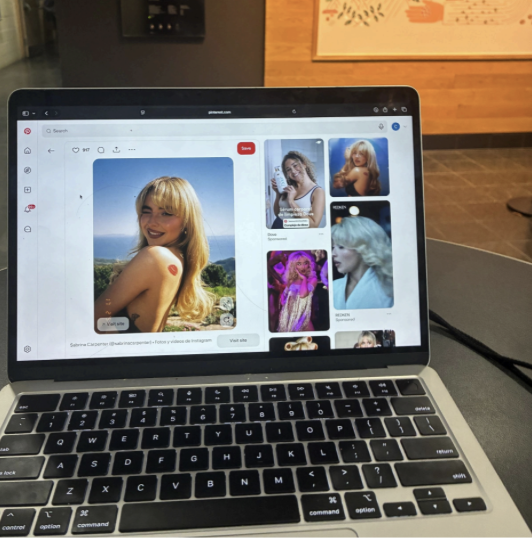
The Rise of Sabrina Carpenter: Navigating Fame and Gender Expectations
This article does not represent the views of Loyola University Maryland, The Greyhound, or Loyola University’s Department of Communication.
Introduction to Sabrina Carpenter
Sabrina Carpenter has emerged as a prominent figure in entertainment, known for her roles in series like ‘Girl Meets World’ and her contributions to the music industry, particularly with hits such as ‘Espresso.’ Her journey to stardom is accompanied by discussions regarding gender roles and societal expectations.
Controversies Surrounding Artistic Choices
Carpenter has faced scrutiny for various artistic decisions, notably her choice to film a music video in a church while wearing a short black dress, and the provocative artwork for her album titled ‘A Man’s Best Friend.’ These incidents prompt questions about societal double standards regarding women’s apparel, especially in religious settings.
Historical Context of Criticism
The backlash against women who embrace their sexuality is not a new phenomenon. This trend parallels past controversies involving notable figures like Britney Spears and Madonna, adding Sabrina Carpenter to the ongoing dialogue about women’s representation in the entertainment industry.
Insights from Gender Experts
Melissa Lees, Director of the McCauley Women’s Center, comments on the oversimplification of narratives surrounding female artists in mainstream media. She states, Mainstream media isn’t talking about the barriers Sabrina Carpenter overcame, the main narrative presented is about how she looks.
This perspective emphasizes the tendency to focus on women’s appearances rather than their achievements.
The Appearance Debate
Grace McCarty from the Women’s Center further argues the hypocrisy in societal attitudes toward gender. She notes, Yet how many people comment on their appearance when men of high status look like they can’t get out of bed?
Gender Expectations in Public Perception
When considering public figures like Billie Eilish, it becomes apparent how heavily gender expectations influence societal perceptions. Eilish’s embrace of androgynous styles often elicits less scrutiny compared to Carpenter and others who adopt traditional feminine aesthetics. This discrepancy highlights a broader commentary on media expectations of women’s appearance.
High-Profile Examples of Media Treatment
Lees points to the media’s portrayal of Millie Bobby Brown compared to her male peers. She observes that reporters often critique Brown’s appearance without similar commentary directed toward her male co-star, Noah Schnapp, stating, The media continuously comments on how Mille Bobby Brown looks too old or looks too young, yet the same reporters wouldn’t make this comment about Noah Schnapp.
Reimagining Female Roles
Carpenter, previously recognized as a Disney Channel star, leverages her music videos to challenge conventional gender roles. Despite her retro-inspired stage attire, she subverts expectations by portraying herself as a vigilante in her narratives, emphasizing themes of empowerment against patriarchal norms.
Broader Implications of Gender Norms
Lees argues that the issues surrounding gender perceptions extend beyond music and into various professional sectors. This aspect is particularly visible in politics, as exemplified by Congresswoman Alexandria Ocasio-Cortez, who has faced obstacles related to both ethnicity and gender identity throughout her career.
Conclusion: The Dual Nature of Popular Music
While Sabrina Carpenter’s music may superficially appear as lightweight ‘bubblegum’ pop, it often addresses deeper societal critiques regarding women’s roles and the injustices they face. Through her artistry, Carpenter seeks to engage with and challenge the pervasive double standards that continue to exist within society.
