


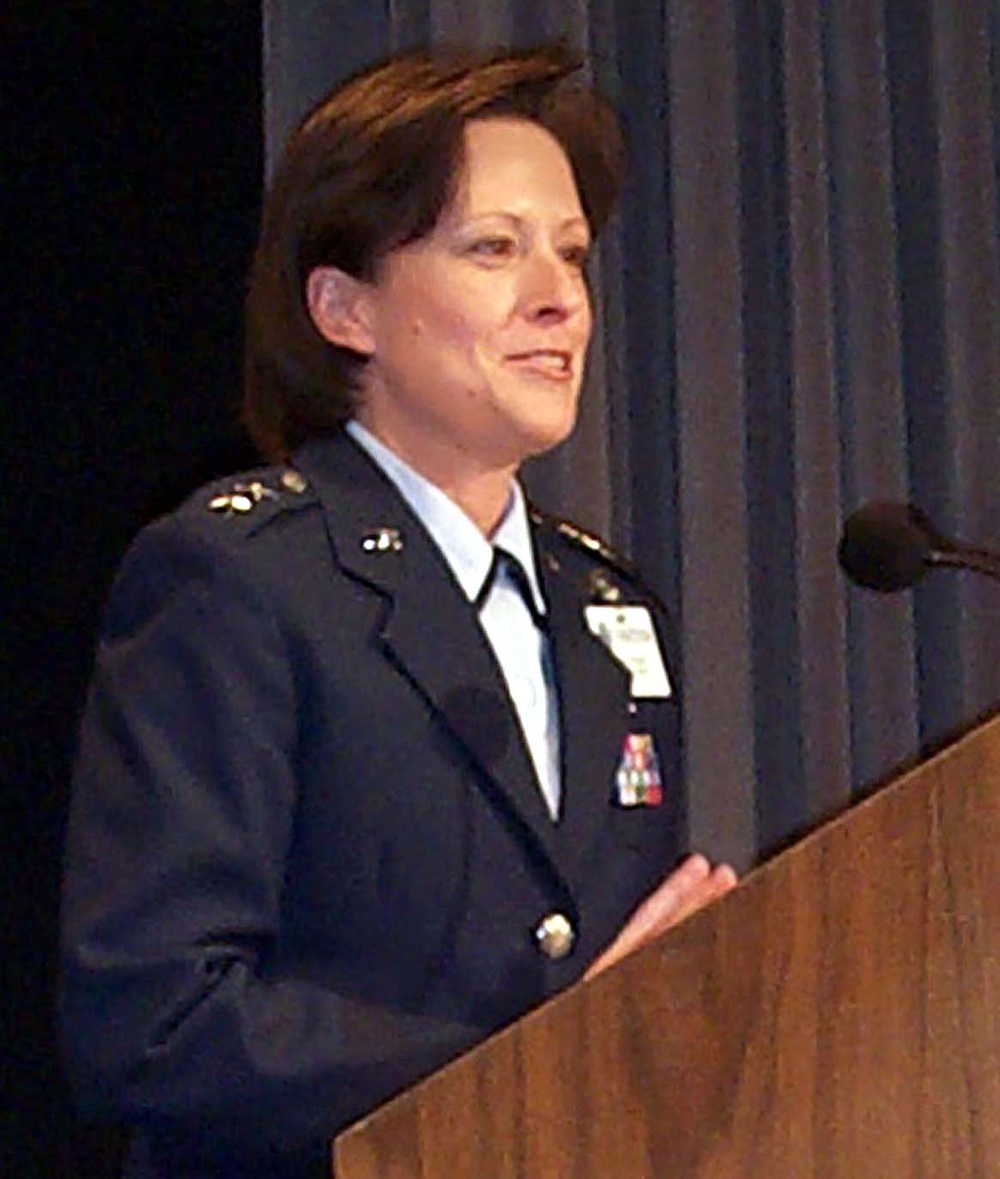
Historic Leadership in the Vermont National Guard: Maj. Gen. Martha T. Rainville’s Perspective
Maj. Gen. Martha T. Rainville recently marked a significant milestone as the first woman to serve as a state adjutant general in the National Guard’s extensive history. However, during her keynote speech for the Department of Defense’s National Women’s History Month observance, she emphasized that her role transcends gender.
Performance Over Gender
Rainville expressed her long-standing belief that military leaders should be evaluated based on their abilities and results rather than their gender. Her responsibilities as adjutant general of Vermont include overseeing the training of Army and Air National Guard members, acting as both inspector general and quartermaster general, and managing budgets of $2.4 million at the state level and $74.1 million federally.
Leadership and Character: The True Metrics
During her speech on March 15 in Washington D.C., Rainville stated, “What really counts to me is the caliber of my leadership, the strength of my character, and the power of my vision.” She underscored that her community expects competent leadership regardless of her being a woman, asserting, “It doesn’t matter if I am a woman or a man as long as I can deliver!”
Honoring Women’s Contributions
Rainville highlighted the profound impact women have had across various sectors, mentioning influential figures such as author Lillian Smith, who addressed racism, and LaDonna Harris, an advocate for Native American rights. “Today, we can see many women contributing to the success of their companies, government, and communities,” she noted.
The Importance of Role Models
As a mother and a resident of St. Albans, Vermont, Rainville underscored the importance of female role models for both daughters and sons. She recounted a touching experience with a young girl who felt empowered by her image displayed in the girl’s home, saying, “If I could do it, so could she.” This moment highlighted the impact that visible success can have on inspiring the next generation.
Lessons from Adversity
Reflecting on past challenges, Rainville recalled her experience during a severe ice storm in 1998 when the National Guard provided aid to affected sectors. “I have warm memories of them because those ladies turned into my personal cheering section,” she shared, pointing out the supportive role women played during a crisis.
Challenges Remain
Rainville emphasized that despite progress in gender equality, gender perceptions still persist. She warned against limiting aspirations based on gender stereotypes, stating, “Too many women let others limit their dreams, and that is a waste of talent.” She believes that both men and women continue to navigate disparities, imagining a future where talents are valued above all else.
Looking Toward the Future
With a nod to fellow Vermonter Consuelo Bailey, pioneering woman in politics, Rainville echoed the sentiment that barriers are meant to be broken. Bailey’s desired epitaph, “Born a woman, died a person,” resonated deeply with Rainville, encapsulating her call for a society where individuals are judged solely on their abilities.
In conclusion, as the nation moves forward, Rainville asserts that Women’s History Month remains vital, calling for recognition of ongoing inconsistencies in gender equality. “We have certainly come a long way, but there is still a ways to go!” she remarked, leaving a call to action to combat outdated norms.
Acknowledging Young Voices
At the same event, sixth-grader Terika Ingram was celebrated for her award-winning essay on women’s contributions to history, receiving a standing ovation. This recognition exemplifies the engagement of youth in discussions of gender and empowerment.
This presentation, publicized by Rudi Williams of the American Forces Press Service, seeks to reaffirm the importance of continued dialogue surrounding gender equality and leadership.
