


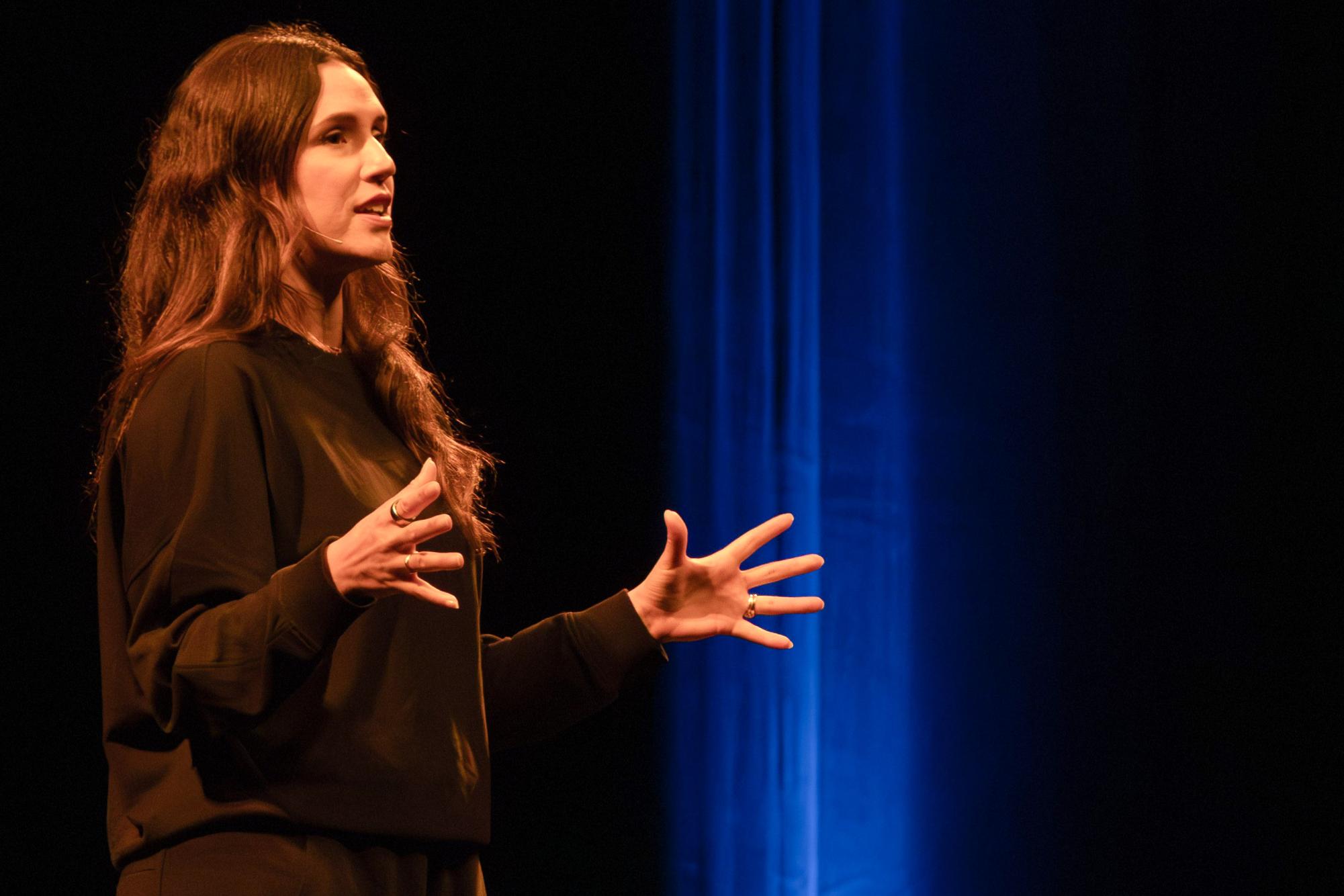
On Friday, attendees at the “LUMINESCENCE: A Woman’s Health and Menopause Summit” gathered at the Bass Concert Hall for an event focused on the critical topics surrounding menopause. The atmosphere was vibrant, with a predominantly female audience participating in mindfulness activities and foot massages.
The summit featured various speakers who guided attendees through mindfulness exercises and shared both personal anecdotes and insights grounded in scientific research regarding menopause management. Schuyler Grant, a yoga instructor affiliated with Commune, an online wellness platform that organized the event, opened with a collective meditation aimed at fostering a sense of community.
“(We’re here) … to be reminded that as women, we are not just a part of the natural cycle,” Grant stated during her meditation session. “But that we, in fact, are the keepers of the flame. … Long before there’s been history — his story — there were mothers.”
The summit sought to break the silence surrounding menopause, an often-ignored topic. Journalist Tamsen Fadal shared her own experiences with symptoms like hot flashes while anchoring a news broadcast. Fadal emphasized the systemic issues in healthcare, highlighting the difficulty many women face in accessing information about their health.
“It’s not just about what happens when we hit menopause,” Fadal remarked. “It’s about what happens when women are given silence instead of information. … A lot of the systems that we have trusted have failed us very, very hard.”
Following Fadal’s presentation, orthopedic sports surgeon Vonda Wright delved into the scientific aspects of menopause. She explained the biological processes, noting how the cessation of menstruation coincides with a significant decline in estrogen levels, leading to various symptoms.
“Chaos happens,” Wright stated, explaining that the decrease in estrogen impacts multiple bodily functions, influencing cholesterol levels and emotional states. Many women, according to Wright, feel dismissed by healthcare practitioners, leading to feelings of isolation and confusion.
“A woman (would come) into my clinic and (say), ‘I think I’m falling apart,’” Wright explained. “They say, ‘You know what, doc? I have a high pain tolerance, and I didn’t want to come in today,’ as if we’re going to wear that like a badge of honor. … They say, ‘But you know what? I couldn’t do it anymore.’”
The event concluded with a presentation by Mary Claire Haver, an obstetrician-gynecologist specializing in menopause. Haver highlighted the lack of funding for women’s health issues, which often leaves them in poorer health compared to men as they age.
“My patients don’t want to live forever,” Haver noted. “What they don’t want is a life plagued with chronic disease, plagued with frailty (and) plagued with dementia. Not because they don’t mind suffering. We’ve been taught to suffer. … They don’t want to burden their children.”
To navigate menopause effectively, Haver suggested maintaining regular exercise, a balanced diet rich in protein and fiber while minimizing sugar, and ensuring adequate sleep. She also pointed toward hormone therapy as a viable option and encouraged attendees to adopt a positive outlook on this life stage.
“Talk to your friends. Share your experiences,” Haver urged. “Don’t be ashamed of being menopausal.”
In closing, Grant reiterated the importance of advocating for better healthcare practices. “Insist that your healthcare providers … do better for 51% of the population,” she implored. “Because honestly, health care and wellness and safety should not be a privilege. They should be a human right.”
