


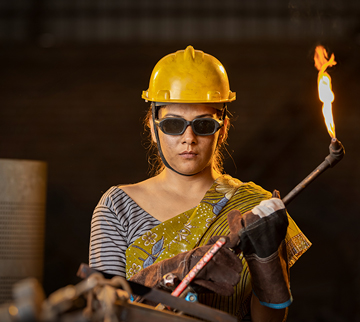
Image Source: Getty
Bridging the Gender Gap in STEM Careers
The International Day of Women and Girls in Science, observed annually on February 11, highlights the ongoing need to narrow the gender divide in scientific disciplines. Enhancing the representation of women in STEM (Science, Technology, Engineering, and Mathematics) fields is vital for cultivating a diverse workforce. As tomorrow’s employment market increasingly leans toward technology, ensuring that women are equipped with essential STEM skills is crucial for long-term career success and narrowing the gender pay gap. By empowering women, society will benefit from diverse perspectives necessary to tackle pressing global issues such as economic growth, innovation, and poverty alleviation.
The Data Behind Gender Disparity
Over the past two decades, there has been some progress toward gender parity in education, reflected by the growing number of girls enrolled in schools worldwide. However, significant disparities remain, particularly in STEM fields. The 2022 Programme for International Student Assessment (PISA) indicates that boys continue to outperform girls in mathematics by an average of 9 points, a trend consistent since 2015, while similar findings were corroborated by the 2019 Trends in International Mathematics and Science Study (TIMSS).
In higher education, women represent only 35% of STEM graduates, and within this group, many are concentrated in care-oriented roles like nursing, with underrepresentation in physical sciences and engineering. Analysis from G20 nations shows that women only occupy 22% of STEM jobs, and where statistics are available, many earn less than 85% of their male counterparts’ salaries in these fields.
Understanding the Root Causes
A review of 165 studies exploring women’s participation in STEM identifies factors influencing this issue at multiple levels. Environmental aspects, including cultural perceptions and the absence of female role models, contribute significantly, with over 60% of studies pointing towards these influences. Personal factors, such as lack of interest or negative attitudes, were cited in only a limited number of instances.
UNESCO’s Gender Scan Survey identifies key factors impacting women’s engagement in STEM encompassing individual self-beliefs, family and peer dynamics, school influences, workplace conditions, and broader societal norms. Significant barriers persist, often limiting women’s career advancement and reinforcing the existing disparities.
Effective Strategies for Change
To bridge the gender gap in STEM, a comprehensive and multi-layered strategy is essential. A focal point of intervention is enhancing self-efficacy in girls through early exposure to engaging STEM-related activities and collaborative learning environments. Successful educational programs, such as TeachGirls in the United States and Girls Who Code in India, serve to inspire and guide young women. Furthermore, initiatives like the Indigenous Girls’ STEM Academy in Australia focus on integrating culturally relevant support for girls in underrepresented groups.
Mentorship opportunities also play a critical role in shaping career trajectories, as evidenced by programs like STEM4ALL in Kazakhstan and India’s Vigyan Jyoti. Hands-on experiences and supportive curricula, like those offered by the National Girls Collaborative Project (NGCP), have demonstrated positive results in engaging girls and increasing their participation in STEM endeavors.
Systematic interventions to change public perceptions and workplace conditions in STEM are few, and therefore, institutional-level barriers persist and remain largely intact.
Conclusion and Call for Action
Despite the existence of various initiatives, the journey toward gender parity in STEM remains a daunting challenge. Efforts often lack scalability, and socio-economic barriers continue to prevent wide access to resources and support. The complexity of the issue necessitates a holistic approach that transcends individual-level interventions.
Moreover, there is a pressing need for comprehensive data collection to inform policy decisions and track the progress of women in STEM. By understanding the full spectrum of experiences that women face in their careers, we can create more effective strategies to foster an equitable and inclusive environment in the STEM field.
Author: Arpan Tulsyan, Senior Fellow, Centre for New Economic Diplomacy at the Observer Research Foundation.
The views expressed above belong to the author(s).
