


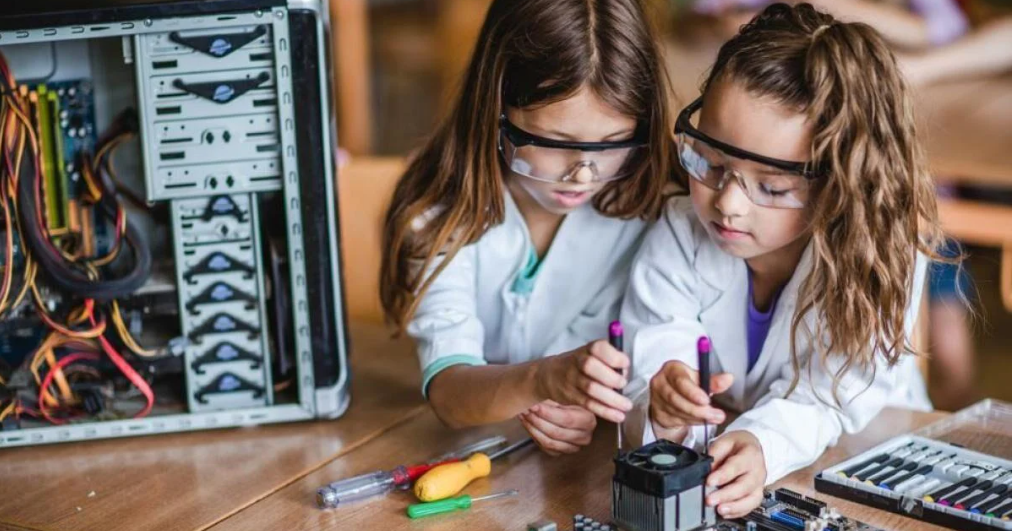
Empowering Girls in STEM: Addressing Gender Gaps in Education
Despite progress in educational access, gender disparities in Mathematics and women’s participation in STEAM (Science, Technology, Engineering, Arts, and Mathematics) careers continue to persist across Latin America. Societal norms and bias significantly hinder girls’ performance in mathematics, thereby affecting their opportunities in higher education and technical fields.
The Historical Context of Women in Mathematics and Science
Consider the impact if historical figures such as Mileva Maric, the mathematician and first wife of Albert Einstein, had been credited for shaping Einstein’s theories. Or if Maria Winkelmann-Kirch, the astronomer recognized for discovering a comet, had received independence in her achievements without her husband’s overshadowing. Similarly, imagine if Esther Lederberg had won the Nobel Prize for her microbiological contributions instead of seeing her husband take the honor. These scenarios compel us to reflect on how gender biases have influenced recognition in scientific fields.
The Current Landscape
As reported by a 2023 UN Women study, a staggering 90% of girls aged 6 to 8 associate engineering with masculine skills. UNESCO’s findings further indicate that these gender biases hinder academic success and limit career aspirations for girls. According to the 2024 UNESCO Gender Report, women constitute only 35% of STEM graduates and occupy 25% of employment positions in science, engineering, and information and communication technologies (ICT). This inequity threatens society’s ability to utilize the full potential of its talent pool to navigate future challenges.
Strategies for Closing Gender Gaps
The path toward gender parity in STEM requires collaborative efforts, involving governmental, private, and social sectors to foster inclusivity. Here are several recommended actions:
- Collaboration Across Sectors: Build partnerships between public and private sectors along with community organizations to promote girls’ involvement in STEAM through focused initiatives.
- Government Incentives: Advocate for scholarship programs, mentorship opportunities, and targeted support to encourage girls to pursue STEAM studies.
- Family and Community Engagement: Work with families to eliminate gender biases from a young age, fostering an environment of equality and support.
- Teacher Training: Provide ongoing professional development for educators on inclusive teaching methodologies to effectively engage girls in mathematics.
- Interactive Learning Experiences: Create engaging and playful platforms that introduce mathematics, science, and technology in an enjoyable manner to build confidence.
- Visibility of Women in History: Highlight the contributions of historical female figures in science to inspire the next generation and challenge existing stereotypes.
Conclusion
In order to make meaningful strides towards closing gender gaps in mathematics and STEAM fields, it is crucial for all stakeholders in society—including governments, educational institutions, and the private sector—to collaborate in empowering girls. Emphasizing the importance of equal opportunities and challenging stereotypes will not only foster confidence among girls but also enrich the future landscape of technology and innovation.
By participating in initiatives like the Matific 2024 Olympics and supporting programs such as the Thousand Women in Artificial Intelligence (M1000IA), we can collectively strive for a future where women play an integral role in scientific and technological advancements.
