


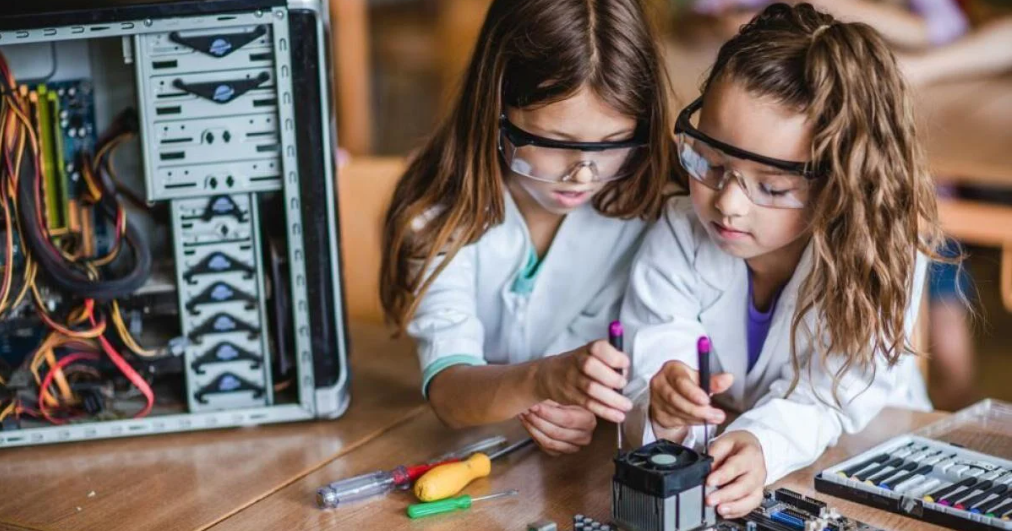
Bridging Gender Gaps in STEAM Fields in Latin America
Current State of Gender Representation in STEAM
In Latin America, gender disparities in Mathematics education and women’s participation in STEAM (Science, Technology, Engineering, Arts, and Mathematics) careers remain significant issues. Despite notable progress in educational access, girls continue to encounter barriers that impact their mathematical performance and limit their entry into university programs in technical and scientific disciplines.
The Importance of Historical Recognition
Consider the impact if figures like Mileva Maric, who played a crucial role in Albert Einstein’s early work, were properly credited in the development of the theory of relativity. Similarly, if Maria Winkelmann-Kirch’s contributions as an astronomer were acknowledged independently of her spouse’s achievements, or if Esther Lederberg’s groundbreaking work in microbiology had been honored with a Nobel Prize in her name, the narrative of women’s contributions in science could be profoundly different. Recognizing these figures underscores the cultural and educational barriers that persist, limiting female representation in STEAM and hindering societal progress.
Recent Findings on Gender Norms and Academic Performance
A 2023 study from UN Women highlights that a staggering 90% of girls aged 6 to 8 associate engineering with male attributes. Furthermore, research from UNESCO indicates that entrenched gender norms and biases continue to deter girls from pursuing academic success, particularly in the STEM fields. As noted in the upcoming UNESCO Gender Report 2024, women hold only 35% of STEM degrees and occupy just a quarter of roles in science, engineering, and ICT.
Strategic Proposals for Change
To facilitate parity in STEAM education, targeted actions are essential. Here are several strategies aimed at increasing female participation:
- Develop collaborative frameworks involving public and private sectors, alongside social organizations, to inclusively promote girls’ engagement in STEAM.
- Implement government incentive programs such as scholarships, mentoring opportunities, and initiatives that support girls from an early age in pursuing STEAM careers.
- Work with families and local organizations to challenge and eliminate gender biases from a young age, fostering cultural shifts.
- Provide ongoing gender equity training for teachers, equipping them with inclusive pedagogical practices that encourage girls in mathematics.
- Encourage playful engagement with mathematics and science through informal opportunities that build confidence among girls.
- Highlight the contributions of women in history to tell a more inclusive narrative and inspire future generations.
Collective Responsibility for Change
The goal of closing gender gaps in mathematics and STEAM fields requires a concerted effort from all sectors of society. Collaborative projects aimed at empowering girls in these disciplines are necessary to challenge existing stereotypes and bolster self-confidence. By leveraging a combination of government initiatives, private sector engagement, and community involvement, significant strides can be made.
