


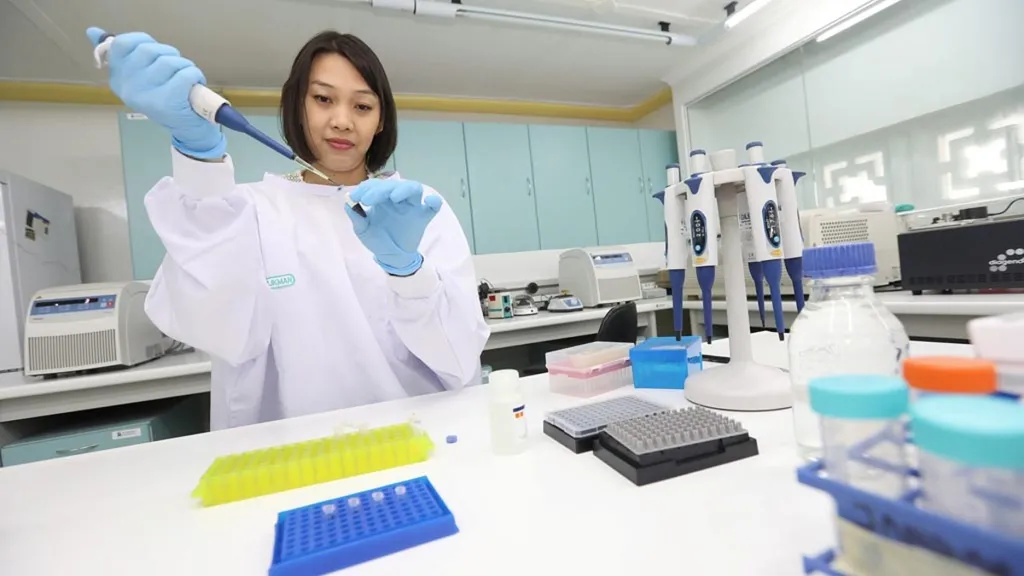
Gender Inequality in Indonesia’s Workforce: A Focus on STEM Fields
Despite advancements in educational access for women in Indonesia, significant disparities continue to exist within the workforce, particularly in strategic fields like science, technology, engineering, and mathematics (STEM). This article delves into the current state of gender inequality in these sectors, supported by statistics and expert insights.
Educational Attainment Among Women
According to a December 2024 report by the Central Statistics Agency (BPS), the enrollment rates of women in higher education now surpass those of men, with women at 76.41% and men at 72.92%. Such educational gains, however, do not translate evenly into professional opportunities.
- Only 52.86% of working-age women hold permanent employment, contrasting sharply with 79.85% of men.
- The unemployment rate for college-educated women stands at 18.66%, compared to 8.16% for their male counterparts.
Workplace Representation and Gender Disparities
At educational institutions like IPB University, although female students and faculty members are increasingly present, leadership roles remain predominantly occupied by men. According to Damayanti Buchori, a professor at IPB, the lack of female representation in structural positions illustrates a persistent gender imbalance:
“In our campus, although there are more female lecturers compared to male lecturers, the majority of those holding structural positions are male.”
This disparity is reflective of a broader national trend where women are underrepresented in STEM fields. Damayanti emphasizes that gender inequality continues to be a significant barrier despite women achieving higher educational qualifications.
Global Context and Local Challenges
The challenges faced by women in STEM are not confined to Indonesia. A 2024 UNESCO report reveals that globally, women constitute about 35% of STEM graduates, yet represent only 25% of the STEM workforce. In Indonesia, approximately 35-37% of STEM graduates are women; however, only around 8% of employed women work in STEM sectors.
Mia Sicawati, a lecturer in Gender Studies at the University of Indonesia, attributes these challenges to cultural stereotypes and structural barriers, stating:
“Culturally, there is a stereotype among the community that the STEM field is closely associated with masculine qualities.”
This stereotype discourages many girls from pursuing studies or careers in this area, leading them to explore fields deemed more suitable for women, such as education or nutrition science.
Barriers to Advancement in STEM
Multiple factors contribute to the low representation of women in STEM fields:
- Cultural Bias: Persistent stereotypes around gender roles affect young women’s ambitions and choices.
- Lack of Role Models: The absence of female mentors in leadership positions makes it difficult for aspirants to envision a career in STEM.
- Dual Burden: Women often bear the dual responsibility of professional commitments and domestic duties, which can hinder their career progression.
As emphasized by Damayanti, the issue at hand is not one of capability but rather of access to opportunities. She observes:
“The minimal representation of women in STEM is primarily an issue of access and opportunities that have not yet been equitable.”
Call to Action for Gender Equality
In February 2024, UNESCO initiated a “Call to Action” aimed at bridging the gender gap in science. This initiative encourages collaborative efforts to eliminate biases in STEM by enhancing the visibility of women as role models and promoting educational pathways specific to women’s success.
For significant progress to occur, inclusive policies and a supportive work environment—characterized by diversity and equality—are essential. Only through focused actions can the representation of women in STEM improve and reflect their educational achievements.
The ongoing struggle for gender equality highlights the need for systemic changes within both educational and professional contexts, ensuring that women in Indonesia—and around the globe—have equitable paths to success.
