


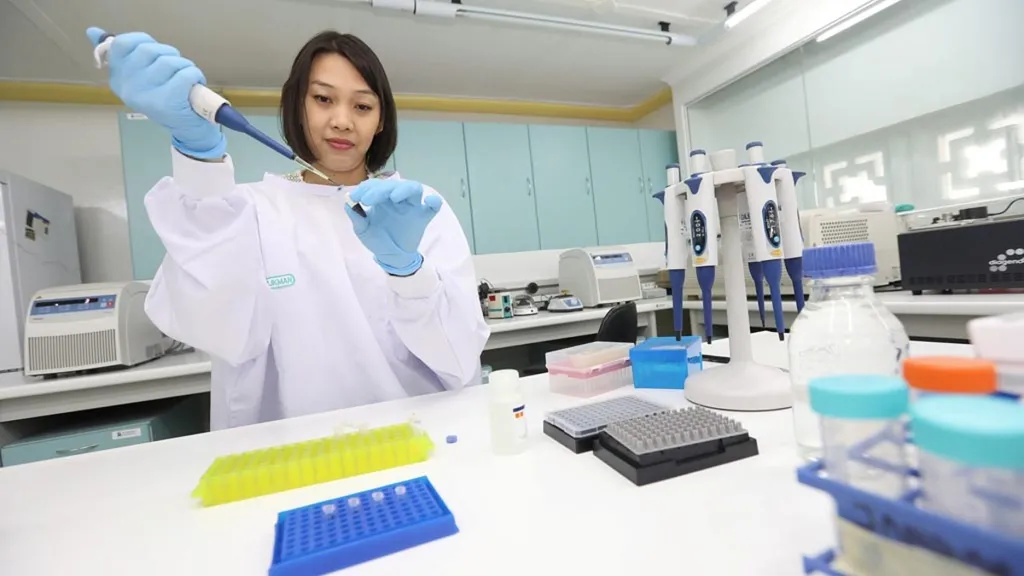
Gender Inequality in Indonesia’s Workforce: A Focus on Women in STEM
Despite notable strides in educational equality, the professional landscape in Indonesia still illustrates pronounced gender disparities. This situation is particularly critical in strategic sectors like science and technology, which remain predominantly male-dominated.
Rising Educational Access for Women
Recent statistics from the Central Statistics Agency (BPS) in the report “Indonesian Women and Men 2024” indicate an increase in female enrollment in higher education, with women representing approximately 76.41% of college students compared to men at 72.92%. This growing access to education underscores a positive trend yet contrasts sharply with workforce participation statistics.
Workforce Participation: A Stark Disparity
While educational attainment among women has improved, their representation in the workforce remains significantly lower. Data shows that merely 52.86% of working-age women are in permanent employment, compared to 79.85% of men. Alarmingly, the unemployment rate among college-educated women stands at 18.66%, nearly double that of their male counterparts at 8.16%.
Challenges in STEM Fields
Women still face systemic barriers, particularly in the fields of Science, Technology, Engineering, and Mathematics (STEM). According to Damayanti Buchori, a professor at IPB University, “In our campus, although there are more female lecturers compared to male lecturers, the majority of those holding structural positions are male.” This trend is reflected in the lack of female leadership; there has never been a female rector at her institution since its establishment.
Global and Local Perspectives on Gender Inequality in STEM
The underrepresentation of women in STEM fields is a global challenge. UNESCO’s “Gender Report: Technology on Her Terms” notes that only 25% of scientific roles globally are held by women, with merely 20% in technology positions. Indonesian counterparts align closely with these figures, with roughly 35-37% of STEM graduates being women. However, only about 8% are employed in STEM industries, highlighting a persistent gap between education and employment opportunities.
Underlying Factors Contributing to Inequality
Mia Sicawati, a gender studies lecturer at the University of Indonesia, identifies both cultural and structural obstacles contributing to this gender gap. Cultural stereotypes often associate STEM with masculine traits, deterring girls from pursuing these fields. Moreover, parent expectations frequently restrict girls to “safer” educational paths, such as teaching, limiting their potential in other areas.
Additionally, a lack of female role models in STEM leadership can complicate women’s pathways into these careers. Women often encounter biases from both men and sometimes even from other women in authority.
Workplace Challenges and Dual Burdens
The systemic barriers extend into the workplace, where women allege that biases influence hiring, promotions, and funding for projects. “Currently, there may not be any explicit regulations that hinder women from pursuing careers in any field, including STEM. However, in practice, biases often arise,” says Mia.
Women also grapple with dual burdens of professional and domestic responsibilities, facing inadequate maternity support and inflexible work schedules. Damayanti highlights the internal conflict many experience: “As a woman, I always feel guilty when spending time in the laboratory,” she shares. “I have children; I should be able to return home earlier.”
Call to Action for Gender Equality
To combat these inequalities, UNESCO launched the “Call to Action” initiative in February 2024, aimed at promoting gender equality in science. This initiative advocates for collaborative measures to dismantle stereotypes while highlighting women’s contributions as role models and fostering an inclusive work environment.
By implementing innovative educational strategies and policies that prioritize diversity and equality, we can pave the way for future generations of women in STEM, ultimately bridging this gender gap.
