


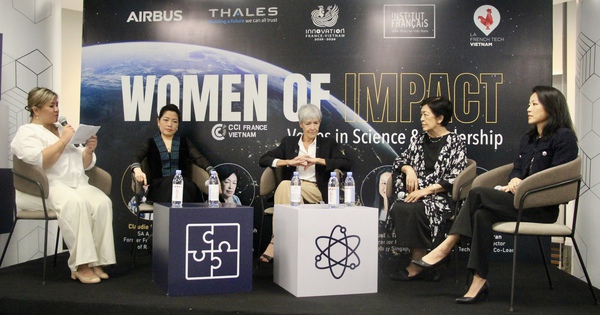
Women of Impact: Insights from France’s First Female Astronaut
The discussion focused on women’s roles in science at a panel moderated by Ubisoft’s Diep Tran on September 25, 2025, in Ho Chi Minh City.
The Event: A Platform for Change
The panel titled ‘Women of Impact – Voices in Science and Leadership’ was co-organized by the French Institute in Vietnam and the French Chamber of Commerce and Industry. It followed two earlier events held in Hanoi, featuring notable speakers from various backgrounds.
Claudie Haigneré: A Pioneer
Claudie Haigneré, recognized as the first female astronaut from France, highlighted her background as a rheumatologist and researcher. With space missions in 1996 and 2001, she has championed international cooperation in space exploration and promotes engagement in STEM fields, particularly among young women.
Advocacy for Change in Women’s Participation
During the discussion, Haigneré pointed out a stagnation in women’s representation within high-tech sectors, stating:
“Thirty years ago, in aeronautics, the high-tech industry, and related fields, women made up less than 20 percent. Now it is around 25 or 26 percent. It’s a growing number, but for 10 years now, we are in a plateau.”
She advocated for early action to inspire young women, emphasizing the importance of role models and mentorship in reshaping perceptions of science and technology. Haigneré noted:
“Changing the narrative, doing more collaborative projects with diversity and embodying this in reality and science too.”
Leadership Qualities: The CHARME Principle
Haigneré introduced the CHARME acronym—representing Conviction, Humility, Assertiveness, Responsibility, Motivation, and Equity—explaining its relevance to successful leadership among women. Hoang Tri Mai, an executive with Airbus, shared her journey toward assertiveness, noting cultural expectations in Vietnam that influence women’s professional behaviors.
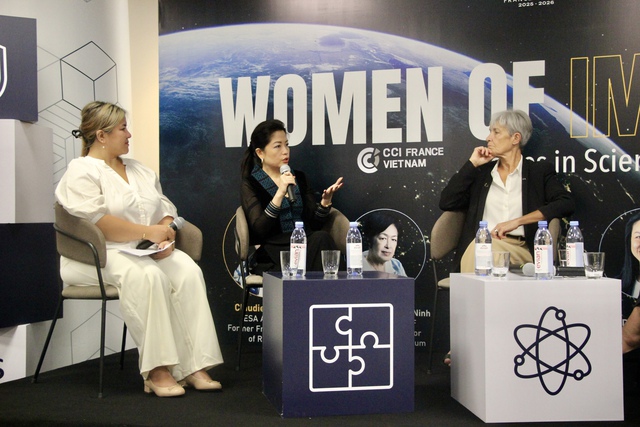
Navigating Identity in a Globalized World
Ton Nu Thi Ninh, former ambassador of Vietnam to the EU, emphasized the importance of understanding one’s identity. She underscored the dual identity challenge faced by Vietnamese women, indicating that personal, cultural, and national elements must intertwine. Ninh articulated the need for women to recognize themselves within both local and global contexts:
“In this globalized world, we still want to connect to a home, not just a house.”
A Call to Action
The discussions wrapped up with a powerful reminder of the potential within Vietnamese women and the urgency for supportive structures that enable their growth in science and technology. Ninh stated:
“If provided the right conditions, I believe they can rise.”
In conclusion, the event painted a hopeful picture for the future of women in STEM, reiterating the importance of identity, mentorship, and active encouragement to foster growth and participation.
