


Empowering Women in Quantum Science & Technology
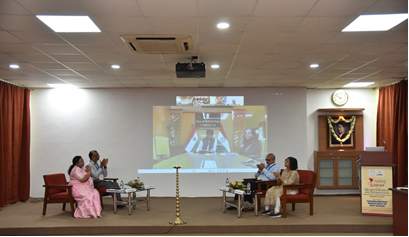
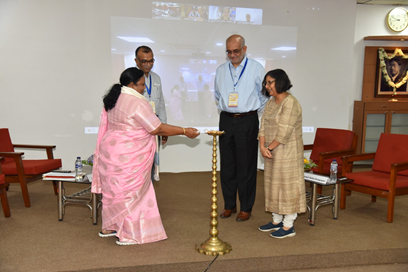
The three-day international conference titled “Women in Quantum Science & Technology” commenced on July 17, 2024, at the S N Bose Centre for Basic Sciences in Kolkata. This event is part of a yearlong celebration honoring Bose Einstein Statistics.
Inauguration and Keynote Address
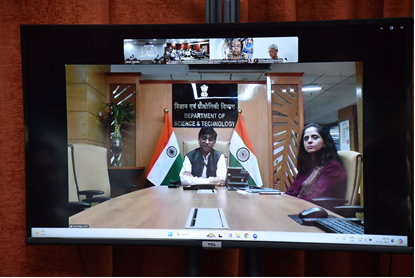
Professor Abhay Karandikar, Secretary of the Department of Science and Technology (DST), delivered the keynote address via an online platform. He emphasized the importance of recognizing women’s contributions in the evolving landscape of quantum science.
“As we usher in the 2nd quantum revolution and accelerate in the journey of our National Quantum Mission (NQM), it is time to recognize and honor the contribution of women in the field,” stated Professor Karandikar.
He expressed pride in the significant role women play in India’s quantum community, highlighting their potential to position the country as a global leader in this domain.
Historical Context of Quantum Mechanics
The conference celebrated the centenary of S.N. Bose’s pivotal work in quantum mechanics, which began in 1924. Bose’s contributions, alongside those of Planck, Einstein, and Bohr, laid the foundation for modern quantum theory, earning him the honor of having a class of fundamental particles named after him—bosons.
Highlights from the Conference
The S N Bose National Centre for Basic Sciences, established in 1986 under the DST, is celebrating Bose’s monumental contributions throughout 2024 by hosting three international conferences and numerous outreach programs, with the “Women in Quantum Science & Technology” conference being a significant highlight.
Director Prof. Tanusri Saha Dasgupta praised trailblazing women scientists such as Dr. Purnima Sinha, the first woman to earn a PhD in Physics from Calcutta University, and Dr. Ashima Chatterjee, who has made foundational contributions to Chemistry, both under the mentorship of S.N. Bose. Prof. Saha Dasgupta noted Bose’s egalitarian approach to science, treating both men and women equally.
Dr. A Dhanalakshmi, Jt. Secretary of DST, remarked that women represent merely 20% of the workforce in Science and Technology, underscoring the need for a supportive environment for their growth.
Scientific Presentations and Discussions
The following day featured presentations from various women scientists from India and around the globe, showcasing their groundbreaking research in quantum science while sharing their personal journeys in academia.
Notable speeches included insights from Dr. Ekta Kapoor, Head of the FFT Division at DST, and Dr. Vandana Singh, Head of WISE-KIRAN Division, who addressed the objectives of the National Quantum Mission and initiatives under the WISE-KIRAN program, respectively.
Addressing Challenges and Cultivating Change
The conference provided a platform for female scientists to discuss the societal and professional challenges they have encountered throughout their careers. Many shared their strategies for overcoming biases and successfully balancing work-life demands.
Despite these challenges, the dialogue highlighted a positive shift, with innovative approaches emerging to foster inclusiveness within the scientific community. Attendees discussed necessary policy changes and attitudinal shifts to enhance the contributions of talented women in the fields of science and technology.
Conclusion
The “Women in Quantum Science & Technology” conference exemplifies a commitment to empowering women in this critical field, ensuring their invaluable contributions are recognized and celebrated. As the National Quantum Mission progresses, fostering an inclusive environment in scientific research will be essential for India’s advancement on the global stage.
