


WiN Ghana: Empowering Women in Nuclear Science for Socio-Economic Progress
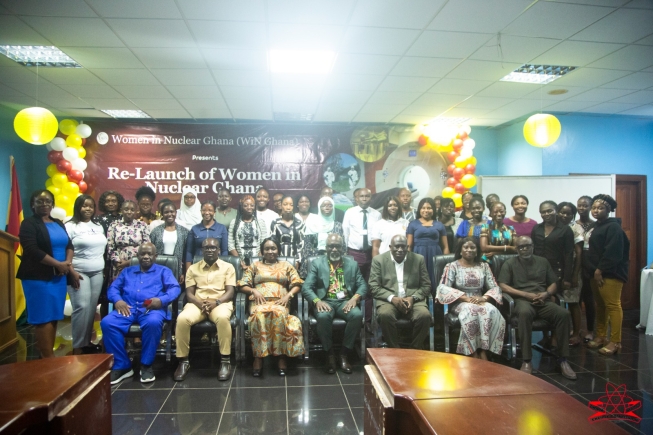
The Women in Nuclear (WiN) Ghana chapter has been revitalized in Accra, signaling a renewed commitment to enhance the role of women in nuclear science as a vital driver for socio-economic growth in the nation. The re-launch event, which took place recently, was themed around the importance of women’s contributions to nuclear science and its implications for Ghana’s development.
Challenges and Strategic Re-launch
Originally established in 2020 amidst the COVID-19 pandemic with a modest membership of 50 and six executives, WiN Ghana faced numerous hurdles during its initial phase. However, the recent re-launch positions the organization to undertake impactful initiatives.
Significance of Women in Nuclear Science
Madam Suweibatu Adams, Chief Director of the Ministry of Environment, Science, and Technology, emphasized that the re-establishment of WiN Ghana is crucial for progressive national development. She remarked that while nuclear science offers significant benefits in fields such as energy, healthcare, and agriculture, systemic barriers—including gender bias—have limited women’s participation.
Currently, among the 250 women employed by the Ghana Atomic Energy Commission (GAEC), less than 25% hold technical roles, and an even smaller percentage attain leadership positions. This disparity persists despite the Graduate School of Nuclear and Allied Sciences producing approximately 150 female graduates at the MPhil level and seven at the PhD level since 2006.
Calls for Action
Madam Adams called for comprehensive STEM education programs targeting girls in secondary schools, equitable recruitment practices devoid of gender bias, and promotion processes that are fair. She also underscored the need for mentorship opportunities, leadership development programs, and workplace policies that support work-life balance, such as flexible working hours and childcare provisions.
Additionally, she pointed to the Ghana Affirmative Action Gender Bill (2024), which aims for 30% female representation in leadership roles by 2030, as a pivotal element for fostering change along with the Science, Technology and Innovation Policy.
Future Directions
Prof. Samuel Boakye Dampare, Director-General of GAEC, described the re-launch as a pivotal moment for revitalization rather than merely a repetition of previous efforts. He announced the forthcoming appointment of Prof. Mary Adu-Poku to spearhead mentorship initiatives aimed at alleviating imposter syndrome among women in the field.
“It is imperative that women participate not just in laboratories but also at key decision-making levels,” he advised, advocating for building intergenerational networks, promoting nuclear science literacy, and forming partnerships with WiN Global and African chapters.
Prof. Dampare also celebrated the achievements of pioneering women in the sector, including Prof. Aba Bentil Andam and Prof. Victoria Appiah, encouraging younger female professionals to engage proactively in their careers without waiting for the perfect circumstances.
Leadership and Optimism
In her closing remarks, Prof. Mary Adu-Poku, President of WiN Ghana and a lead organizer of the re-launch event, expressed her optimism that this revitalization will propel forward efforts aimed at advancing women’s empowerment in support of Ghana’s socio-economic development.
