


Grace Wood
Yorkshire, Leeds
Grace Wood/BBC
The Rise of Female Apprentices in Traditional Trades
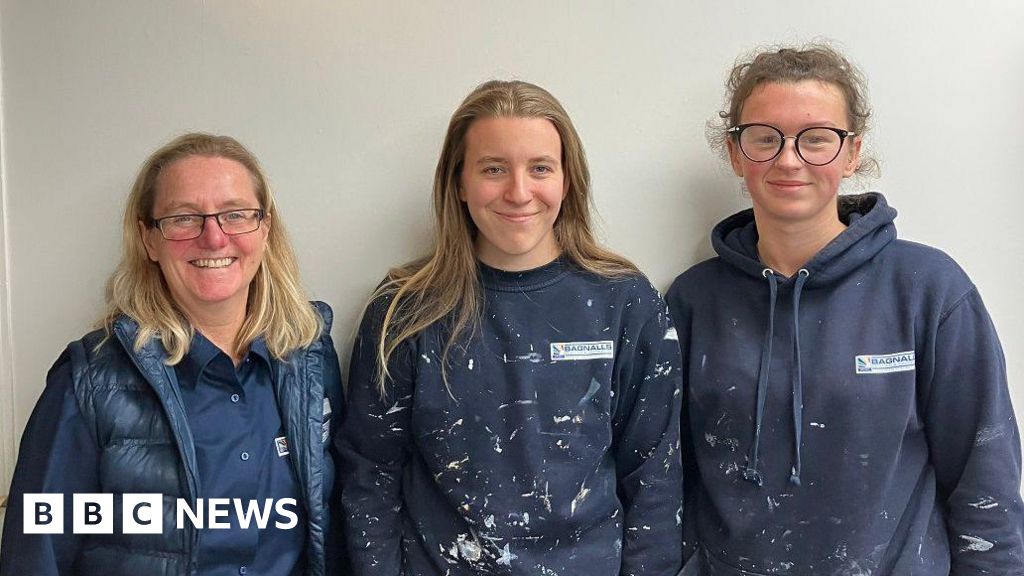
In a significant shift within the traditionally male-dominated painting and decorating industry, Bagnalls, an industrial painting and decorating firm based in Bradford, has seen an impressive increase in female apprentices at its Leeds branch. Currently, about one-third of the apprentices at this office are women, a stark contrast to the national figure in the industry, where only 4% of staff are female.
Profiles of Aspirational Apprentices
Faith Loynes, 20, is now in her second year of apprenticeship, joined by first-year apprentice Antonia Fieldhouse. Together, they are part of a vibrant workforce that includes 10 female apprentices out of a total of 21.
Faith explains her choice, stating, “I chose this course because it allows me to gain a qualification while also getting paid. I’m not getting student debt, and I always knew I wanted to do something more in manual labor instead of just sitting at a desk.” Her journey reflects a desire for active engagement, having found traditional coursework unfulfilling.
Antonia, also motivated by a practical focus, reveals her initial uncertainty. After enrolling in a multi-skills course at college, she found her passion for painting. “When you see the change of the job—when it goes from being worn down to leaving it all new, it’s just nice,” she expresses, emphasizing the satisfaction derived from transforming workspaces.

Bagnalls
A Role Model in the Industry
Branch manager Jane Potter, who has dedicated 34 years to Bagnalls, stands as a source of inspiration for her apprentices. Acknowledged as one of the most influential women in construction by the Construction Industry Training Board (CITB), Jane recalls her own challenges entering the trade as the only female in her apprenticeship cohort. She faced skepticism but turned it into motivation, stating, “I had a lot of the guys saying: ‘because you’re a girl you’re winning competitions and you can’t do this, you can’t do that.'” Her determination led her to achieve significant milestones, often proving her capabilities despite facing gender bias.
The Need for Diversity in the Industry
Jane emphasizes the importance of having women in the sector beyond fulfilling diversity quotas. “For changing rooms or toilets, we’ll have a female and a male painter decorator down there so you can go into the right areas,” she explains, highlighting practical benefits in operational efficiency. Furthermore, hiring female employees helps in creating comfortable environments in sensitive locations, such as nursing homes, where a female presence can facilitate better interaction.
Beyond the practical considerations, Jane believes women bring unique strengths to painting, often exhibiting a finer attention to detail. “When we’ve employed females, it seems they strive in the painting side of things,” she states, noting that women often excel in artistic and intricate tasks.
Challenges and Opportunities Ahead
Despite the progress, Jane acknowledges barriers remain in attracting more young women to the sector. The current distribution of female apprentices at Bagnalls has improved significantly, yet efforts continue to encourage more participation from schools. “The plan is to keep increasing that and attracting more females into the industry,” she asserts, highlighting outreach to younger generations to raise awareness about career opportunities in manual trades.
Antonia concurs, noting that some peers resort to other professions for potentially higher pay, despite the fulfilling nature of painting and decorating. “It does look quite daunting from the outside…but once I actually started, I realized it’s not actually like that,” she shares, reflecting a sentiment that resonates with many aspiring female tradespeople.
The future of the painting and decorating trade in Yorkshire appears promising, as more women like Faith and Antonia step forward to reshape a traditionally male-dominated landscape.
