


Pioneering Women in Chinese Science and Technology
Introduction to Wang Haoze
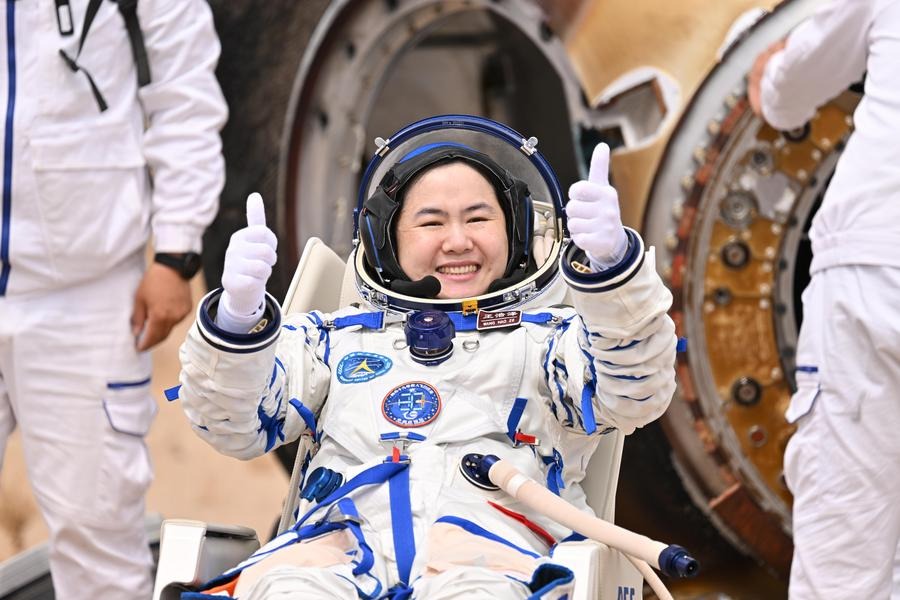
Wang Haoze made history as the third Chinese woman to participate in a crewed space mission. Her journey has not been without challenges, involving rigorous training that includes survival drills in extreme conditions and complex psychological assessments. Describing her training experiences, Wang remarked that the sea spray encountered during maritime exercises felt “like cutting my ears with knives.”
Her motivation stems from a desire to elevate the role of women in science and contribute significantly to Chinese scientific advancements. Upon her return from a 183-day orbit during the Shenzhou XIX mission, she expressed her feelings poetically, stating, “The universe is filled with stars, each one a tiny point, like the flames in my heart.”
Impact on Science and Technology
Having earned a master’s degree, Wang joined the aerospace field a decade ago, focusing on rocket engine research before being selected as the only woman in China’s third group of astronauts. She stands as a role model among approximately 40 million women in STEM in China, who hold nearly half of the country’s scientific and technological positions.
Leading Figures in Various Fields
Innovations in Rail Transport by Liang Jianying
Liang Jianying, a chief scientist at CRRC, the largest rail transit supplier globally, has played a crucial role in advancing China’s rail technology. Under her leadership, high-speed trains have reached remarkable speeds, including:
- A 600 km/h high-speed maglev system
- CRH380A, which achieved a test speed of 486.1 km/h
- Fuxing trains, operating commercially at 350 km/h
Liang emphasizes the importance of aiming for global excellence, particularly with strong governmental support.
Advancements in Cryptography by Wang Xiaoyun
Wang Xiaoyun, a prominent figure in cryptography, was recognized as one of the five global laureates at the 2025 L’Oréal-UNESCO For Women in Science International Awards. Her groundbreaking work on hash functions led to the influential breakdown of major algorithms, MD5 and SHA-1, in the early 2000s. Wang continues to lead her team towards post-quantum cryptography, enhancing future digital security.
Healthcare Contributions by Zhang Wen
Zhang Wen, the deputy director of rheumatology and immunology at Peking Union Medical College Hospital, has dedicated over a decade to research on IgG4-related disease. She initiated the creation of China’s first expert consensus and contributed to international treatment guidelines, demonstrating the integration of Chinese clinical experiences into global practices. Zhang noted, “We must not only manage individual trees but also contribute to the entire forest.”
Conclusion
The contributions made by women like Wang Haoze, Liang Jianying, Wang Xiaoyun, and Zhang Wen signify a transformative movement in Chinese science and technology. Their achievements not only highlight individual excellence but also inspire future generations of women to pursue careers in these critical fields.
