


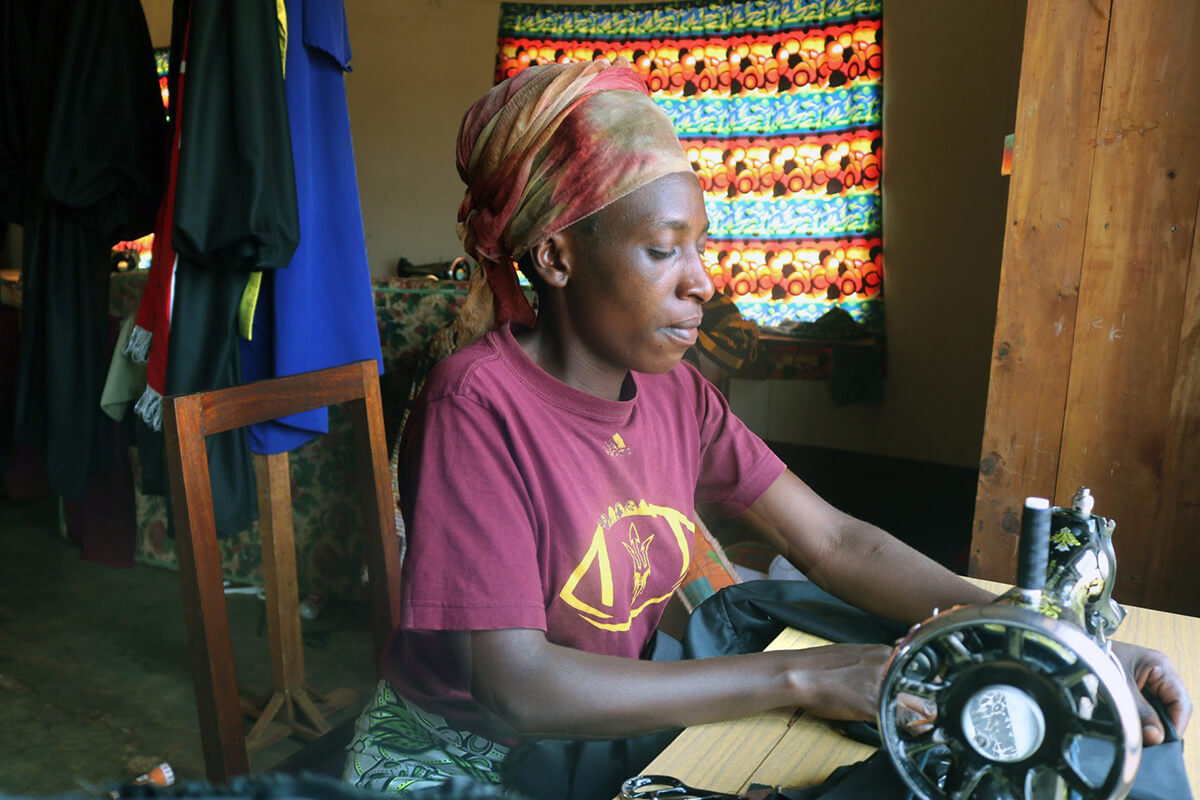
In Burundi, women within the United Methodist Church are increasingly taking charge of their financial futures through community-based tailoring projects and cooperative ventures. These initiatives not only empower women but also contribute significantly to local church funding and family support.
At the Nyabugogo United Methodist Church, a three-month tailoring course has become a beacon of hope for community members, irrespective of their religious affiliations. Pascaline Nijimbere, the president of the Burundi Conference’s women’s group, notes that the original focus on training women to create clergy attire and school uniforms has expanded to include men and individuals from other denominations. “We realized there was a need to include men and also enroll students who are not United Methodists,” said Nijimbere.
The skills acquired through this training have enabled participants to establish their own tailoring businesses, lifting their families out of poverty and allowing them to contribute to their church’s programs.
The response to these training efforts has been overwhelmingly positive, with various districts within the conference establishing their own centers for tailoring education. Kessie Bucumi, the Kayero District women’s leader, shared that her group actively engages in both tailoring and agriculture, raising crops such as maize, wheat, and sunflowers, along with livestock. “With nearly 2,000 members, our projects help us contribute to church finances while also improving our living conditions,” Bucumi remarked.
Women from various districts, including Murehe, are also engaging in agricultural activities such as farming and livestock rearing. Joséphine Nizigiyimana, the president of Murehe District, highlighted that they have constructed a meeting hall to facilitate their initiatives, noting the necessity for additional land as they currently operate from rented spaces. “There is no gender discrimination in the church,” Nizigiyimana explained, emphasizing the inclusive nature of their practices. “Women can be liturgists, preachers, or anything they choose, just like our male counterparts.”
The Kinyinya District women, comprising over 3,400 members, are focusing on both farming and the establishment of a tailoring school. District president Odette Nkurunziza pointed out the need for sewing machines to fully develop their program, which will aid in bolstering local ministries through generated income.
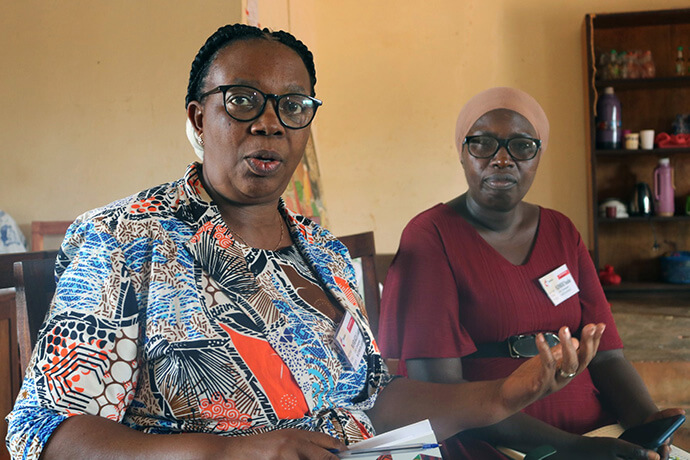
Godelieve Manirakiza, the national coordinator for women in the Burundi Conference, expressed gratitude for the church leadership, which played a pivotal role in revitalizing the women’s center. She noted that the unity among women in their efforts is crucial to their collective empowerment: “We plan together, implement together, and support each other.”
Further enhancing their financial capacity is the Abundant Life Cooperative, formed by the women to pool resources for income-generating activities. Currently, the cooperative has accumulated approximately BIF 12 million (around $4,000 USD), which will allow members to secure loans for their projects. This initiative has been strongly supported by Bishop Emmanuel Sinzohagera, who provided sewing machines and encouraged the formation of the cooperative.
Bishop Sinzohagera underscored the importance of collective efforts, highlighting how collaboration fosters unity and strengthens communities. He emphasized the need for women and youth, who represent a substantial portion of the church membership, to develop a strong work ethic independent of donations.
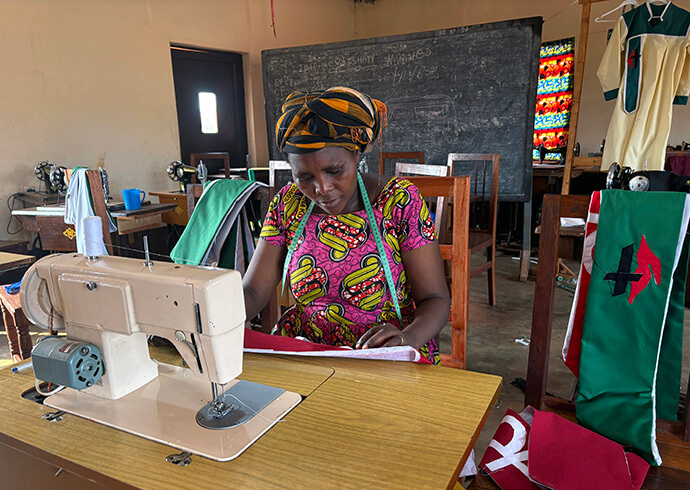
This collective effort showcases how women in the Burundi Conference are not only strengthening their personal and community livelihoods but are also paving the way toward greater church involvement and leadership.
