


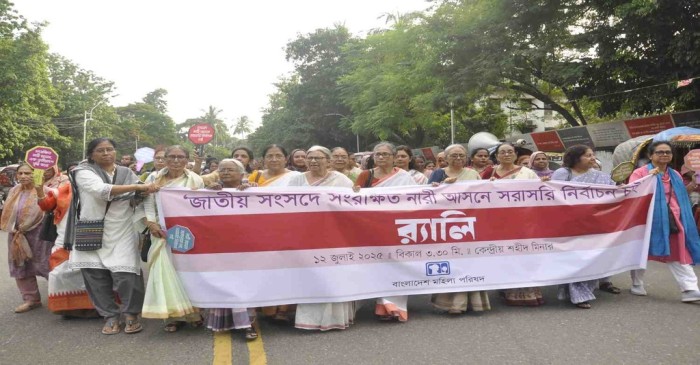
Activists Demand Direct Elections to Women’s Reserved Seats in Bangladesh
On Saturday, a rally organized by Bangladesh Mahila Parishad at Central Shaheed Minar highlighted significant demands from women’s rights activists for direct elections to the reserved seats in the Jatiya Sangsad. This call seeks to promote meaningful representation and to dismantle a nomination system that has historically marginalized women’s leadership roles.
Historical Context and Demands
Fauzia Moslem, the president of Bangladesh Mahila Parishad, emphasized that the fight for political empowerment of women has been ongoing since 1972. “We are in search of our own identity. The time is now to ensure women’s participation in decision-making,” she stated, highlighting the societal support behind the women’s movement.
Fauzia advocated for a one-third representation of women in Parliament through direct elections, asserting, “Democracy cannot move forward by leaving anyone behind.” She further urged political parties to take the demands of the women’s movement seriously and to respect their determination.
Support from Activist Leaders
Maleka Banu, the general secretary of Bangladesh Mahila Parishad, reiterated the push for direct electoral participation. “Despite many women entering politics, they are often bound by party lines,” she conveyed, adding that direct electoral opportunities are crucial for women’s true representation in Parliament.
Highlighting the urgent need for increased representation, Rabeya Khatun Shanti, secretary of the platform, pointed out that, “The capabilities of today’s women in decision-making are fruits of the women’s movement.” She stressed the necessity of focusing on this representation, especially amid ongoing humanitarian crises.
Rina Ahmed, head of the Training and Research Sub-Council, raised concerns about increasing violence against women, noting the lack of action from many female lawmakers. “I urge the Women’s Commission to advocate for direct elections to reserved seats,” she called.
Grassroots Mobilization and Future Steps
Several activists, including Rehana Yunus, emphasized the slow progress in women’s political participation over the last 55 years. Yunus noted, “It is not enough to have women elected; they must be given the opportunity to work and lead through direct elections.”
Anwara Begum called for grassroots mobilization to raise awareness about the importance of women’s rights in politics. “Political agendas for women’s welfare cannot be implemented without political empowerment of women,” she stated.
Shahida Parvin Shikha, general secretary of Nari Shramik Kendra, highlighted that the movement is not against men but aimed at strengthening democracy itself. “Democracy is incomplete without women’s political empowerment. We demand direct election, not nomination, for reserved seats,” she concluded.
Conclusion
The rally attracted representatives from various organizations advocating for educational and labor rights for women. The clear consensus among attendees was that meaningful change is needed to ensure that women are not just present but active participants in the political arena.
