


Women’s Advocacy in Conservative Religious Contexts
The landscape of women’s advocacy within religious spheres has evolved, notably during the administration of former President Donald Trump. This period has seen challenges to gender equality, such as the rollback of various nondiscrimination policies and the removal of prominent women from military roles. However, women from the conservative realms of the Catholic Church and evangelical communities are actively engaging in social and political discourses, often viewing traditional gender barriers as inconsequential.
Mobilization Among Conservative Christian Women
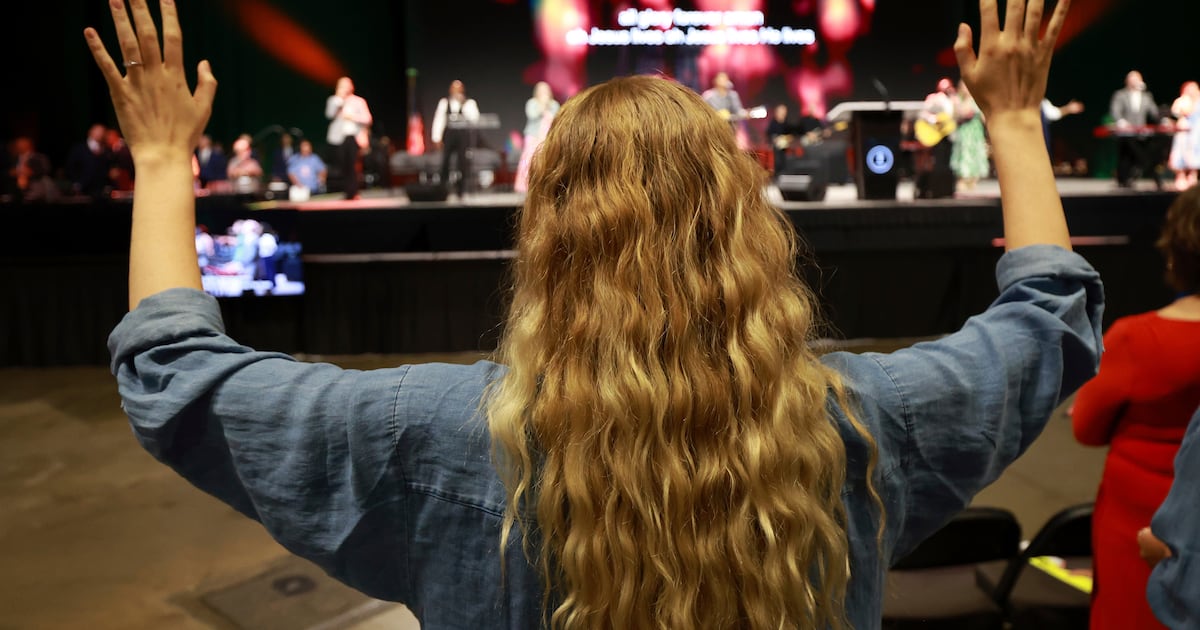
In October 2020, over 6,500 conservative Christian women participated in a significant gathering in a Dallas suburb. This conference, organized by commentator Allie Beth Stuckey, aimed to motivate women to take a more active role in cultural and political discussions. Stuckey’s rallying cry, “Welcome to the fight,” resonated deeply with attendees.
Ahead of this gathering, Stuckey had noted an outpouring of messages from women expressing their dissatisfaction with a passive political stance. “We’re done sitting on the sidelines of politics and culture,” she stated. “We’re not backing down; we’re doubling down,” emphasizing a commitment to countering what she described as the falsehoods of feminism and progressivism while advocating for adherence to biblical principles.
Faithful Voices in Social Justice
In contrast, Catholic women, particularly those in religious orders, are making significant inroads in social justice advocacy. For instance, the Sisters of Charity of New York issued a robust critique after Cardinal Timothy Dolan referred to conservative activist Charlie Kirk as a “modern-day St. Paul.” The sisters highlighted Kirk’s divisive rhetoric, stating, “These prejudicial words do not reflect the qualities of a saint,” and reaffirmed their commitment to supporting marginalized communities.
Sister Norma Pimentel, an influential migrant-rights activist in the U.S.-Mexico border region, exemplifies this commitment. As the head of Catholic Charities of the Rio Grande Valley, she has garnered attention for her compassionate approach to helping migrants. During a recent event, she reflected on her experiences visiting detention centers, stating, “I saw Border Patrol agents looking at us, and they, too, were moved and were crying.” This illustrates a broader movement within the church where women religious are seen as essential representatives of faith in public life.
Women in the Southern Baptist Context
In the Southern Baptist Convention (SBC), which hosts the second-largest Christian denomination in the U.S., traditional views on gender roles often restrict women from pastoral positions. Despite these constraints, women like Susie Hawkins argue that this does not equate to a lack of agency or influence. Hawkins, a Bible teacher and wife of a former SBC leader, commented on the nature of complementarianism, which suggests that men and women have distinct, divinely ordained roles. She emphasized that many women find fulfillment in their roles as wives and mothers within the church framework.
Moreover, Hawkins acknowledged the rising prominence of women such as Erika Kirk, widow of the late Charlie Kirk. Stuckey, reflecting her Southern Baptist roots, has addressed gender roles in her podcasts, affirming her view that while women should not serve as pastors, their voices should still resonate strongly in cultural discussions, stating, “Women are also called to raise a voice.”
Ongoing Advocacy for Women’s Ordination
Despite longstanding restrictions, the push for women’s ordination in the Catholic Church continues unabated, particularly through organizations like the Women’s Ordination Conference, which will celebrate its 50th anniversary soon. Executive Director Kate McElwee expressed concern about the resurgent anti-women sentiments, asserting that her group serves as a “Ministry of Irritation” committed to bold and creative advocacy.
McElwee posited, “As things get more polarized, we’re seeing more people find their courage in this moment,” using the activism of women religious as a notable example of resilience against adversity.
Conclusion
The engagement of women in conservative religious movements illustrates a complex interplay between traditional doctrines and modern advocacy for social justice and gender equality. While barriers remain, the ongoing activism and public presence of women, both within and outside established church structures, signal a notable shift in the landscape of faith and social justice.
