


Empowering Women in STEM Through the MakHer Initiative
Author: Tuan Rahim*
The MakHer Training Program
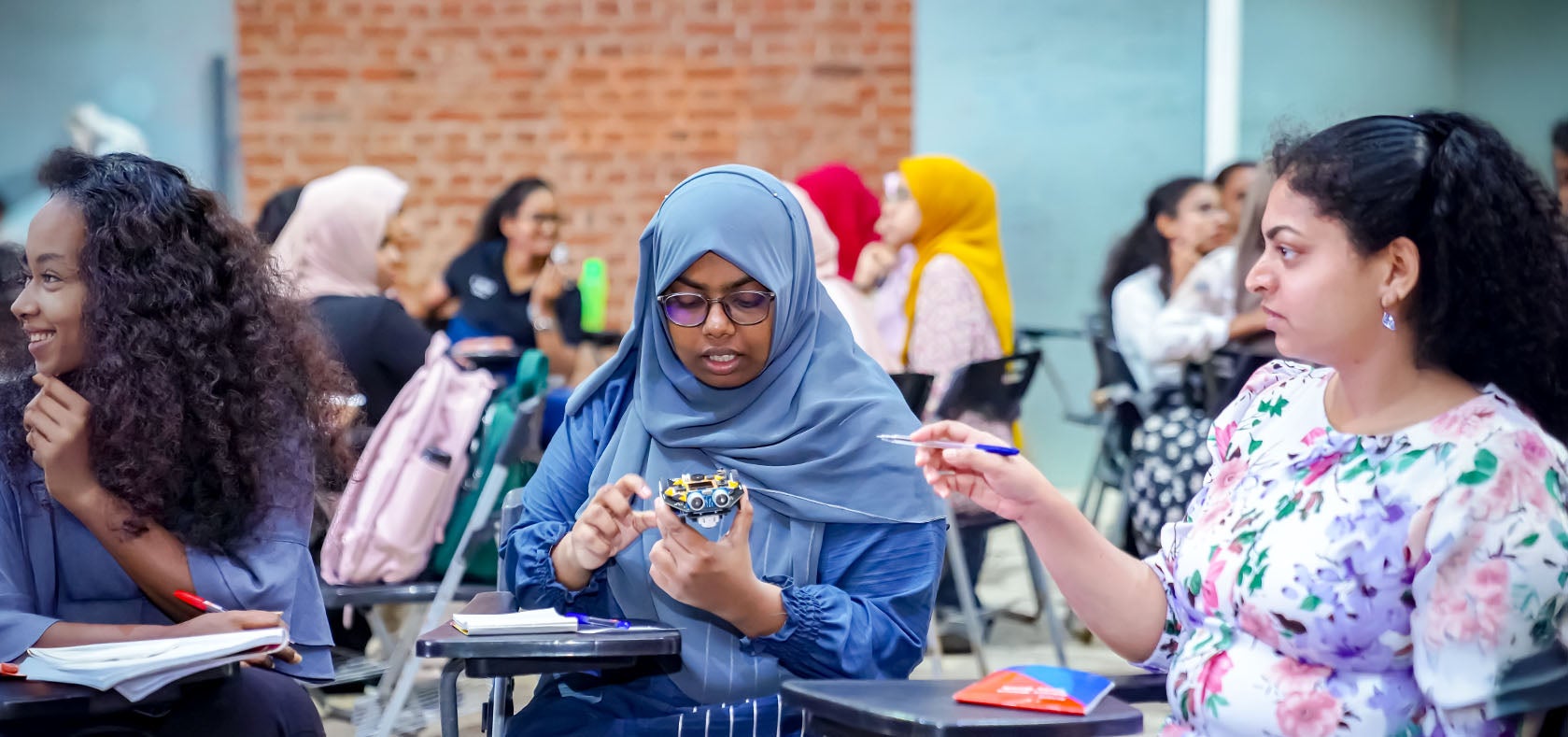
In an effort to bridge the gender gap in STEM fields in Sri Lanka, over 100 women undergraduates participated in the MakHer training program organized by UN Women from August 2024 to May 2025. Funded by the Republic of Korea, this initiative aimed to provide participants with both technical and interpersonal skills crucial for succeeding in science, technology, engineering, and mathematics.
The training, conducted by UN Women project partner The Makers Global, offered hands-on education in emerging fields such as artificial intelligence, entrepreneurship, and user experience (UX) design, complemented by essential leadership and communication skill modules. The program not only boosted technical know-how but also enhanced the participants’ confidence to pursue careers in traditionally male-dominated fields.
Diverse Participation Across Institutions
Women from 29 universities across Sri Lanka engaged in the program, which was designed to accommodate their busy schedules by being offered on weekends, both online and in-person in Colombo. This inclusive approach aimed to foster a supportive ecosystem community where aspiring women technologists could thrive.
Voices of the Participants
Kenuka Karunakaran, a participant from the University of Moratuwa, expressed her ambition to become an entrepreneur: “There are so few women entrepreneurs in our society, especially those from women-headed families. I want to change that.” Her story reflects the program’s goal of encouraging women to pursue leadership roles in business and technology.
Susanya Karunarathna from the University of Peradeniya noted, “Since childhood, I loved IT, engineering, and math. This programme is one of the biggest opportunities I’ve ever had. It made me realize—being a woman doesn’t hold you back in STEM. I want more girls to see that too.”
Similarly, Prarthana Jayathikala, who switched her major from psychology to technology, shared her transformation: “Many girls were scared. They weren’t sure they could get jobs in tech. Now I’m confident. I can help others through what I’ve learned.” In her capstone project, she led a team in developing a GPS-based bus tracker, designed specifically for enhanced safety for women using public transportation.
Amasa Herath, a mechanical engineering student, revealed her initial fears about entering a predominantly male field: “I wasn’t sure about STEM. The boys always seemed ahead.” However, after completing the training, her outlook changed, stating, “Now, I encourage other girls to take the leap. We belong here too.”
