


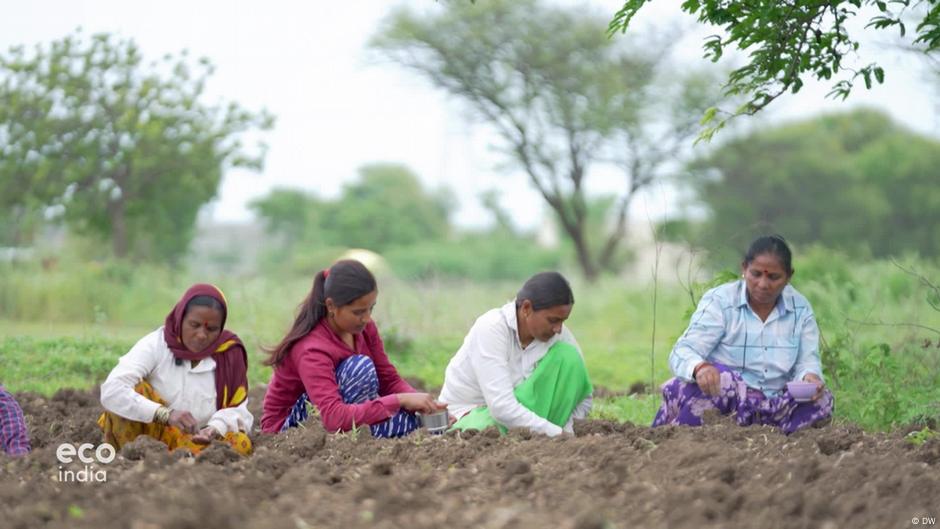
In the challenging environment of the Dharashiv district in Maharashtra, the agricultural landscape is marked by unpredictability. Farmers in this arid region face the dual hurdles of erratic rainfall and changing climatic conditions, making the cultivation of traditional crops like sugar cane and soybeans increasingly difficult. Amidst these adversities, Sangamitra Ankushrao, a 42-year-old farmer from Bamni village, is pioneering a shift in farming practices that aims to counteract these challenges.
Embracing Sustainability
Sangamitra’s journey symbolizes resilience and innovation. Having experienced significant losses attributed to poor seed selection and reliance on chemical fertilizers, she is now reclaiming her farming operations. By utilizing homegrown seeds, implementing drip irrigation systems, and employing polyculture techniques such as the “sari method,” she diversifies her crops, thus reducing vulnerability to potential farming disasters.
Community Empowerment through Training
The transformation in Sangamitra’s farming practices is supported by the grassroots organization Swayam Shikshan Prayog (SSP). This group focuses on empowering women through sustainable agricultural training, incorporating both traditional knowledge and modern farming technologies. For instance, SSP teaches practices such as observing bird nesting patterns to predict rainfall, alongside utilizing contemporary methods like rainwater harvesting and seed drills.
Moreover, SSP is not solely dedicated to agricultural training; it also equips these women with crucial economic skills, fostering a sense of autonomy in a predominantly male-dominated sector. By adopting organic farming techniques and intercropping, Sangamitra has managed not only to withstand adverse climatic conditions but also to prosper.
Advocating for Land Rights
The issue of land ownership poses a significant barrier for many women farmers in the region. With the assistance of SSP, women such as Suvarna Mote have successfully gained rights to land—an accomplishment that holds profound social significance. After becoming widowed, Suvarna took control of her inherited fields, transforming them into thriving, pesticide-free areas that can better withstand climate extremes. Thanks to the organization’s initiatives, over 16,000 women now possess land titles, marking a considerable shift in gender equity within the agricultural framework of the area.
Conclusion
As Sangamitra and her fellow farmers illustrate, resilience in agriculture is achievable through innovation and sustainable practices. The work being done by organizations like Swayam Shikshan Prayog plays a critical role in empowering women, promoting sustainable farming, and contributing to economic stability in the face of climate change.
