


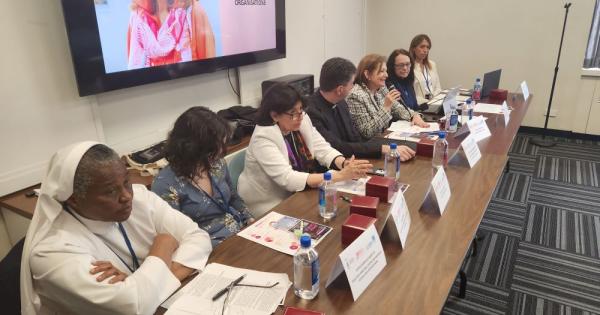
Catholic Sisters: Bridging Local Justice and Global Advocacy
Editor’s note: This is one in a series of stories about Catholic sisters’ advocacy at the United Nations.
The Boomerang Effect of Advocacy
Advocacy is a powerful tool, especially for grassroots organizations like those led by Catholic sisters who work with vulnerable populations, including migrants, women, and children facing economic challenges. These efforts often feel solitary; however, engagement with international organizations like the United Nations can empower them significantly.
“Advocacy at the U.N. is not abstract rhetoric but a concrete tool that enhances local ministry,” said Sr. Ngozi Frances Uti, a member of the Congregation of the Handmaids of the Holy Child Jesus. Her experience illustrates how connecting local initiatives with global platforms can amplify efforts for change.
Local and Global Connections
Through her work at the Centre for Women Studies and Intervention in Nigeria, Uti exemplifies how advocacy creates a feedback loop that benefits local projects. For instance, participation at the U.N. helped draw attention to a 2015 Nigerian law aimed at combating violence against women, which subsequently influenced local government actions and community-led initiatives against practices such as female genital mutilation.
This model of defining local needs within the framework of international agreements empowers advocates. By aligning local bylaws with Nigeria’s obligations under global conventions like CEDAW, local ministries gain necessary leverage for implementing vital reforms.
Highlighting Vulnerabilities
‘[We are] sort of like the watch guards of what’s really going on because the nation’s people sometimes just want to paint a beautiful picture about what’s happening.’
Through direct representation at U.N. forums, sisters voice the concerns of those directly impacted by social issues. For example, Sr. Jean Quinn, who heads UNANIMA, emphasizes the importance of sharing personal testimonies from those experiencing homelessness and indigenous challenges, spotlighting the necessity of grassroots voices in the international dialogue.
Collaborative Approaches to Advocacy
As highlighted by Sr. Mary Jane Caspillo of the Medical Mission Sisters, advocacy work is not just about representation but also about collaboration with those facing crises, such as conflict or climate change. These individuals bring essential insights into effective responses, fostering community-led solutions.
The connections made through international advocacy help to legitimize local initiatives, creating urgency and authority that can drive significant changes. This synergy is particularly evident in ongoing discussions about the Sustainable Development Goals (SDGs), where the urgency of meeting global targets resonates deeply at the community level.
Challenges and Realities on the Ground
Despite the progress reported at high-level discussions, the realities faced by communities often tell a different story. Sr. Ligia Elizabeth Molina Sevilla notes her experiences during a review of Guatemala’s gender equality progress, revealing a stark contrast between governmental claims and ground realities, including entrenched gender norms and resource accessibility issues.
As Sr. Molina emphasizes, vigilance from civil society, including religious groups, is necessary to hold governments accountable to their commitments in line with the SDGs.
Connecting Local Needs with Global Action
Creating synergies between advocacy at the U.N. and local realities is essential but not without its challenges. Sr. Veronica Brand of the Religious of the Sacred Heart of Mary highlights how immediate local needs can overshadow broader advocacy goals. However, she also notes the richness that arises when local networks connect with global dialogues, particularly in environmental advocacy.
The concrete actions taken by sisters on the ground serve as a testament to the efficacy of linking global frameworks with local initiatives. As Uti asserts, the role of Catholic sisters offers both moral authority and a trusted network, enhancing their effectiveness in achieving meaningful change.
