


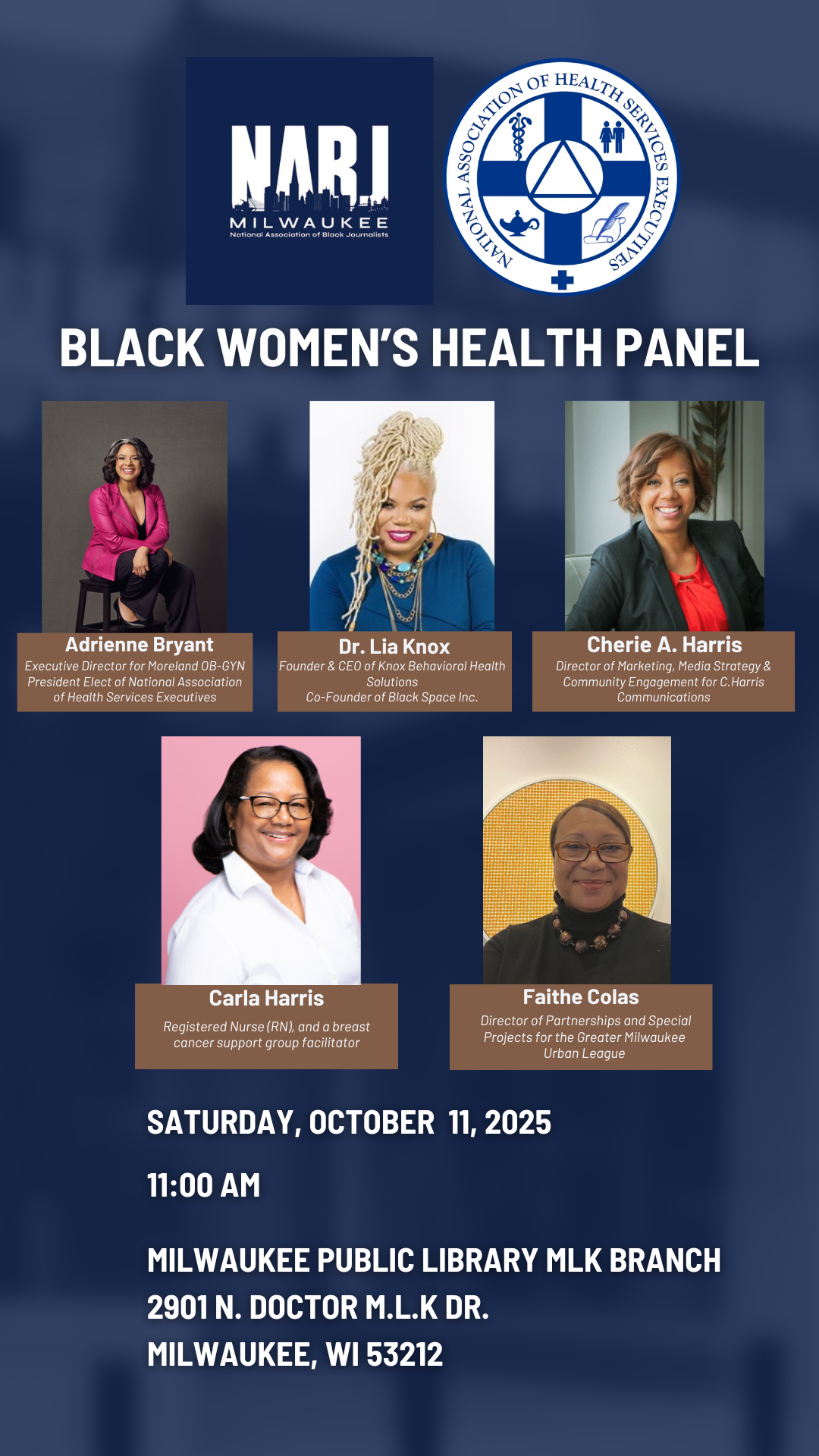
Elevating Health Conversations: Black Women’s Health Panel in Milwaukee
On October 11 at 11 a.m., the National Association of Black Journalists-Milwaukee (NABJ-Milwaukee) and the National Association of Health Services Executives (NAHSE) will collaborate to address pressing health issues faced by Black women. The panel will take place at the newly inaugurated Martin Luther King Library Branch located at 2901 N. Dr. Martin Luther King Jr. Drive.
Key Discussion Topics
Attendees will have the opportunity to engage with experts on various health topics that significantly affect Black women, including:
- Maternal health
- Mental wellness
- Heart disease and hypertension
- Breast cancer screening
- Accessing culturally sensitive medical care
- Navigating chronic conditions
Empowering Community Voices
Panelists will include prominent health experts and leaders from Milwaukee, all committed to discussing the unique challenges that impact Black women’s health and wellness. Among them are:
- Adrienne Bryant: President-elect of NAHSE
- Dr. Lia Knox: Founder and CEO of Knox Behavioral Health Solutions
- Cherie Harris: Director of Marketing, Media Strategy & Community Engagement for C.Harris Communications
- Carla Harris: R.N. and breast cancer support group facilitator
The panel will be moderated by Faithe Colas, director of partnerships and special projects for the Greater Milwaukee Urban League, who will facilitate audience questions and dialogue.
Raising Awareness and Addressing Disparities
This initiative underlines the commitment to address health disparities affecting Black women. Tannette Johnson-Elie, president of NABJ-Milwaukee, states, “This partnership reflects the commitment of two leading organizations serving Black professionals to raise awareness around the critical health concerns of Black women. We invite women of all ages to join the conversation, ask questions, and feel empowered.”
Adrienne Bryant further emphasizes the importance of such discussions: “This event creates a safe space where Black women can hear from experts, connect with one another, and leave armed with the knowledge and resources to take charge of their health and wellness.”
Data-Driven Insights
The urgency of these conversations is underscored by alarming statistics. The Centers for Disease Control and Prevention (CDC) reports that Black women are nearly three times more likely to die from pregnancy-related complications compared to their white counterparts. Additionally, while the incidence of breast cancer is slightly lower among Black women, they face a 40% higher mortality rate due to the disease, according to the American Cancer Society.
“Confronting these disparities requires open dialogue and shared solutions,” adds Bryant. “By shining the spotlight on Black women’s health, we can help women take practical steps towards healthier futures.”
