


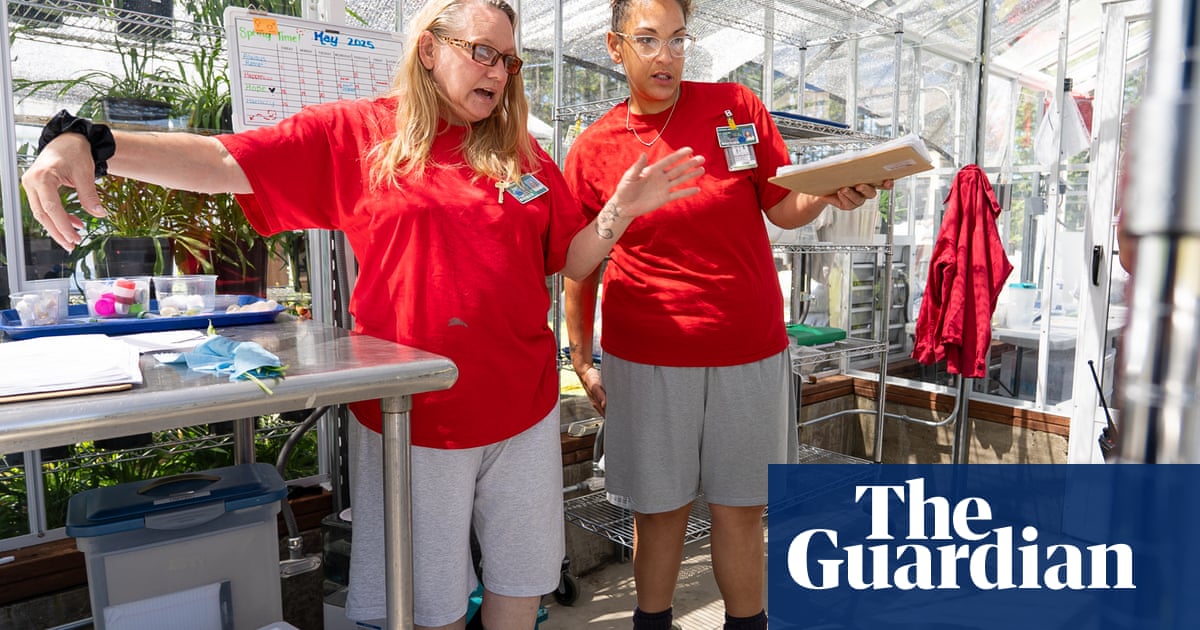
Within the walls of the Mission Creek Correctional Facility, a unique conservation program unfolds, contributing significantly to the restoration of the Taylor’s checkerspot butterfly, a native species dwindling in the Pacific Northwest. Central to this initiative is a dedicated team of women who have taken on the responsibility of nurturing butterfly larvae, specifically utilizing invasive English plantain as their primary food source. Trista Egli, one of the program participants, reflects on her engagement: “The big thing for me is being part of an effort to save an endangered species. It is a big thrill.”
The program involves gathering butterfly eggs, rearing the larvae, and eventually releasing them into the wild, with over 67,000 larvae released last year alone. This hands-on experience not only reaffirms the importance of environmental stewardship but provides the women involved with a sense of pride and accomplishment, as many express their desire to contribute positively to society despite their circumstances.
Participants in the program don red sweaters that signify their status outside the prison’s perimeter, breaking away from their standard khaki uniforms. This visual distinction reflects their commitment to a cause larger than themselves, allowing them to share their experiences with visiting family and taking pride in their ecological contributions.
Jennifer Teitzel, another participant, highlights the discipline that the program fosters: “Every detail about the eggs and larvae has to be collated and recorded. It is our responsibility, and nobody else’s.” This meticulous approach not only enhances their project management skills but also prepares them for future endeavors upon re-entering society.
Despite the transformative effects of the program, participants like Egli confront their pasts daily. Serving a nine-year sentence for a hit-and-run incident resulting from drunken driving, she shares, “I can never go back and undo what happened. But I can try to make sure the rest of life is about making the world a better place.”
Established a decade ago, the program operates through a collaboration between the Washington State Department of Corrections (DOC) and academic institutions, including Evergreen State College. Kelli Bush, co-director of the Sustainability in Prisons Project, underscores the significance of educational support complemented by hands-on experience, stating, “They reconnect with their own brilliance, they reconnect with their own intelligence.” Graduates of the program have been empowered to venture into academic and professional realms they once deemed unattainable.
The Taylor’s checkerspot thrives in open grasslands, which historically flourished due to Indigenous land management practices. However, habitat loss has led to the butterfly being classified as endangered under the U.S. Endangered Species Act since 2013. Currently, the butterfly is confined to just eight populations in Washington, two in Oregon, and one in British Columbia.
Efforts to bolster the Taylor’s checkerspot are particularly important given the challenges posed by land development and military activities on Joint Base Lewis-McChord (JBLM), a crucial habitat that comprises a significant portion of the remaining prairie in Western Washington. Dan Calvert of the Sentinel Landscape Partnership notes the impact of federal protections on military operations, remarking, “The military cannot use half the base for about half the year.”
To mitigate the impact of the butterflies’ endangered status, the Department of Defense has financially supported Mission Creek’s conservation initiatives, forming an intertwining relationship between military operations and ecological restoration efforts.
Looking ahead, the Mission Creek program anticipates a bustling year for butterfly releases, yet faces uncertainties due to impending budget cuts that threaten its continuation. Currently slated to shut down in October, there are plans to transfer operations to a facility in Gig Harbor, but fears linger among participants regarding the program’s future.
Egli, who actively engages in her rehabilitation, envisions a brighter future for herself and her children. With four years of sobriety behind her, she expresses aspirations of pursuing higher education, saying, “At some point, I’d like to go back to college. But I know I have to work hard and get some money before I can do that.” This determination encapsulates the transformative potential of the program, engendering hope and resilience even amidst the challenges of incarceration.
