


Global Disability Summit 2023: Advancing Rights and Inclusion for Persons with Disabilities
Overview of the Summit
Hosted in Berlin, the third Global Disability Summit brought together stakeholders from around the globe to address the complex barriers faced by persons with disabilities, especially women and youth, in accessing essential services. Co-hosted by the Governments of Germany and Jordan, along with the International Disability Alliance (IDA), this summit aimed to drive renewed commitments toward the rights and inclusion of individuals with disabilities.
UNFPA’s Commitment
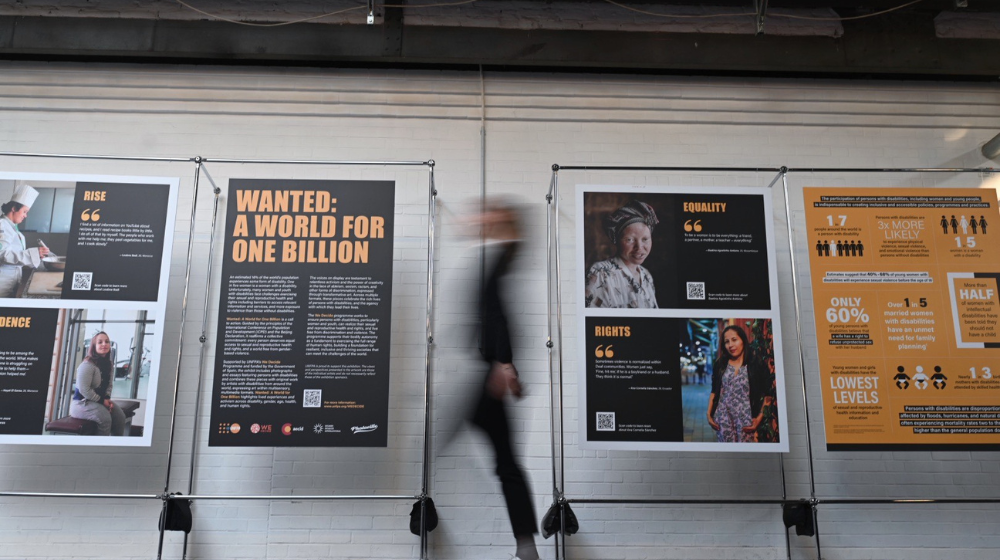
The United Nations Population Fund (UNFPA) showcased its dedication to enhancing the rights and agency of individuals with disabilities through various initiatives, including an art exhibition. This exhibition featured works by prominent artists with disabilities, paired with documentary photography that shared authentic narratives of their lived experiences.
Art as Advocacy
Under the theme “Wanted: A World for One Billion,” the exhibition served as a platform for creative advocacy, emphasizing the crucial need for access, dignity, and empowerment for all. Through the diverse expressions of the featured artists, UNFPA denounced ableism, sexism, racism, and other discriminatory practices, advocating for the inclusion of persons with disabilities in sexual and reproductive health policies, particularly in crisis settings.
Among the featured artists was Jamila, who draws upon her own experiences of disability and loss in her artwork. Shahrzad Darafsheh also contributed, utilizing her art to process her journey through health challenges, including endometriosis and cancer, stating, “This is the project of my journey through a sickness.”
Global Collaborations and Declarations
During the summit, UNFPA endorsed the “Amman-Berlin Declaration on Global Disability Inclusion,” which reinforces international cooperation on disability rights and commits to the implementation of the Convention on the Rights of Persons with Disabilities (CRPD). Additionally, the summit emphasized the significance of prioritizing health equity for persons with disabilities, setting the stage for the next Global Disability Summit in 2025.
The summit also highlighted the importance of empowering women with disabilities in leadership roles, in alignment with the objectives of the Global Forum on the Leadership of Women with Disabilities (GFLWD).
Statements of Support
The Government of Germany reaffirmed its dedication to the inclusion of persons with disabilities. Federal Minister Svenja Schulze remarked, “Inclusion is not just a desirable ideal, it is a fundamental human right.” She emphasized that when individuals with disabilities have equal access to rights and services, society benefits as a whole.
In turn, Spain expressed support for UNFPA’s “We Decide” program, which enhances sexual and reproductive health and rights for women and youth with disabilities. Antón Leis García, Director of the Spanish Agency for International Development Cooperation (AECID), noted Spain’s commitment to further collaboration in achieving inclusion and autonomy for all.
Scaling Up Initiatives
With a renewed global focus on disability rights, UNFPA is expanding its initiatives to empower persons with disabilities to make informed decisions regarding their sexual and reproductive health. The organization calls on global donors for sustainable funding to facilitate transformative changes in the lives of persons with disabilities.
Key Statistics
- Approximately 1.3 billion individuals, or 16% of the global population, live with significant disabilities.
- In developing countries, this figure rises to 20%.
- More than 180 million adolescents aged 10-24 are living with disabilities, with 80% residing in low-income nations.
- Women with disabilities represent nearly 20% of the total female population globally.
