




BBC
A groundbreaking initiative within Northern Ireland’s prison system is making strides in addressing male violence against women and girls. The charity White Ribbon NI has implemented educational workshops across three prisons: Hydebank Wood, Magilligan, and Maghaberry, allowing hundreds of convicted individuals to voluntarily engage with these critical issues.
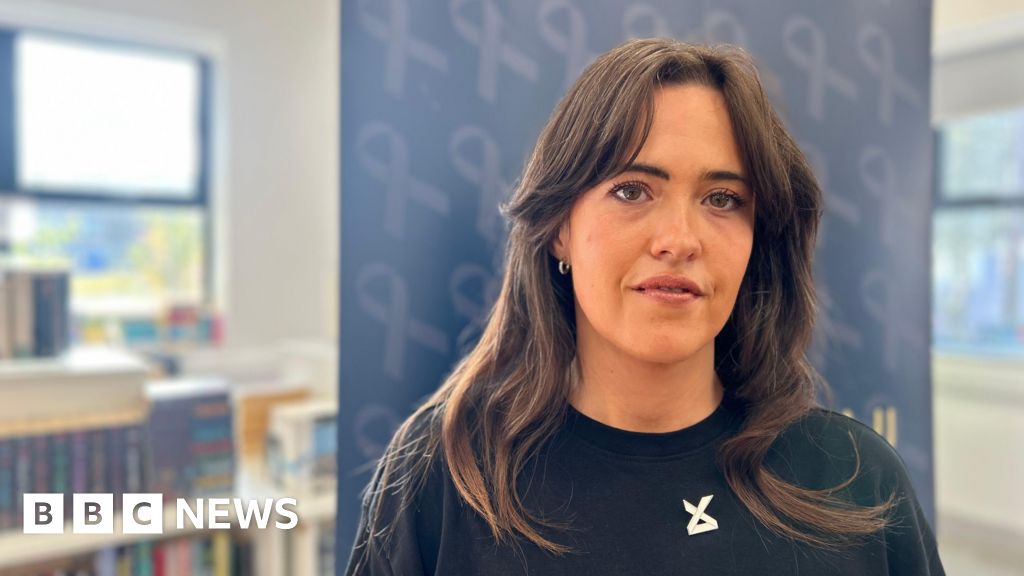
Tahnee McCorry, the organization’s chief executive, views this work as pivotal in her mission to combat violence against women. She underscores the unique nature of this initiative in the context of the UK and Ireland.
McCorry states, “The difference in this is that it’s encouraging certain conversations in rooms where [they] just haven’t been had before.” She recognizes the complexity of the work involved but believes it holds potential for long-term societal change. The program is accessible to anyone, irrespective of their criminal background, as long as participants are willing to engage and reflect critically.
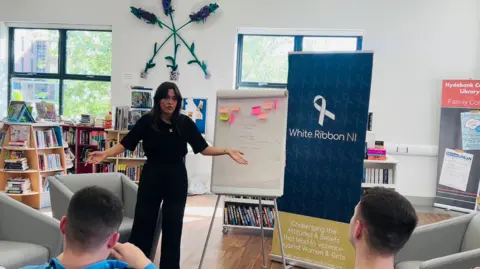
The White Ribbon sessions incorporate various learning methodologies, including case study analyses, strategies for safely intervening in troubling situations, and techniques for handling disclosures from victims.
McCorry highlights that the candid and open atmosphere of these workshops enhances their effectiveness. “This is a no-holds-barred conversation. You can say anything you want, and I want to know what you really think about this issue,” she remarks, expressing her commitment to understanding attendees’ genuine perspectives while sharing her own experiences and knowledge as a woman.
Domestic Abuse Prosecutions in Northern Ireland
Recent statistics indicate that over 2,500 prosecutions occurred under the Domestic Abuse and Civil Proceedings Act 2021 in the past year, with more than 90% of those convicted being male. As of 2023/2024, there were 1,877 individuals incarcerated in Northern Ireland, 1,787 of whom were men, with young males under 39 representing a significant portion. Violent offenses accounted for the largest share of these crimes.
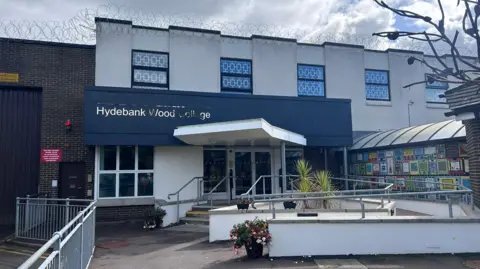
Many young men incarcerated at Hydebank Wood have reportedly grown up in environments where domestic violence was prevalent. McCorry explains, “When I came in here, that wasn’t on my radar.” She recognizes that witnessing violence against a primary caregiver, such as a mother, can significantly alter a young man’s life path. “Unless we break those kinds of cycles, we’re going to keep seeing a lot of the same issues in Northern Ireland,” she cautions.
Changing Perspectives on Violence Against Women
Recent testimonies from individuals participating in the workshops reveal their shifting viewpoints on violence against women and girls. One participant, referred to as John, noted, “I didn’t really think much of it to be honest with you. But the more I did the course, the more I realized how important it is and how much violence against women and girls actually happens in Northern Ireland.” He expressed a desire for safer communities for his daughter, reflecting a growing awareness.
Another participant, referred to as Sean, acknowledged, “It opened up a discussion, you know, something that wouldn’t have been talked about.” He and others have taken insights from the workshops back to their living areas, continuing the conversation beyond the classroom.
A Unique Approach Within Prisons
The unit manager at Hydebank Wood, Cathy Russell, affirms the program’s uniqueness within the prison system. “The boys will have conversations that we would have never had before,” she remarked. The initiative has fostered a new discourse around violence against women, prompting young men to proactively seek involvement.
Addressing the challenge of measuring long-term impacts, McCorry acknowledges that immediate results may be elusive. “It’s a big mountain to climb, but hopefully it’ll happen,” she asserts, emphasizing the importance of breaking the cyclical nature of violence.
