


Empowering Women in Africa Through Mobile Financial Services
The advent of mobile financial services, driven by fintech companies and mobile network operators, has significantly transformed the financial landscape across many African countries. Mobile users can now send and receive funds without the necessity of a traditional bank account, thereby challenging and reshaping financial norms.
According to the World Bank, in Eastern and Southern Africa, only 37% of women hold a bank account, in contrast to 48% of men. This disparity highlights the critical role that mobile money plays in providing financial access, especially for women without the means to open a bank account.
The Impact of Mobile Money on Women’s Financial Inclusion
In regions of Africa where patriarchal systems are prevalent, financial literacy and inclusion have historically favored men. However, the rise of mobile money services has begun to address this imbalance. The technology is particularly advantageous as it is accessible via both smartphones and feature phones, broadening its reach among women.
As reported in the World Bank Global Findex 2025 database, mobile money account ownership among women in low- and middle-income countries surged from 37% in 2011 to an impressive 73% in 2024.
Experts emphasize that mobile financial solutions have empowered women to access funds directly, providing them with a newfound sense of financial independence. Marissa Brendel, a business growth consultant, notes that mobile money platforms have significantly benefited women who previously faced barriers to banking due to various factors such as location, cost, and lack of formal IDs.
“In places like Kenya and Ghana, mobile money services have been transformational. Even in countries with more established banking sectors, like South Africa, platforms such as TymeBank and MTN MoMo are reaching previously excluded women,” Brendel explains.
Mobile Money: A Catalyst for Financial Empowerment
Mobile money applications have unveiled significant benefits for women, enabling them to transition into entrepreneurial roles. Jenniffer Wairimu Waruingi, a communication strategist, asserts that mobile money is not merely a transactional tool but has become a foundational banking service for many women. “It has become the first bank for women long excluded from formal systems,” says Waruingi.
Waruingi further illustrates this point by citing specific services like MTN MoMo in Ghana, which empower market women to run their businesses securely, and Tigo Pesa in Tanzania, enhancing financial accessibility for farmers and traders.
_(1).jpg?width=1280&auto=webp&quality=80&disable=upscale)
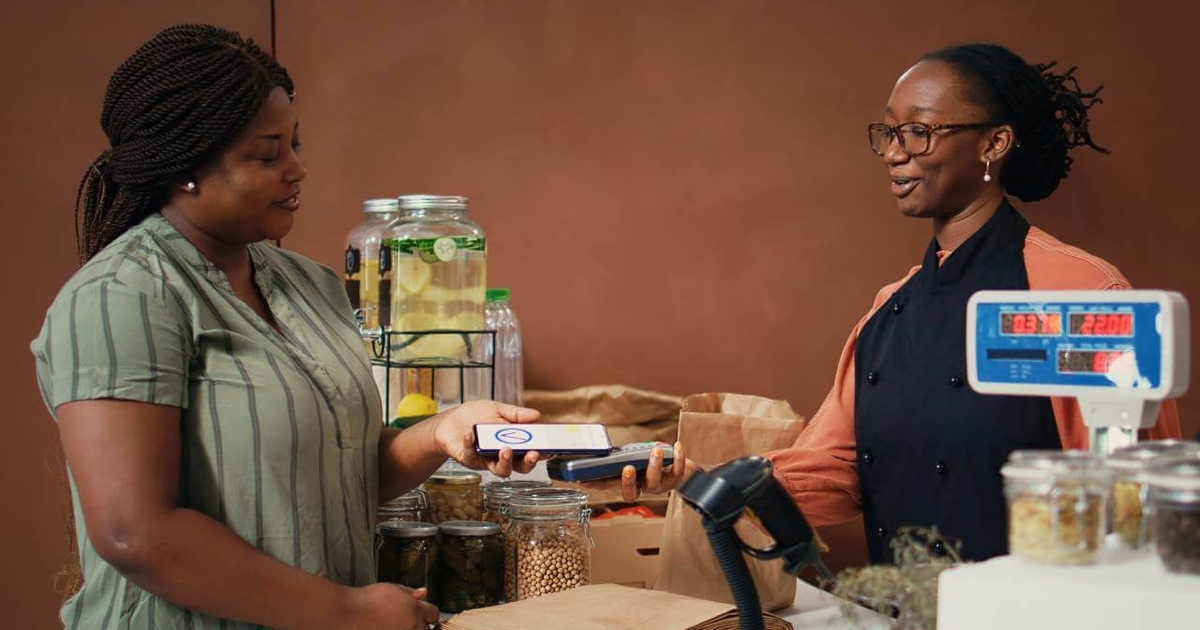
Experts believe that mobile money has enabled women to become business owners, giving them control over their finances and a stronger voice in their communities. (Source: Image by krakenimages.com on Freepik)
Lady Chinyere Chukwudi Zimako, founder of the Chybee Entrepreneurship Foundation for Women and Girls, highlights the game-changing aspect of mobile money for women in rural areas. “They no longer need to travel long distances for banking services; they can be paid instantly and manage small businesses efficiently,” Zimako states, emphasizing the platform’s role in enhancing women’s voices in their households and communities.
Adapting to a New Financial Landscape
Research by Professors Terence Jackson and Ellis Osabutey indicates that the accessibility of mobile technology has led to increased financial inclusion, removing barriers related to income, class, or gender. Banks are now starting to incorporate mobile money services into their offerings, further merging traditional banking with digital financial solutions.
Brendel observes that mobile money has afforded women opportunities to receive remittances, save funds without visiting a bank, and mitigate risks associated with carrying cash. Its user-friendly and flexible nature makes it an attractive alternative to conventional banking systems.
However, Brendel cautions that for women to achieve true growth in areas like business ownership and property acquisition, they will eventually need more comprehensive banking services. “We need to create a pathway where mobile money can serve as an entry point, facilitating transitions into formal banking as they become ready,” she remarks.
As Waruingi articulates, the perception among many African women is that banks are cumbersome, while mobile money offers immediacy and simplicity. “Mobile money is now integral to women’s financial empowerment. It is affordable, trusted, and a part of daily life,” she states.
The conversation around mobile money underscores its significance as more than just a financial tool; it represents a key player in women’s empowerment on the continent. Waruingi asserts that as Africa progresses, women must be at the forefront of its digital transition. “By empowering women, we empower families, communities, and nations,” she concludes.
