


By Byron Adonis Mutingwende
Originally posted on spikedmedia.
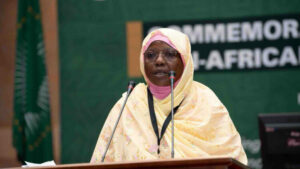
MIDRAND, SOUTH AFRICA | 31 July 2025 (IDN) — The Pan-African Parliament (PAP) precinct in Midrand became a vibrant platform for the celebration of women’s contributions and aspirations during the Pan-African Women’s Day commemoration. The event, themed “Women Driving Africa’s Economic Justice and Innovation: Advancing Reparations through Enterprise,” focused on the transformative potential of women in the economic sphere.
The Gathering of Visionaries
Hosted by the PAP Women’s Caucus under the leadership of Hon. Amina Tidjani Yaya, the event attracted influential figures from various sectors. Key attendees included Chief Fortune Charumbira, President of the Pan-African Parliament, Hon. Mariam Djimet Ibet, Vice President of Chad’s National Assembly, Prof. Margaret Kumar, member of PAP’s Committee on Trade, Customs and Immigration, and Ms. Amanda Mvimbi, Project Manager at UN Women South Africa Multi-Country Office (SAMCO).
Empowering Women: A Call to Action
In her opening remarks, Hon. Amina Tidjani Yaya asserted that African women play vital roles as “pioneers, architects, and actresses” of the continent’s socio-economic progress. She emphasized the critical need for economic reparations as a mechanism for justice and empowerment, especially through entrepreneurship.
“This commemoration is not simply ceremonial,” she stated. “It is a call to action—a call for economic systems that reflect equity, reparative justice, and inclusive innovation driven by African women.”
Entrepreneurship as a Pathway to Justice
The discussions highlighted the role of entrepreneurship in fostering economic reparations for historical injustices faced by women across Africa. Despite significant challenges, women entrepreneurs are making strides in fields such as agriculture, digital technology, and regional trade integration.
Objectives of the Women’s Caucus
- Advance economic reparations through policy and practice.
- Promote women-led enterprises as engines of structural transformation.
- Position African women at the core of reindustrialization and innovation.
- Integrate gender-sensitive economic agendas into national policies.
- Engage development partners and private sector stakeholders as advocates for change.
- Create platforms for shared entrepreneurial models and policy deliberation.
Confronting Structural Inequities
Hon. Yaya pointed out that economic justice is inherently tied to gender justice, highlighting ongoing disparities in land ownership, educational access, political involvement, and security for women. She identified structural violence as a pressing human rights issue that hinders Africa’s overall economic development.
“No country can prosper with only half of its population empowered,” she warned.
Legislative Innovations for Gender Equality
The event also signaled a commitment to legislative advancements aimed at enhancing women’s economic participation. The PAP is developing a draft Model Law on Gender Equality and Equity, intended to bolster women’s access to finance, legal protections, and institutional support.
A Testament to Resilience
The gathering featured influential women from diverse fields, including trade, technology, and academia, who shared insights and practical strategies for aligning economic goals with grassroots realities. Hon. Yaya concluded the event by paying tribute to women’s resilience and contributions in various sectors.
She described them as “living symbols of a peaceful, inclusive, and prosperous Africa.”
A Unified Vision for Development
The commemoration served as a rallying cry for all stakeholders—legislators, policymakers, private sector representatives, academics, and development agencies—to prioritize African women in economic transformation efforts. The message conveyed was that the empowerment of women is crucial for Africa’s future.
“When a woman has access to economic opportunities and control over resources,” Yaya said, “she actively contributes to her home, her community, her country, and the world.”
Champions of Women’s Representation
During the event, Chief Fortune Charumbira emphasized the necessity of increasing women’s representation in African leadership roles. He articulated this point powerfully, declaring:
“Out of 10,000 parliamentarians on the African continent, only 2,500 are women. Yet women make up 52% of our population. That’s more than 5,000 voices missing from the lawmaking process. It is a grave demographic injustice.”
Overcoming Cultural Barriers
Charumbira challenged traditional cultural narratives justifying the gender gap in leadership. He pointed to Rwanda’s success in achieving high representation of women in government, asking:
“What is stopping the rest of us?”
While some countries, like South Africa and Namibia, have shown progress, Charumbira highlighted that most of Africa still faces critical structural and social barriers to gender equality.
Recognizing Women’s Proven Leadership
He dismissed the notion that women lack leadership capabilities, citing their achievements across various fields and their efficiency in managing complex organizations. His message was clear: the continent may only thrive when both men and women are empowered equally.
A Call to Action
As Africa aspires to sustainable development, Charumbira’s insights stress that the continent cannot afford to overlook half its population. His poignant challenge to both male and female leaders is a reminder that the future of Africa depends on fully leveraging women’s potential in leadership roles, today—not tomorrow.
[IDN-InDepthNews]
