


Bridging the Gender Gap in STEM: Progress and Initiatives in Africa
Despite global efforts to encourage female participation in Science, Technology, Engineering, and Mathematics (STEM), women still represent only 28% of the workforce in these fields worldwide. In Sub-Saharan Africa, this figure drops to a mere 30% of all professionals engaged in scientific disciplines, according to the UNESCO Institute for Statistics.
The Challenge of Gender Imbalance in STEM
This substantial disparity illustrates a longstanding gender gap in fields traditionally dominated by men. With limited encouragement for young girls to delve into mathematics and science, this phenomenon has raised considerable concern among organizations, including the United Nations. In response, the UN adopted a resolution to establish an annual International Day dedicated to recognizing the contributions of women and girls in science and technology.
A New Initiative for Change
Launched on February 11, the International Day of Women and Girls in Science aims to foster greater inclusion and participation of women in STEM education. Though this initiative is still in its infancy, there is a pressing need for significant progress, particularly in Africa, where the sciences remain largely male-dominated.
Positive Trends at All Nations University College
One institution making strides in altering this trend is Ghana’s All Nations University College. The Head of the Department of Biomedical Engineering, Mr. Archibald Ekow Danquah-Amoah, highlighted encouraging developments: “In our department, we have more women applying than men, and currently women comprise about 70% of the student body, outperforming their male counterparts,” he shared in an interview with Africanews.
To further facilitate female involvement in STEM, Mr. Danquah-Amoah proposed providing scholarships specifically for girls pursuing technical education, suggesting that financial support can pave the way for gender equity across academic and professional landscapes.
Engagement Through National Society of Black Engineers
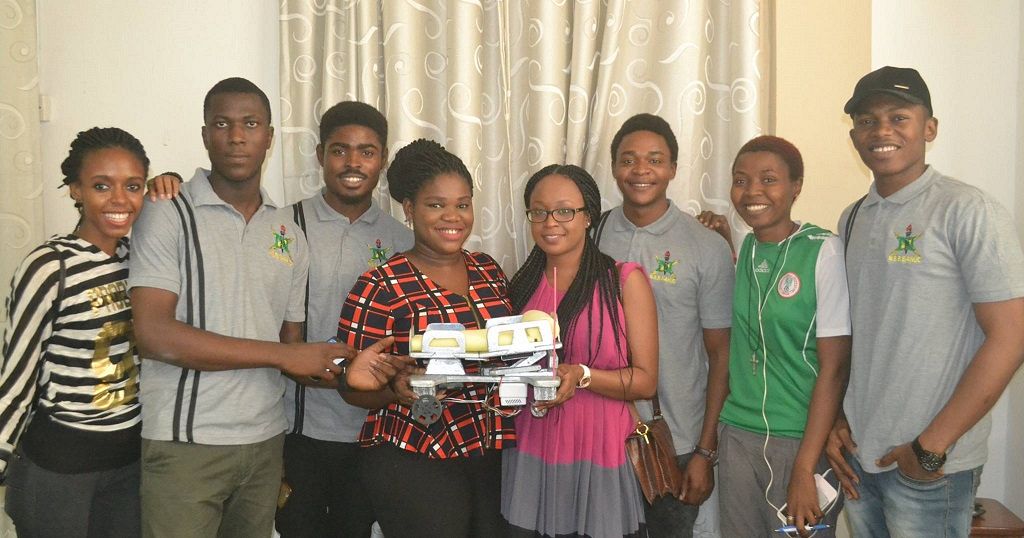
The Ghana Chapter of the National Society of Black Engineers (NSBE) actively promotes the engagement of students in engineering. Recently, a Pre-College Initiative (PCI) program at All Nations University fostered interest in STEM subjects among high school students. This event showcased various projects by women in the biomedical engineering department, such as a Robotic Nursing Bed with Voice Recognition and a Urine Alert System for diabetic patients.
“We inspired the children to appreciate engineering, and with a little push and support, they will grow to contribute significantly to the engineering community in Africa,” noted Goodluck Seiyefa, NSBE President at the university.
Voices of Innovation
Two female students, Ibeh Chiamaka Cynthia and Rhoda Ajiroba, shared their aspirations and experiences in the field. Cynthia expressed her desire to become the first engineer in her family, stating, “I am aspiring to help my nation and Africa with ideas and solutions to many problems facing the continent.” However, she emphasized that financial backing is crucial for students to expand their innovative projects.
Ajiroba voiced a similar enthusiasm, emphasizing that biomedical engineering drives her to leverage available resources in Africa to improve healthcare systems. “Challenges exist, but with determination and the right support, we will undertake significant projects in the near future,” she affirmed.
Call for Increased Support for Female Participation
Dega Billy James, Administrative Secretary for NSBE Ghana, highlighted the importance of more activity-based scientific events aimed at girls. He noted, “The potential of girls participating in our initiatives is tremendous, and with sufficient resources, they can achieve even greater milestones.” The ratio of interest in STEM between boys and girls currently stands at about 1 to 5, underscoring the need for targeted programs like the Computer Science Camp for Girls that promotes female participation in technical fields.
Global Perspectives on Empowerment
During the inaugural celebration of the International Day of Women and Girls in Science, UNESCO Director-General Irina Bokova urged governments and stakeholders to enhance their efforts in empowering girls and women through scientific education, marking it as essential in pursuit of the 2030 Agenda.
Conclusion
As efforts to bridge the gender gap in STEM continue, the initiatives led by institutions like All Nations University College and organizations such as NSBE reflect a promising shift towards greater inclusivity in the sciences. Continued commitment and support will be critical for achieving gender equity in these vital fields.
