


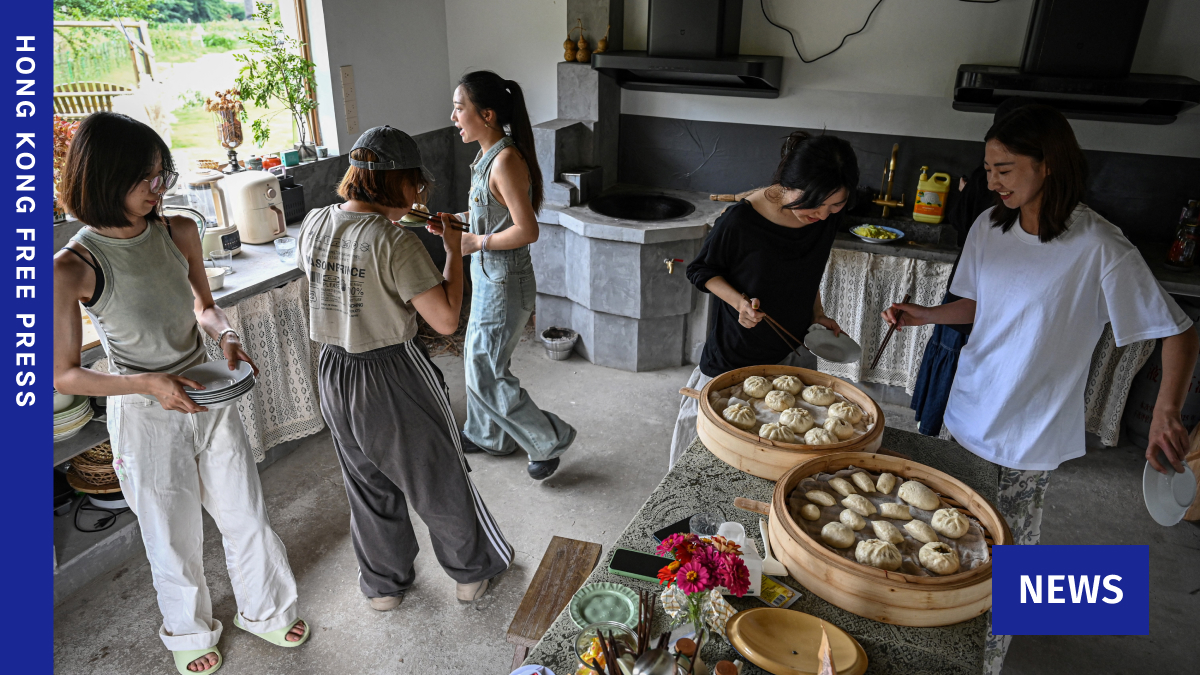
In a tranquil setting of Zhejiang province, China, a fresh movement is blossoming: women-only co-living spaces, where laughter often fills the air over shared meals and board games. These retreats are more than mere accommodations; they offer a sanctuary for women seeking refuge from societal pressures and the judgment often encountered in mixed-gender environments.
These spaces enable women to forge connections and candidly discuss personal matters, offering an atmosphere of mutual support. “An all-women environment makes me feel safe,” remarked Zhang Wenjing, 43, reflecting on the comfort of shared experiences. The absence of men allows for more open conversations. “Not being forced to wear a bra is already a kind of freedom,” added Chen Fangyan, 28, emphasizing the liberation that comes from being in a female-centric environment.
The emergence of these spaces aligns with a broader trend in China, as women gain economic independence and seek environments that prioritize peace of mind and safety. Facilities like “Keke’s Imaginative Space” charge about 30 yuan ($4.17) a night for accommodation, increasing after prolonged stays. Founder Chen Yani, popularly known as “Keke,” established the space after facing harassment in her professional life and yearned for a safe haven where women could thrive.
“I encountered various degrees of harassment from men, to the point where I often found myself unable to work normally,” Keke shared, highlighting her motivation for creating a supportive community. She custom-designed a house in Lin’an, a suburb of Hangzhou, into a cozy retreat where women could relax and exclude the worries that often accompany daily life.
Creating a Comfortable Community
Keke initiated this project by inviting women to participate in a gathering over the Lunar New Year. The response was positive, with twelve women arriving, each drawn to the space for different reasons—some sought a peaceful getaway, while others wanted to escape societal expectations regarding marriage and motherhood.
“Within the family, women often have to take care of grandparents, children, and household chores,” Keke noted. “They need a place where they don’t have to play a role and can just be themselves.” As women’s financial independence and educational opportunities expand, many are prioritizing personal well-being and exploring alternatives that better suit their lifestyles.
Social media platforms, particularly Xiaohongshu (or “Rednote”), are amplifying awareness of such alternatives, allowing women to connect with like-minded individuals and discover communal spaces. An example is “Her Space,” established by Yang Yun in Xiuxi, Zhejiang, where women find refuge and a supportive community, characterized by its welcoming decor and ethos aimed at providing comfort during life’s challenges.
Addressing Criticism and the Future of Women-Only Spaces
While some critics argue that such dedicated spaces may foster division between genders, advocates like Keke defend the necessity of all-female venues. “Women constitute a social group with shared life trajectories and problems. It’s often easier for them to understand each other and show empathy,” she stated. Although Keke’s venture is not yet profitable, she believes that the value lies in the creation of a supportive environment for women.

Lilith Jiang, who founded Half the Sky, another cultural hub for women in Beijing, emphasizes that such spaces fulfill an unmet need for women seeking safe environments to socialize, similar to the myriad of opportunities available to men in more conventional settings.
As urban life evolves, these women-only spaces could present future solutions for addressing concerns about loneliness as women grow older, defying traditional notions surrounding marriage and socialization.
With increasing demands for these dedicated environments, the future of women-only co-living spaces seems promising, providing not merely shelter but also empowerment and community for women in China and potentially beyond.
