


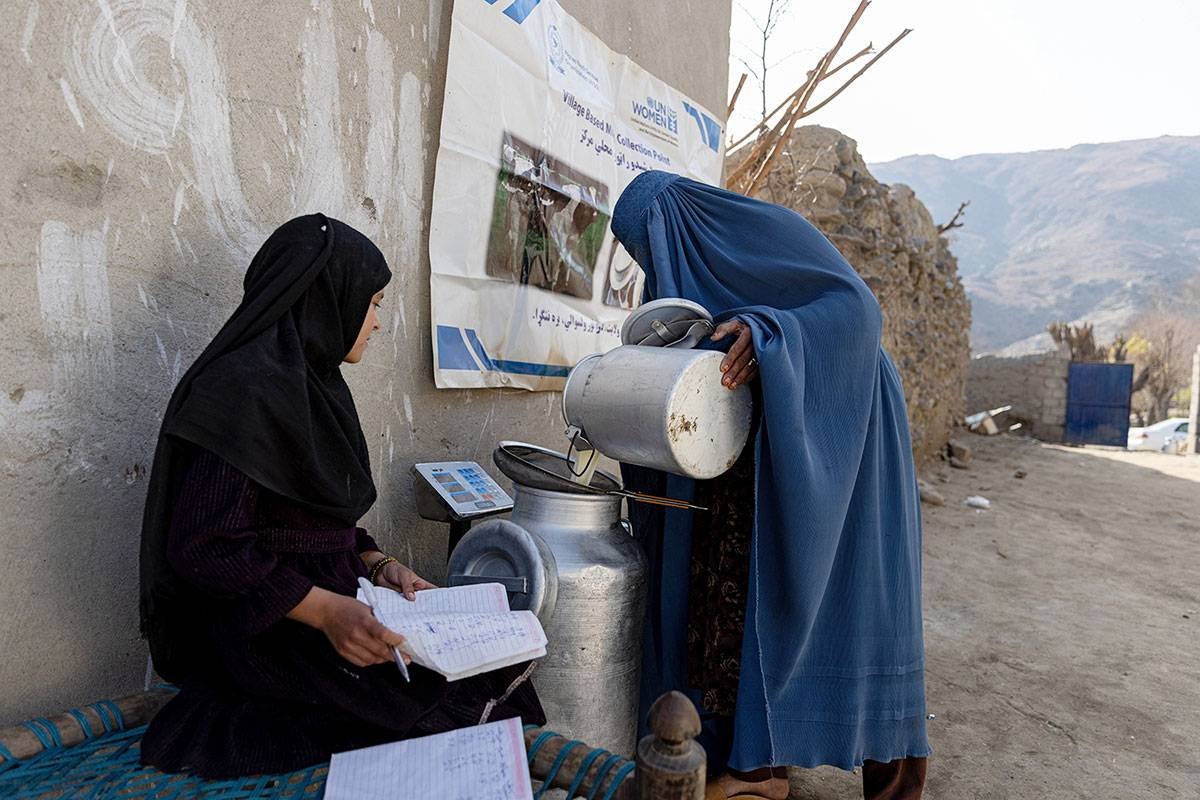
Empowering Afghan Women: Resilience Amid Challenges
Afghanistan’s women and girls are recognized as the country’s most valuable resource, according to Sima Bahous, Executive Director of UN Women. Despite ongoing adversities, these women demonstrate remarkable resilience. They are actively engaged in various initiatives, from supporting one another in business ventures to providing crucial humanitarian aid and advocating against injustices.
The current educational and employment landscape for Afghan women is stark. A recent report by UN Women, backed by the European Union, reveals that a concerning 78% of young Afghan women are currently neither in education nor employment, a figure nearly four times higher than that for their male counterparts. The situation is dire, with secondary school completion rates for girls projected to plummet as educational bans extend to secondary and tertiary institutions, including medicine.
Gender disparity within the workforce remains alarming. Women represent merely 24% of the labor force, compared to 89% of men. Much of the work women do is unpaid, with 74% engaging in household chores, significantly more than the mere 3% of men. Furthermore, a gender gap is evident in financial services, where men are nearly three times more likely to possess a bank account or utilize mobile money services.
Notably, despite significant restrictions on women’s employment, reports indicate an unexpected uptick in female workforce participation, driven by the pressing economic and humanitarian crises. The number of unemployed women actively seeking jobs quadrupled by 2022 when compared to before the regime change, and employed women doubled during the same time frame.
The current political landscape remains challenging, as women hold no positions within the de facto Cabinet or local governance structures. This lack of representation severely limits their ability to influence policies and laws that affect their lives. Nevertheless, Afghan women persist in their efforts to advocate for inclusive governance and to voice their concerns to authorities at both national and local levels.
The recent Index developed by UN Women serves as a vital tool for measuring the progress of gender equality in Afghanistan. This resource aims to inform both national and international stakeholders about the ongoing women’s rights crisis in the country. UN Women continues to prioritize the needs and aspirations of Afghan women and girls, ensuring their pivotal role in the nation’s development and their right to live with dignity.
