


Understanding the Importance of 24-Hour Access
Recent developments in reproductive health highlight a shift toward making birth control more accessible. A key landmark was the introduction of Opill, the first non-prescription birth control pill approved in the United States. This move represents a significant step in the evolving landscape of contraceptive availability.
Additionally, options such as long-acting implants, patches, and Phexxi—a hormone-free vaginal gel—have increased the choices available to consumers. Importantly, emergency contraception (EC) is now available without a prescription, yet many women remain unaware of this option. A poll conducted by KFF revealed that a substantial number of women in states with abortion restrictions either mistakenly believe EC is illegal or are uncertain about its status.
Despite these challenges, the use of emergency contraception is notably prevalent among younger women, with 44% of those aged 15 to 24 and 40% aged 25 to 34 reporting use. Interestingly, online data indicates that searches for emergency contraception peak during late-night hours, highlighting the demand for accessible options at all times.
“And 7-Eleven is open,” said Voyten, underscoring the need for easily accessible contraceptive options.
A Closer Look at Contraceptive Usage
Megan Kavanaugh, a principal research scientist at the Guttmacher Institute, points out that virtually all women of childbearing age in the U.S.—99%—have utilized some form of contraception during their lifetime. However, reliance on fertility awareness methods remains minimal, with less than 1% of women opting for that route. The demand for emergency contraception has noticeably increased over the years, with KFF reporting that one-third of women aged 15 to 49 who have had sexual relations with a male have used such products.
Kavanaugh explained, “People use EC for a lot of reasons,” which may include contraceptive failure, lack of birth control, or as a response to sexual assault. However, the cost can present a significant barrier; for instance, over-the-counter options like Plan B One Step may retail for around $50, a figure deemed prohibitive by many women.
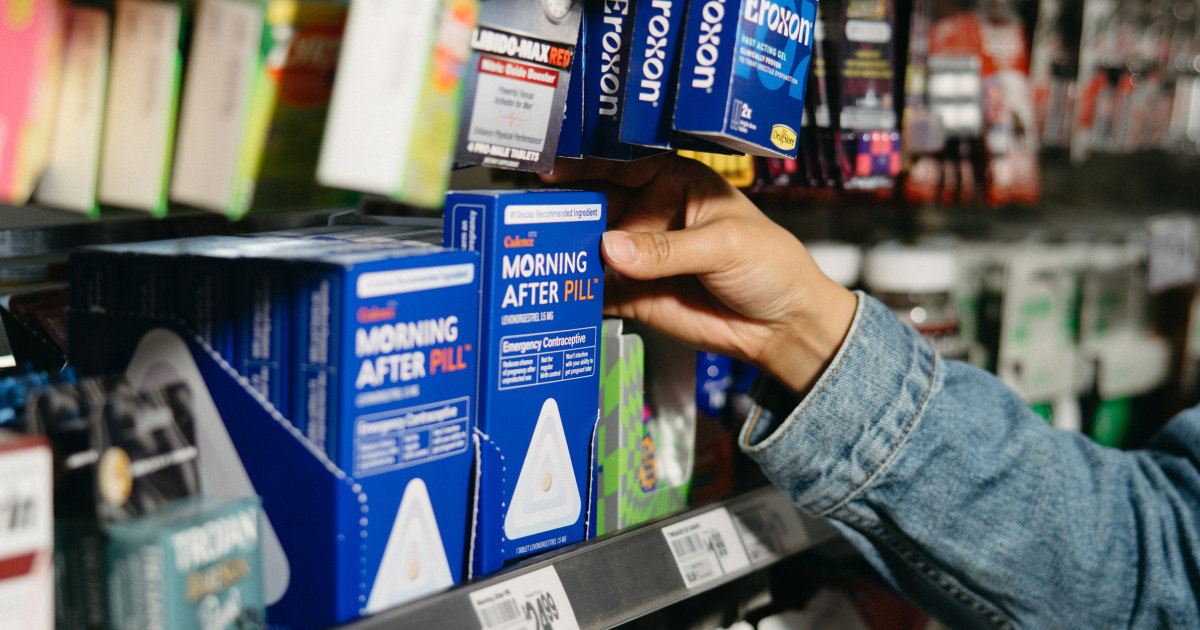
While condoms are a cost-effective alternative, Kavanaugh notes they are typically outside the control of those engaging in sexual activity, reinforcing systemic issues regarding accessibility. Cadence’s emergency contraception, priced at approximately $25 per dose, serves as a lower-cost option, yet consumer hesitance persists regarding products priced under $15, reflecting concerns about quality and efficacy.
Barriers to Access: Confidentiality and Stocking Issues
Despite the availability of emergency contraception, access remains fraught with challenges. Dr. Amanda Bryson, a pediatrician and adolescent medicine specialist at the University of California, San Francisco, emphasizes that barriers can include the need for confidentiality, comprehension of the product’s accessibility, and logistical issues such as transportation and insurance coverage.
Emergency contraception, despite being available to all ages without a prescription, is often secured in lockboxes or behind pharmacy counters. This physical barrier necessitates interaction with store clerks, a process that can intimidate younger shoppers seeking confidentiality.
In rural areas, access to EC can be even more challenging, particularly in locations lacking pharmacies or drugstores. Bryson recounted a specific case where a patient, although informed and insured, faced obstacles when attempting to obtain EC after hours due to stock shortages and high prices at local pharmacies. “It shouldn’t be this hard,” Bryson remarked, calling for increased accessibility through convenience stores with expanded hours.
Innovations in Accessibility
Addressing these obstacles, Cadence has expressed interest in expanding their product distribution to college campuses and potentially to vending machines, recognizing the profitability of this market. Access to contraceptives—especially at convenient hours—can help mitigate stigma surrounding sexual health, Bryson asserts. She advocates for a wide-ranging presence of birth control options on convenience store shelves to enhance visibility and combat stigma.
Notably, while Plan B is not typically found in convenience stores, it is available at major retailers like CVS, Walgreens, and Walmart, as well as through delivery services such as UberEats and Instacart. Demand continues to push the conversation forward despite hesitations from certain retailers. As Voyten summarized, “There are some who say, ‘I don’t believe in this,’ but I know my customer needs it.”
As the landscape of reproductive health evolves, advocating for 24-hour access to emergency contraception remains crucial in ensuring women can make informed choices about their sexual health.
