


Addressing Gender Disparities in STEM Education
By Adam Echelman, CalMatters
Introduction
Despite increased investments in education aimed at boosting female participation in science, technology, engineering, and mathematics (STEM), improvements remain minimal in recent years. A report by the Public Policy Institute of California reveals stagnation in women’s attainment of STEM degrees across California’s four-year colleges.
Stagnation in Gender Parity
Data comparing figures from the 2009-10 academic year and the 2022-23 academic year indicates that the percentage of bachelor’s degrees earned by women in engineering rose from approximately 19% to about 25%. However, the statistics for computer science showed an increase from nearly 16% to 23%. Alarmingly, women’s graduation rates in mathematics and statistics have seen a decline in recent years.
“The unfortunate news is that the numbers haven’t changed much at all,” stated Hans Johnson, a senior fellow at the institute. He emphasized that while progress has been made, the rate at which women are entering these fields is not sufficient to achieve parity in the foreseeable future.
Underrepresentation and Cultural Factors
The challenges persist even in high school settings, where girls are notably underrepresented in advanced computer science classes. Although women represent 42% of California’s workforce, only a quarter are engaged in STEM professions, as indicated by research from Mount Saint Mary’s University. Notably, the number of women in math professions has decreased since 2023.
Mayya Tokman, a professor of applied mathematics at UC Merced, attributes this underrepresentation to societal perceptions around gender and the availability of role models in STEM fields.
The Importance of Gender Parity
With the U.S. technology sector facing a talent shortage, achieving gender parity in STEM is more crucial than ever. Prominent advocates like Sue Rosser, former provost at San Francisco State, stress the need to diversify the workforce to include women, immigrants, and people of color. “There’s no point in excluding anyone,” she stated.
Impact of Policy Changes
Recent changes in federal policy have raised concerns about the future of women in STEM. Funding reductions initiated by the Trump administration have considerably affected research programs at California’s universities, including those focused on women’s issues and health problems impacting the LGBTQ+ community. Legal actions are underway to restore some of these crucial grants.
Shifts in Cultural Dialogue
In the wake of the COVID-19 pandemic and social movements advocating for racial justice, many organizations have reported a decline in funding and focus on women in STEM. This cultural shift has diverted attention and resources away from initiatives aimed at supporting women in these fields.
State Funding and Educational Initiatives
In 2018, California legislators committed to funding $10 million annually for the California Education Learning Laboratory, designed to address gender equity in education, including the underrepresentation of women in STEM. However, severe budget cuts have significantly hampered progress, with discussions now pointing towards complete discontinuation of the initiative.

A Spotlight on Individual Experiences
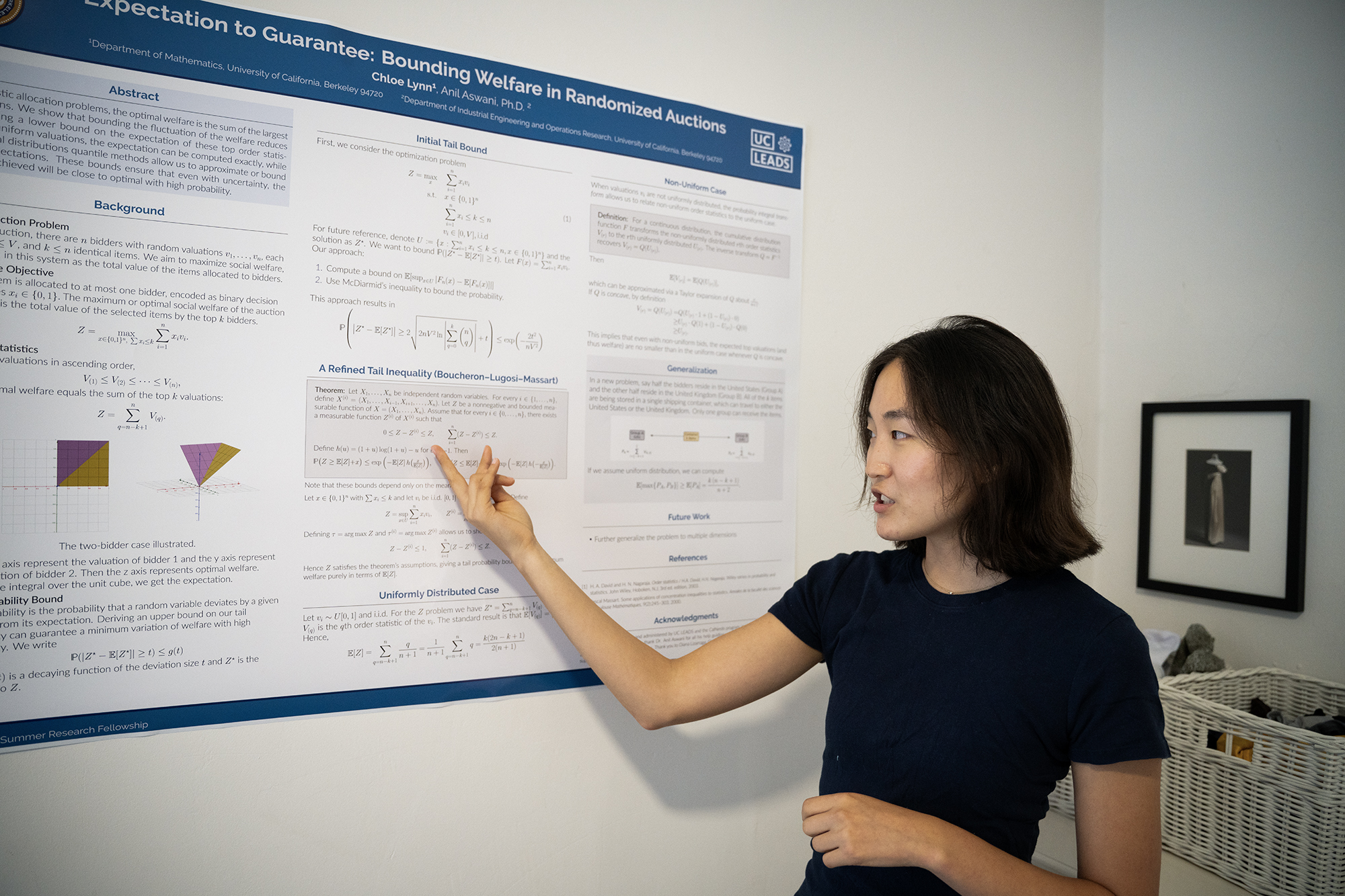
UC Berkeley student Chloe Lynn, who is pursuing a double major in applied mathematics and management science, shares her experiences of distinct gender disparities in advanced courses. She notes that women are often outnumbered in her classes, with only a few female peers in larger groups. Lynn is proactive in building a supportive community for female students in mathematics.
“Creating an inclusive and uplifting community is vital for anyone that’s underrepresented,” she emphasized, highlighting her desire to contribute positively to her field.
Intersecting Fields and Future Directions
The underrepresentation of women in STEM is not indicative of their capabilities. In fact, women pursuing STEM degrees tend to graduate at higher rates compared to male counterparts at California State University campuses. Brown, president of the EmpowHer Institute, advocates for improved guidance for female students to explore diverse avenues within STEM, rather than limiting them to biology.
Rosser points out that the attraction to biology reflects a long-standing trend where female students see the direct applicability of their education to health and caregiving professions. By fostering awareness of the practical implications of various STEM fields, educators can inspire greater female participation.
Conclusion
As women like Chloe Lynn seek to make meaningful contributions to society through their research, the urgency to support their access and momentum in STEM education remains paramount. Ensuring that future generations have the resources and encouragement to engage in STEM fields holds the key to unlocking their potential and achieving gender parity in these sectors.
This article was originally published by CalMatters and is republished under the Creative Commons Attribution-NonCommercial-NoDerivatives license.
