


By Adam Echelman, CalMatters
This article was originally published by CalMatters. For more updates, subscribe to their newsletters.
Current Landscape for Women in STEM
Discussion around women in science and technology has significantly waned over the past decade despite earlier enthusiasm that peaked following the Great Recession. As economic recovery took shape, concerns arose regarding the slow re-entry of women into the workforce, particularly in science, technology, engineering, and mathematics (STEM) fields.
Investment vs. Results
In response, millions of dollars were invested to boost female participation in STEM degrees. However, recent analyses conducted by the Public Policy Institute of California reveal stagnation in women’s degree attainment in these fields. According to Hans Johnson, a senior fellow at the institute, the percentage of women graduating with bachelor’s degrees in engineering rose from about 19% to merely 25%, while those in computer science increased from 16% to just 23%. Notably, the graduation rates in math and statistics have even declined.
High School Education Gaps
In secondary education, the underrepresentation of girls persists in key subjects such as AP computer science. A study from Mount Saint Mary’s University found that while women constitute around 42% of California’s workforce, they represent only 25% of those in STEM careers. The trend shows a decrease in women pursuing mathematics-related careers compared to previous years.
Deep-rooted Cultural Factors
Mayya Tokman, a professor at UC Merced, asserts that the challenges women face in STEM are influenced by societal perceptions and a lack of visible role models, rather than biological factors. Sue Rosser, provost emerita at San Francisco State, emphasizes the need for diversity in STEM to address workforce shortages.
Government Support and Challenges
Recent cuts to educational and research funding have jeopardized women’s progress in STEM. The Trump administration’s budget reductions have notably affected research at California universities, with significant impacts on projects focused on healthcare and educational equity. A recent federal ruling may restore some funding, but future legislative decisions could further affect this landscape.
Shifting Priorities
In recent years, focus has shifted from women’s roles in STEM towards broader social issues, particularly after events like the police killing of George Floyd. Legislative funds intended to support girls and women in STEM, such as the California Education Learning Laboratory, faced considerable budget cuts during the pandemic. Although some funding has been secured for upcoming fiscal years, uncertainties remain.
Community Building Initiatives
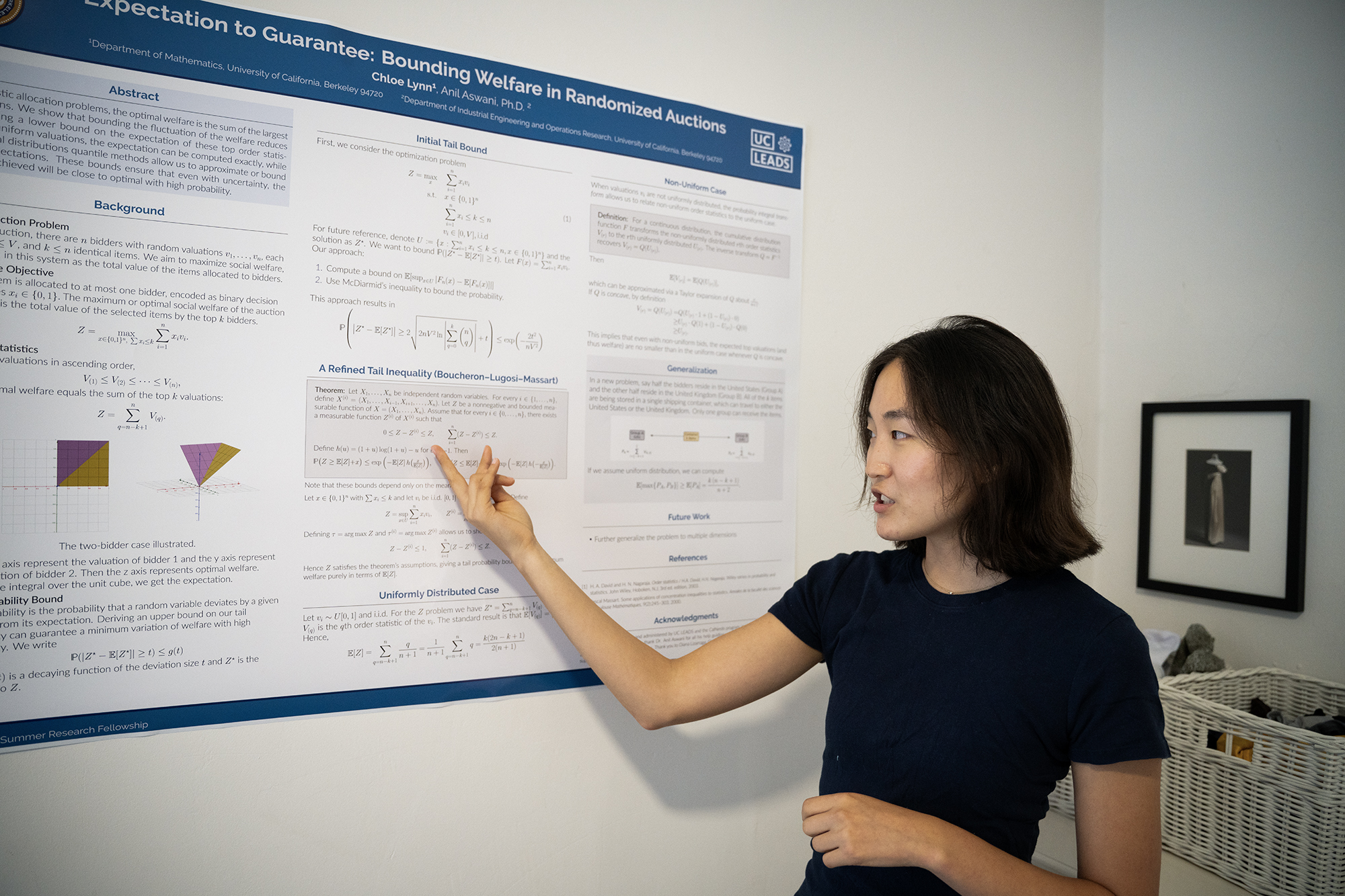
Chloe Lynn, a UC Berkeley student majoring in applied math and management science, has observed a gender disparity in her upper-level courses, often being one of only a few women in large classes. To address this, Lynn, serving as vice president of the undergraduate math association, is actively promoting community among female math students to foster a supportive environment.
Mathematics as a Tool for Real-World Impact
The underrepresentation of women in STEM is not a reflection of capability. Women in California State University STEM programs have a higher graduation rate than their male counterparts. Interestingly, women are overrepresented in biology, with over 64% of bachelor’s degrees awarded in that field during the 2022-23 academic year going to women.
To attract women into various STEM fields, experts recommend enhanced advising that highlights the relevance and utility of different scientific disciplines. Rosser notes that women’s interests in STEM often relate to perceived societal benefits, particularly in healthcare and community service roles.
The Importance of Applications
Lynn aims to create applicable solutions from her optimization research, particularly regarding community issues such as earthquake preparedness in San Francisco. “It does hit close to home,” she remarks, given the campus’s earthquake-prone location.
This report reflects ongoing challenges and the pressing need to support and empower women in STEM to ensure a diverse and competent workforce for the future.
This article was originally published on CalMatters and is reposted under the Creative Commons Attribution-NonCommercial-NoDerivatives license.
