


The Complex Debate Over Transgender Participation in Women’s Sports
Introduction
As the conversation surrounding transgender athletes in women’s sports evolves, it often incites passionate responses across the political spectrum. Within the realm of social liberalism, a critical examination of the discourse reveals a tension between protecting marginalized communities and acknowledging biological realities.
The Central Argument
A growing number of voices within the Democratic Party express concerns about fairness in sports, particularly regarding biological men who transition to women. Critics argue that these athletes may still retain physical advantages over their cisgender female counterparts, posing complex questions about equity in competitive sports.
Case Studies and Perspectives
Critique from the Sports Community
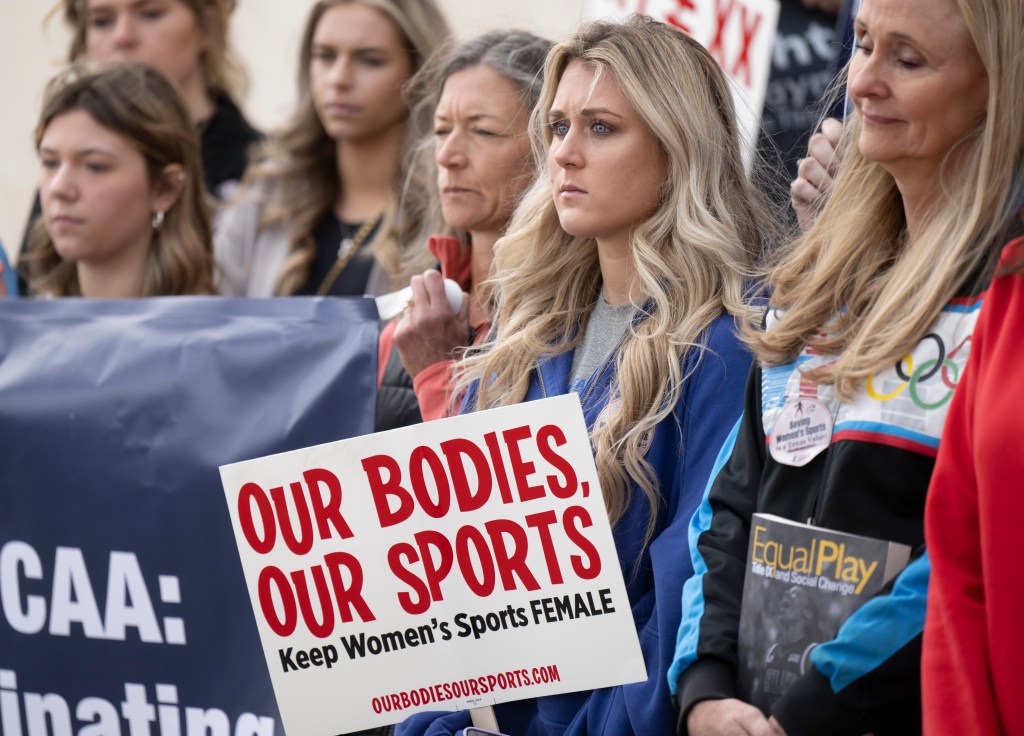
An illustrative example of this debate can be seen in a recent column by Nancy Armour of USA Today. She criticized former collegiate swimmer Riley Gaines for opposing the participation of transgender athletes in women’s sports, while simultaneously praising Olympic gymnast Simone Biles for advocating inclusivity.
Biological Considerations
It is essential to consider the scientific aspects of this debate. Many observations and studies indicate that male puberty provides advantages such as increased muscle mass and lung capacity, which may not fully decline even after hormone therapy. This raises critical questions: If no physiological differences existed, why do sex-segregated sports remain a standard practice?
Examples from Sports
Recent data illustrate measurable disparities: top high school boys in Central Florida ran faster in the 100 meters compared to women’s Olympic champion Julien Alfred. Additionally, Lia Thomas, a swimmer at the University of Pennsylvania, achieved remarkable success in women’s competition after transitioning, further highlighting ongoing disparities.
Public Sentiment
Surveys indicate a significant portion of Democrats—about 67%—believe it is unjust for transgender athletes to compete in women’s sports. This perspective does not stem from opposition to transgender rights, but rather from a commitment to fairness and competitive integrity within female sports.
Equity vs. Inclusion
Some prominent advocates for women’s sports, such as Martina Navratilova, have voiced concerns similar to Gaines. They argue that allowing transgender women who have undergone male puberty to compete against females undermines the hard-won rights and protections of women in sports.
Defining Inclusion
While the need for inclusivity is paramount, it must be balanced with respect for the principles of competitive fairness that have historically defined women’s athletics. The discourse surrounding this issue should not equate supporting fairness with bigotry; rather, it highlights a commitment to safeguarding the integrity of women’s sports.
Conclusion
The challenge lies in fostering a dialogue that respects the rights of transgender individuals without dismissing the physiological differences that influence athletic performance. Acknowledging these biological realities is crucial in moving forward with a fair, compassionate, and inclusive approach to sports.
