


The Legacy of Women in Quantum Science & Technology
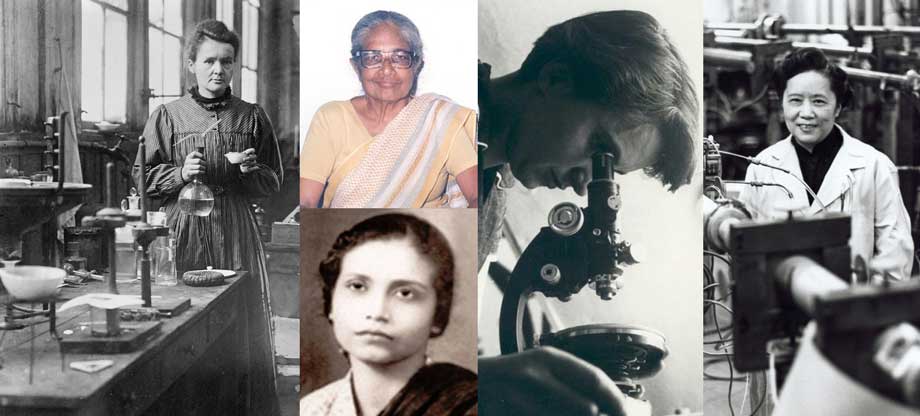
The United Nations has designated 2025 as the International Year of Quantum Science & Technology, highlighting the importance of this field in modern research. While women today play significant roles in STEM, their historical contributions were often overshadowed by gender biases. This article explores the pivotal roles women from India and around the world played in shaping Quantum Science & Technology.
Chien-Shiung Wu: The First Lady of Physics
Born in 1912 in China, Chien-Shiung Wu is often referred to as the “First Lady of Physics.” After graduating from National Central University in 1934 and moving to the United States to study under Ernest O. Lawrence, she confronted gender and racial discrimination but persevered. Wu’s groundbreaking work included her involvement in the Manhattan Project and an essential role in nuclear physics, where she established quantum entanglement through experimental validation. Despite her colleagues receiving a Nobel Prize for their related theoretical work, her contributions were overlooked. She famously remarked, “In China, there are many, many women in physics.”
Anna Mani: Pioneer of Meteorological Instrumentation
Anna Mani, born in 1918 in Kerala, was encouraged to pursue her academic interests from a young age. She earned her B.Sc. in Physics and Chemistry in 1939 and worked under Nobel laureate Sir C.V. Raman on spectroscopy. In 1945, she relocated to Imperial College, London, where she specialized in meteorological instrumentation. Her notable achievement was the invention of the Ozonesonde, an instrument used for measuring ozone levels, and she became a prominent member of the International Ozone Association. Mani passionately stated, “Wrong measurements are worse than no measurements at all.”
Marie Curie: The Quantum Matriarch
Marie Curie, born Maria Skłodowska in 1867 in Warsaw, became a beacon of scientific achievement. She was the first to win Nobel Prizes in both Physics and Chemistry. Curie and her husband Pierre’s work led to the discovery of Radium and Polonium, crucial elements for advancements in chemistry and physics. Her innovations in X-ray technology during World War I significantly impacted medical treatment. Despite the eventual toll of her research on her health, her legacy is immortalized in her assertion: “The way of progress was neither swift nor easy.”
Bibha Chowdhury: The Unsung Hero of Cosmic Rays
Born in 1913 in Bengal, Bibha Chowdhury was a pioneering figure in subatomic particle research. After completing her education, she made significant contributions to cosmic ray studies by identifying pions and muons through extensive photographic analysis. Despite her impactful findings, recognition came slowly. Even though she was overshadowed by her male counterparts, Chowdhury’s achievements have been acknowledged posthumously with the renaming of a star in her honor.
Rosalind Franklin: The DNA Trailblazer
Rosalind Franklin, born in 1920 in Notting Hill, made crucial contributions to the understanding of DNA. A graduate of the University of Cambridge, she utilized X-ray crystallography to elucidate the structure of DNA, paving the way for future scientific advances. Although her groundbreaking work was not sufficiently recognized during her lifetime, it served as a foundation for James Watson and Francis Crick’s Nobel-winning research in 1962, underscoring her vital role in molecular biology.
Conclusion
The contributions of these remarkable women are a testament to their perseverance and brilliance in a field that was often not welcoming. As we approach the International Year of Quantum Science & Technology in 2025, it is essential to recognize and celebrate the foundational work laid down by these scientists, inspiring future generations in the realms of physics, chemistry, and beyond.
