


The Ongoing Debate on Gender Participation in Sports
The discourse surrounding gender participation in sports has recently intensified, particularly in California. Governor Gavin Newsom has acknowledged concerns regarding equity in sports, yet policies from the California Department of Education (CDE) and the California Interscholastic Federation (CIF) have continued to pave the way for male athletes to compete in women’s sports.
Recent Developments in California Sports
At the California CIF Championships in June, a male athlete triumphed across several events, securing gold in the high jump and triple jump while taking silver in the long jump. This resulted in significant displacement of female athletes, such as Lelani Laruelle, who was expected to win gold, yet finished behind the male competitor.
As a consequence, the Trump administration has initiated actions through the Office for Civil Rights (OCR), demanding California retract titles awarded to male athletes in women’s categories and apologize to the affected female competitors. This proposal represents a broader call for justice, reflecting a cultural shift concerning the rights of female athletes.
The Silent Stakeholders
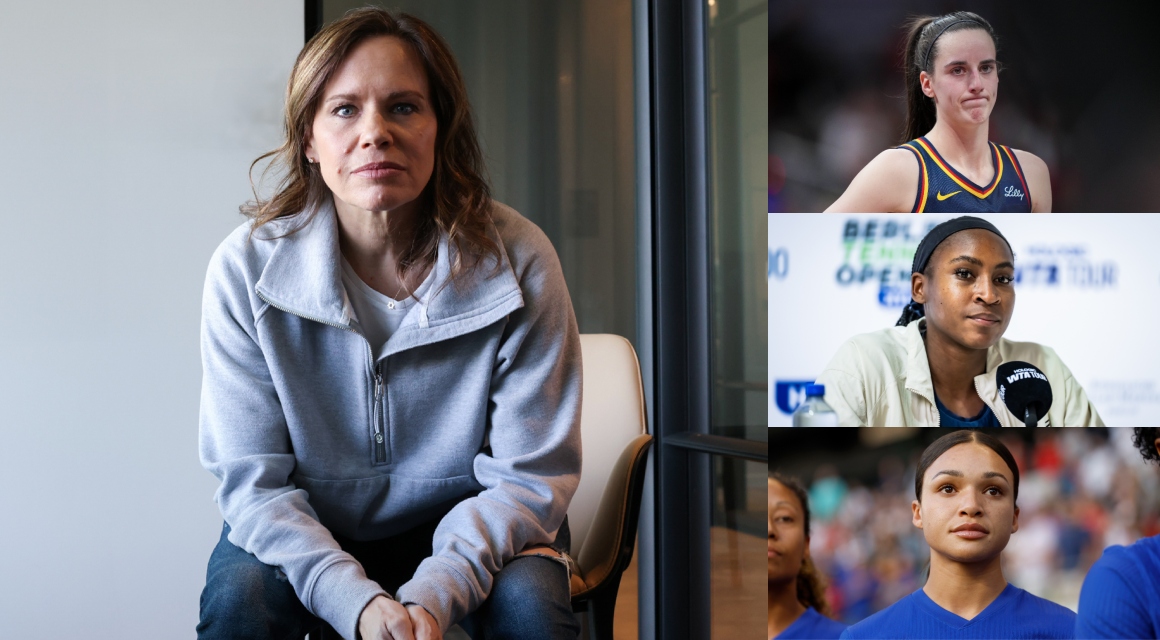
Despite the implications of these events, major figures in women’s sports have remained largely silent. Notable athletes like Jordan Chiles, Caitlin Clark, Coco Gauff, and Sophia Smith have not publicly advocated for the preservation of women’s sports categories, raising questions about the collective voice of the athletic elite.
Similarly, prominent brands in the sports industry—Nike, Adidas, Lululemon, and Athleta—have not taken a stand on this issue, observing the situation without public comment. This silence from influential figures in sports and business speaks volumes about the challenges faced by female athletes today.
Threats to Title IX and Women’s Sports
Title IX, enacted in 1972, established that no individual should be denied access to educational and athletic opportunities based on sex. However, this fundamental promise is being undermined in various states, including California, as male participation in women’s sports increases.
Female athletes are facing structural challenges—many feel pressured to accept their sidelining and suppression of their voices. Instances where girls express dissatisfaction regarding these changes are often met with hostility, branding them as exclusionary or bigoted.
The Evolution of Female Sports Participation
Since the passage of Title IX, there has been a remarkable rise in female participation in high school sports, increasing by 1000%. Many girls who competed benefited significantly; for instance, those who participate in sports typically achieve better academic performance and have higher rates of graduation and college enrollment.
Call to Action for the Future of Women’s Sports
Jennifer Sey, a former national champion in gymnastics and advocate for female athletes, underscored the urgency of the situation, asserting that if the current trajectory continues unchallenged, it threatens the very essence of women’s sports. Sey, who credits Title IX for opening doors for girls like her, calls for collective action amongst citizens to support and safeguard the opportunities for future generations.
Despite a significant majority of Americans—approximately 80%—believing that women’s sports should remain exclusive to females, the prevailing silence is troubling. Sey emphasizes the importance of unity in advocacy, stating that if society collectively stands for the rights of female athletes, the movement cannot be silenced.
Conclusion: Standing Together for Women’s Rights
As society approaches the 53rd anniversary of Title IX, there is a pressing need for clarity and solidarity in preserving the rights conferred by this transformative legislation. Without decisive action, the unique opportunities afforded to female athletes may deteriorate, impacting not only their current standing in athletics but also their broader prospects in leadership and life.
We must rally together to protect the legacy and future of female sports, ensuring equitable opportunities for girls who aspire to compete. Our collective voice can make a difference—if we choose to speak out.
