


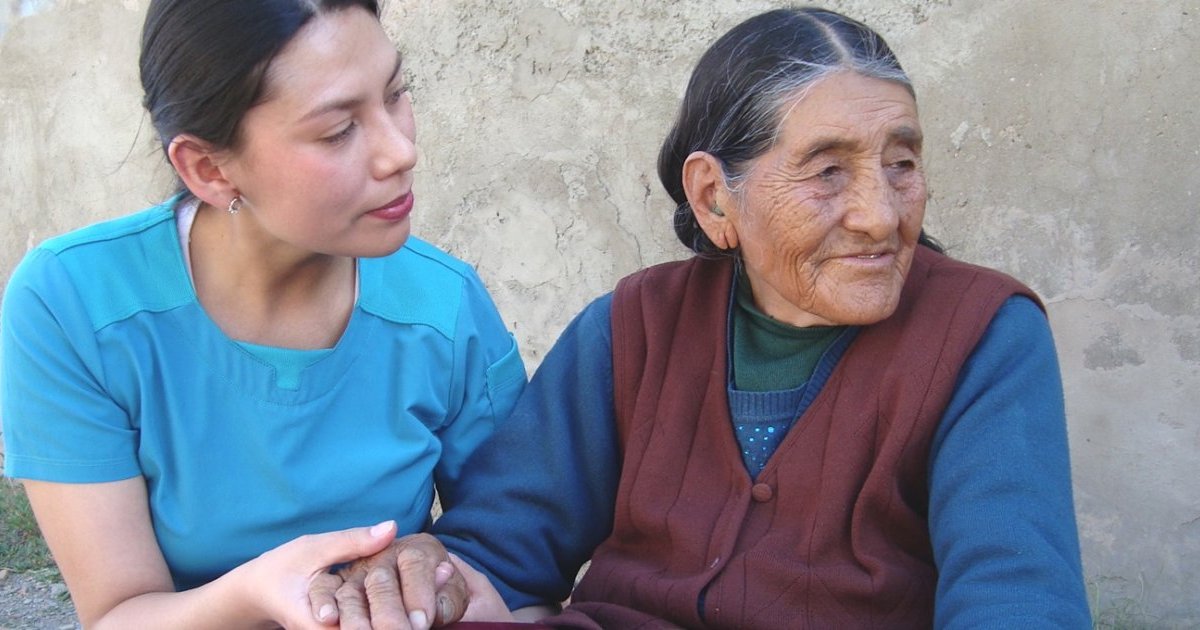
It is an early morning in Bogotá, and Sandra Moreno is already awake, quietly preparing for her day ahead. At 4:45 AM, she steps out into the busy streets, heading to the adult care center where she has worked for three years. While her education lies in early childhood development, Sandra has dedicated her career to providing care for the elderly, a commitment she approaches with both patience and compassion.
As her day begins, she serves ‘tinto’, a traditional black coffee, and ‘agua aromática’, a herbal tea, to the residents, remarking how even small tasks can spark lively debates among them. The day is filled with routine activities, exercises, and recreational events, alongside the constant need for vigilance to prevent falls or address moments of crisis among residents suffering from Alzheimer’s, dementia, or depression. Many simply seek a friend to listen to them.
Once her shift concludes, Sandra’s responsibilities shift back to her home, where her elderly parents, both in poor health, are waiting for her. Managing their medical appointments and obtaining their medications, she frequently relies on taxis due to her lack of personal transportation. “Everything falls on me,” she expresses, outlining the challenges associated with balancing both her job and her family obligations.
“It’s as if we were care machines,” she laments. “People forget that we are also human beings, with feelings and needs of our own. Sometimes it feels like I’m working double or even triple shifts.”
Despite a stable job and social security benefits, Sandra feels her financial compensation and societal recognition do not adequately reflect the significance of her work. In Colombia, caregiving responsibilities predominantly fall on women like her, who are often aging themselves and in need of care.
The Cultural Burden of Caregiving
According to a study conducted by the Pan American Health Organization and the Inter-American Development Bank (IDB), at least eight million older adults in Latin America and the Caribbean require assistance with daily tasks such as eating and bathing. As global demographics shift towards an older population, this number is projected to triple by 2050.
Women are the primary caregivers, with 6.2 million people in Colombia requiring direct care, of which 76.2% of this work is unpaid and performed by women at home.
Diana Cecilia Gómez from the Confederación de Trabajadores de Colombia (CTC) asserts that recognizing the economic contribution of caregiving is essential, pointing to recent efforts to include this work in national accounts as a positive step. “Unpaid work alone accounts for nearly 20% of Colombia’s GDP. If it were remunerated, it would surpass commerce and public administration as the largest sector,” Gómez explains.
“While men spend an average of two to three hours on such tasks, women dedicate not less than seven,” she points out, highlighting the resultant physical and emotional exhaustion that often accompanies these imbalanced caregiving responsibilities.
The structural crisis around caregiving reflects deeply ingrained cultural perspectives that place this responsibility within families, often on women. Susana Barria from Public Services International (PSI) advocates for the view that caregiving should not be solely a private matter, but rather a shared societal responsibility where the government also plays a critical role.
Sandra’s experiences echo this sentiment. “Sometimes it feels like our existence centers solely around care for others. Yet, we too have families and needs that are often neglected. Society doesn’t always recognize that,” she shares.
Progress with a New National Care Policy
In February 2025, Colombia took a significant step by adopting a National Care Policy (CONPES 4143), which officially recognizes care as a basic right for both those who provide and receive it. This policy aims to redistribute caregiving responsibilities among the state, families, and society, in addition to bolstering public services and challenging longstanding cultural norms surrounding care.
While this initiative is a promising development, questions regarding its implementation remain. How will it be practically executed across various territories? What resources will be allocated to ensure its objectives are met? And critically, what will be done to improve the circumstances of caregivers like Sandra?
“Recognizing the role of community care is essential. But we need more: caregiving must be acknowledged with financial remuneration and job security,” Gómez declares.
The Inter-American Court of Human Rights has already established care as an independent right, imposing responsibilities on states to guarantee decent conditions for caregivers. For Sandra and her colleagues, this acknowledgment and support are crucial. “There are many areas in need of improvement: working hours, salaries, and training to support career advancement. Often, we feel like we are seen merely as caregivers, rather than as professionals,” she states.
Castaño from CGT stresses that while CONPES 4143 has been ratified, it requires clear implementation strategies that involve trade union cooperation for genuine impact.
Current Realities and Obstacles
Until this policy is fully executed, caregivers continue to face excessive workloads, informal employment, and inadequate labor protections. An IDB survey highlighted that many caregivers lack proper training, further compromising both their job security and the quality of the care provided. Barria notes that up to 80% of contracts in public institutions are for ‘provision of service’ roles, leaving many without stability or social security.
Moreover, internal disparities within the caregiving field persist, as exemplified by the differences in employment conditions between nurses and support staff like cleaners, who also contribute to caregiving. Sandra is painfully aware of this reality, noting that many of her colleagues lack stable employment contracts or benefits. “You become overwhelmed by your experiences. Sometimes, I return home frustrated with unresolved issues at work, and there’s no one to talk to. We need professional support. This job takes a toll emotionally,” she explains.
Her testimony highlights the often-ignored emotional demands of caregiving, as recognition and support for caregivers are typically lacking.
Castaño advocates for the professionalization of the caregiving sector. “It is imperative to formalize their employment, in addition to training and certifying caregivers,” she insists. Addressing existing barriers and creating sustainable strategies will be vital in assessing the true needs of those working in care.
A Call for Shared Responsibility
Despite policy gaps and resource shortfalls, societal attitudes continue to dictate that caregiving remains a woman’s primary duty. Gómez articulates this connection: “Roles such as nursing, teaching, or caregiving are often seen as extensions of maternal responsibilities, which leads to the undervaluation of caregiving.”
Altering this perception is essential. Trade unions can help promote shared caregiving responsibilities by advocating for practices like paternity leave. “Demonstrating male involvement in caregiving can pave the way for greater equality,” Gómez argues, emphasizing that household responsibilities must be recognized as collective tasks.
From her experience, Sandra wishes for a day when she could simply say, ‘I need to rest and not care for anyone today,’ but acknowledges that this thought rarely crosses anyone’s mind. “Where does that leave me as a human being?” she questions.
Castaño indicates that a comprehensive proposal addressing unpaid care within the home is still necessary. This gap highlights the need for trade unions to reconsider their priorities regarding caregiving issues and promote essential public services recognizing care as foundational to social life.
Empowering Care Workers through Union Support
For years, caregivers have performed their duties in silence, grappling with responsibilities that often go unrecognized. However, trade unions are beginning to amplify their voices, viewing care as an essential social issue. “Colombia has a long way to go in moving beyond mere welfare schemes towards significant policies that enhance the quality of life for older adults and their caregivers,” Gómez asserts.
Barria underscores the importance of collective action, explaining that many caregivers experience a sense of isolation. “International solidarity can ensure that local demands gain traction,” she stresses.
Castaño considers that engaging actively with the government is crucial to make care policy effective. “Without this involvement, achieving meaningful change will be incredibly difficult,” she warns.
The Future of Care Policy in Colombia
The direction of Colombia’s care policy remains uncertain. It holds the potential either to enhance the dignity of caregivers and care recipients or to falter as an unfulfilled promise. The acknowledgment of care on the political agenda signifies a pressing need for action that cannot be postponed any longer.
Barria reflects on past injustices towards both older individuals and their caregivers as a historical debt that remains unaddressed. The COVID-19 pandemic served as a stark reminder: caregiving cannot be merely viewed as a commodity. “These are real human lives at stake, deserving recognition as a public good and a right,” she insists.
Contrary to some regions that have outsourced caregiving to private entities, Colombia faces the imperative of defining care as a shared state responsibility.
Without a dedicated public commitment, inequality will continue to shape who receives care and who is left without it, cautions the PSI representative.
Meanwhile, women like Sandra Moreno continue to rise before dawn, embodying the spirit of caregiving. “I am a listener of stories, a preserver of memories, and a facilitator of peace in the wise stage of life,” she shares, reminding us of the essential question: who cares for those who care for others?
Recognizing and dignifying care work, whether compensated or voluntary, underlines the truth that without caregivers—whether at home, in healthcare facilities, or anywhere else where care is provided—life itself could not sustain. Care is not an ancillary responsibility; it is vital to the functioning of our society.
