


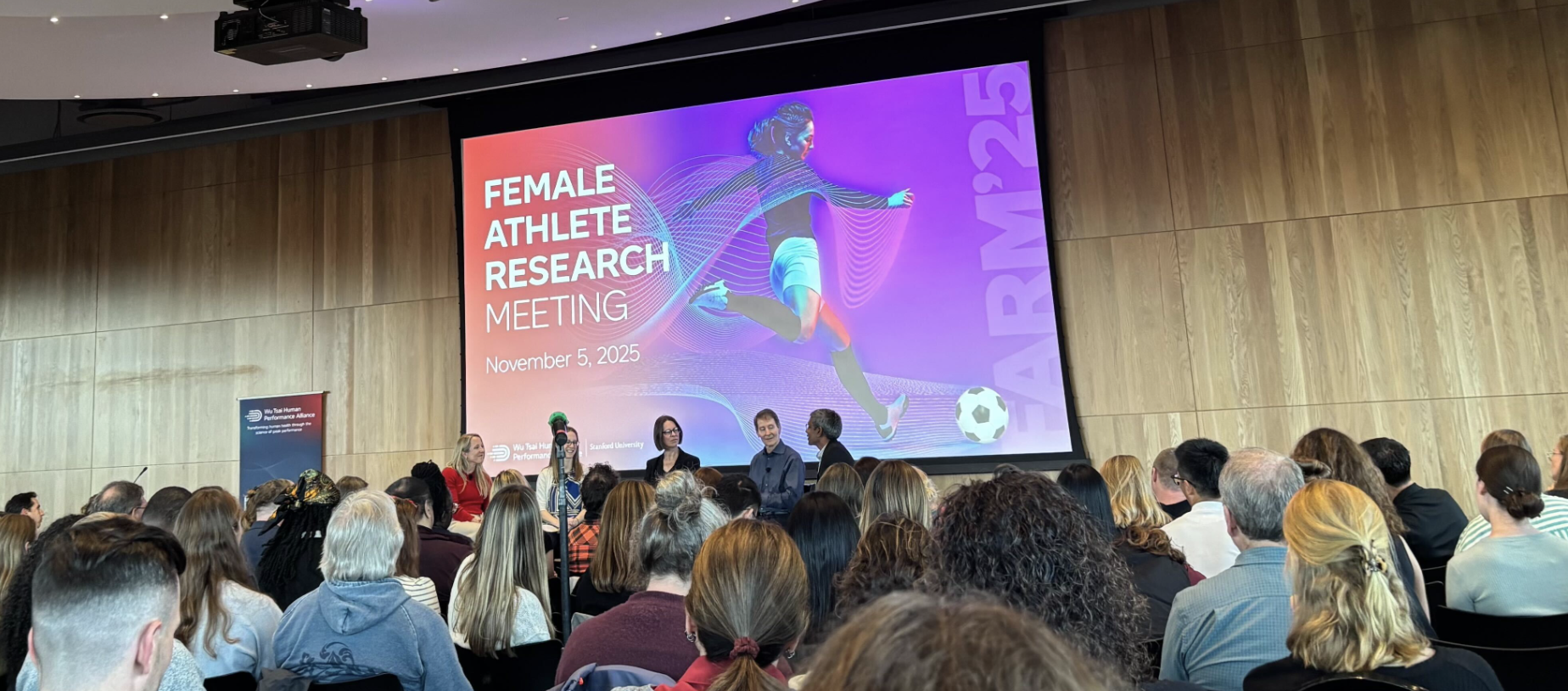
On Wednesday, a significant gathering took place at the Computing and Data Science building, as scientists, clinicians, and sports practitioners convened for the Female Athlete Research Meeting (FARM) conference. This event was organized by the Wu Tsai Human Performance Alliance, aiming to delve into the critical factors affecting female athletic health.
The conference examined a range of determinants influencing female athletic performance, including genetics, training regimens, sleep patterns, nutrition, and mental well-being. Joy Wu, the associate director of the Wu Tsai Human Performance Alliance, emphasized the organization’s commitment to advancing research in this area. “Female athlete research is a major priority for the Wu Tsai Human Performance Alliance,” Wu stated. “We hope the event will inspire new collaborations and innovative ideas that further advance the well-being and performance of girls and women in sports.”
In their welcome letter, event co-leaders Jennifer Hicks and Scott Delp highlighted the historical lack of focused research on the health and performance of women in sports, noting that this trend is beginning to change. They envision a future where athletes face fewer devastating injuries and have access to comprehensive guidelines on female athletic performance.
Among the attendees was Claire Swihart, a student who has dealt with Relative Energy Deficiency in Sport (RED-S), a condition resulting from inadequate caloric intake to sustain physical activity. She expressed enthusiasm about the potential of FARM to provide insights into nutrition and performance optimization specifically tailored for female athletes. “It’s wonderful to engage with others interested in female performance. I’m eager to learn about the latest developments in the field,” Swihart remarked.
Key Discussions at FARM
A pivotal topic of the conference, “Nutrition and Fueling,” addressed emerging research about how dietary timing, composition, and gut health influence athletic achievements. Emily Kraus, who leads Stanford’s Female Athlete Science and Translational Research Program (FASTR), along with Kristen Gravani, director of Olympic Sports Nutrition, co-moderated this session.
Kraus initiated the dialogue by stressing the importance of nutrition and recovery, which are often overlooked aspects of sports science, particularly concerning female athletes. Micheal Fredericson, Stanford’s head physician for Track & Field and Swimming, presented findings from the “Healthy Runner Project.” This seven-year initiative, focused on collegiate runners at Stanford and UCLA, aimed to mitigate bone stress injuries through team-based nutrition education and personalized fueling strategies. Fredericson noted a significant reduction in injuries: “We cut our bone stress injuries down by over half [at Stanford],” he stated, revealing a drop from 63 to 28 injuries per 100 person-years.
Following this, Satchin Panda, a professor at the Salk Institute, shared insights into his research on time-restricted eating and its effects on performance. His lab discovered that aligning eating schedules with circadian rhythms can enhance endurance in animal models, with female subjects showing greater sensitivity to dietary changes. “Time-restricted feeding can improve performance irrespective of diet,” Panda explained, emphasizing metabolic flexibility as a potential driver for these improvements.
Erica Sonnenburg, a senior research scientist at Stanford, concluded the session by discussing the gut microbiome’s influence on athletic resilience. Her findings indicated that the consumption of fermented foods can enhance microbial diversity and reduce inflammation. “Participants increased their microbiome diversity by about 25% and decreased many markers of inflammation,” Sonnenburg reported, advocating for evidence-based nutritional information amidst widespread misinformation.
Reflections on Nutritional Strategies
Co-moderator Gravani reflected on her decade of experience directing nutrition for Stanford’s athletic teams. She noted the positive shifts not only in injury prevention but also in the overall culture within teams. “Athletes began prioritizing their health and educating the next generation,” she said. Gravani encouraged athletes to adopt a long-term perspective regarding their health, noting that “prioritizing long-term health sometimes comes at the expense of quick fixes.”
