


Amelia Wilson has always had a passion for sports, especially basketball. However, that love began with football, which she adored as a child.
At the tender age of 3, Wilson would sit on the couch with her father, Lawyer Wilson, Jr., a former Division III player, watching the Philadelphia Eagles. Those Sundays spent together became unforgettable bonding moments as he introduced her to the intricacies of the game and its fervent fandom.
Yet, Wilson’s aspirations went beyond merely being a fan. Driven by her childhood dream, she embarked on a remarkable journey. Today, she is in her second season as an assistant coach for the Buffalo Bills, contributing her expertise to the offensive line.
“When I first watched football, I felt an undeniable desire to be part of it,” Wilson remarked in an interview with ESPN. “I wanted to play; I wanted to engage with football in any manner possible.”
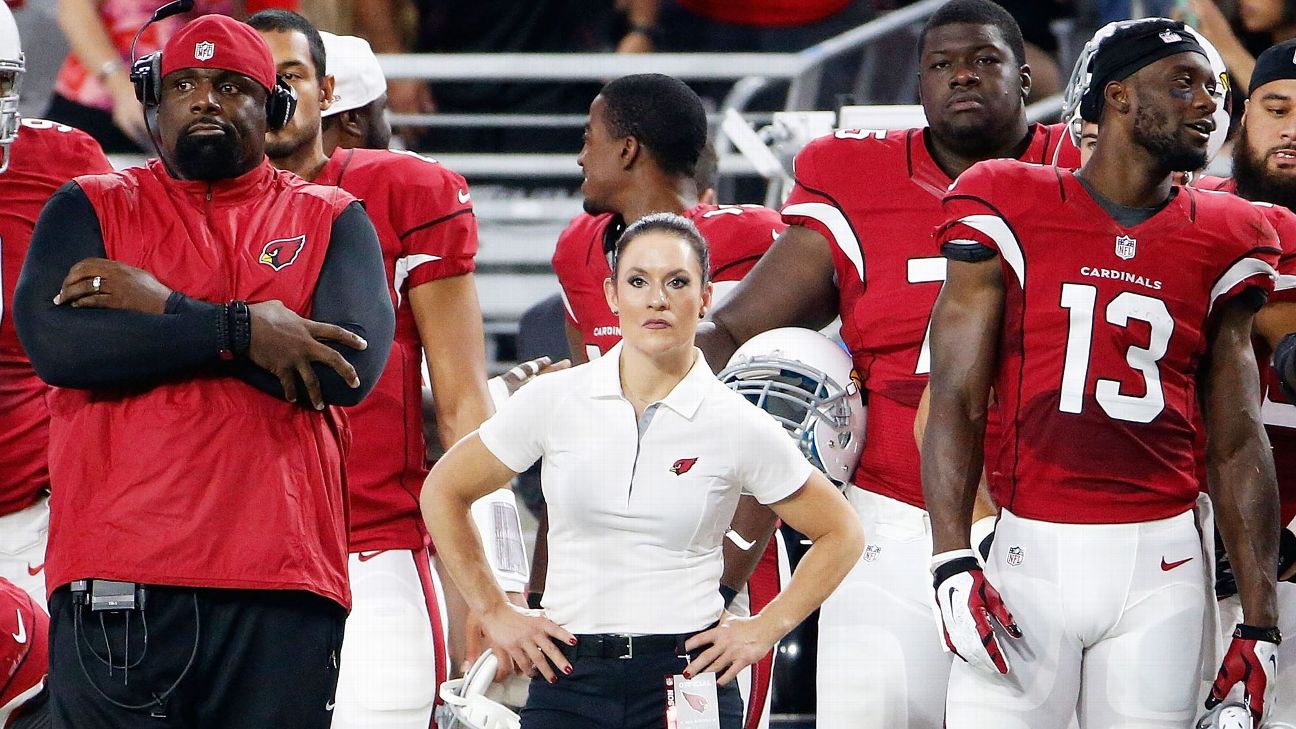
As Wilson matured, however, she faced the stark reality of the gender disparity in football, recognizing the limited opportunities available for women in the sport. This landscape began to shift on July 27, 2015, a pivotal date when Jen Welter made history by becoming the first woman to coach in the NFL, hired as a training camp intern by the Arizona Cardinals.
“It felt monumental yet familiar,” Welter shared. “As a little girl, hearing that ‘girls don’t do that’ was a reality I faced. Seeing a woman coaching was an experience that many hadn’t encountered before, and there were doubts about its sustainability.”
The impact of Welter’s hiring did not go unnoticed by Wilson. “Realizing that a woman could take on such a role was astounding and inspiring. It instilled hope that I might one day break into football,” she expressed.
Since that groundbreaking moment, the NFL has gradually embraced more women within coaching and operational roles. According to league statistics from the previous season, Wilson was among 15 women on NFL coaching staffs, a number complemented by women in various departments across teams.
“The increase of women in these roles highlights the intentional efforts across the league,” noted Sam Rapoport, a coordinator focused on expanding opportunities for women in football. “NFL Commissioner Roger Goodell has advocated for this change, emphasizing that diversity enhances the game.”
The initial years after Welter’s hiring saw sluggish progress. Kathryn Smith gained acclaim as the first woman to secure a full-time coaching role when she joined the Buffalo Bills in 2016. However, her tenure ended unceremoniously when she was not retained by the new head coach Sean McDermott.
Katie Sowers was another name to emerge, working as an intern with the Atlanta Falcons in 2016 before joining the San Francisco 49ers as a Bill Walsh Diversity Coaching Fellow. The momentum shifted in 2018, as 10 women were hired in coaching roles, doubling the number from the prior year.
Ron Rivera, former coach for Washington and Carolina, has championed women in coaching, promoting Jennifer King after her internships began in 2018. “They have to be willing to endure and prove their worth,” he stated, emphasizing the challenges faced by women in the league.
The trend continued in 2019 when Bruce Arians made headlines for hiring two women as full-time coaches for the Tampa Bay Buccaneers. Their increasing presence has demonstrated that women can equally fulfill these roles alongside their male colleagues.
“The focus must remain on the qualifications and abilities of candidates, regardless of gender,” Rivera said. Through an experiment to demonstrate biases, he highlighted the importance of merit over preconceived notions.
As of 2023, the NFL’s Racial and Gender Report Card revealed 10 full-time women coaches in the league. This number rose to 15 by 2024, showcasing a 187% increase in women’s roles within coaching and football operations since the inception of these pioneering efforts.
Influential figures like Amy Trask and Connie Carberg have witnessed this transformation. Trask, who began working for the Los Angeles Raiders’ legal department in 1983, remarked on how far the landscape has shifted.
Despite the progress, challenges remain in breaking traditions, particularly regarding head coaching roles. Arians and Rapoport noted that the absence of women in positions leading to head coaching roles makes it a daunting prospect in the near future.
Carberg believes the path to a general manager role might be more attainable, with several women already stepping into more strategic positions, including large-scale interviews for GM roles.
“We need to cultivate a pipeline filled with women in football operations to ensure the right individuals ascend to leadership roles,” Rapoport said, stressing the importance of ongoing development and training.
The NFL has also broadened its initiatives, expanding the Rooney Rule to encompass women in its minority candidate definition. Teams are required to interview diverse candidates for various coaching and senior positions.
Welter foresees potential for women to fill coordinator roles within the next five to seven years, especially with the rise of flag football, which is gaining traction and could serve as a training ground for future coaches.
“Those who begin playing early have an advantage in understanding the intricacies of football strategy and the art of coaching,” Rivera stated, reflecting on the developmental aspects of future talent.
As women continue to break barriers within the NFL, the last decade showcases significant strides in achieving representation and equality in an industry long considered a male stronghold. The efforts of those who paved the way have changed the game’s landscape, allowing women to envision a future where their presence is no longer extraordinary, but simply part of the fabric of the sport.
“Progress may be slower than desired, but it’s undeniably moving forward. The difference between then and now is striking,” Welter concluded, reflecting on the notable developments that have transpired since her trailblazing role.
