


Geeta Pandey
BBC News, Delhi

Muskan Sharma
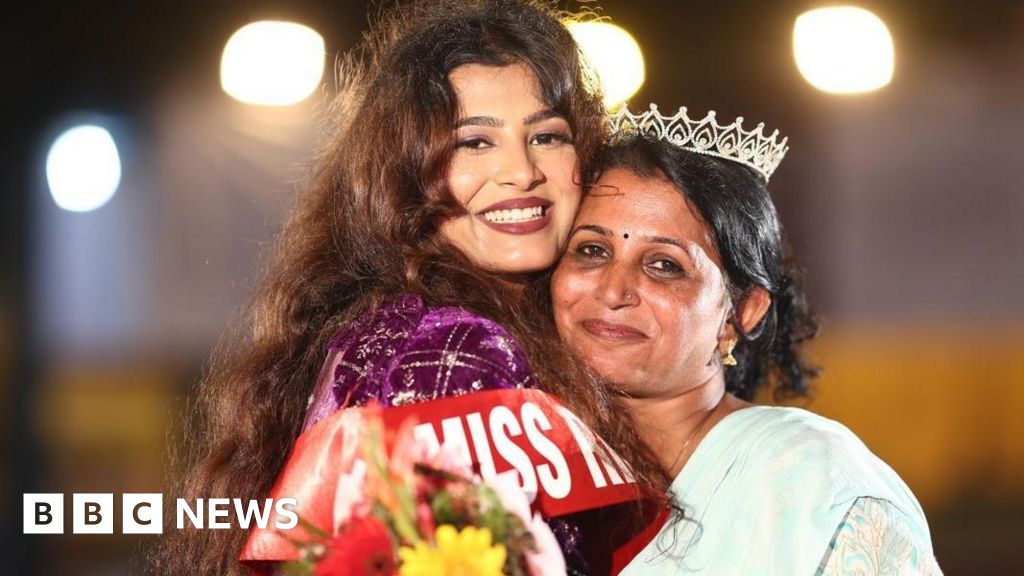
In a remarkable display of courage and resilience, Muskan Sharma, a 23-year-old contestant, emerged victorious in the Miss Rishikesh 2025 pageant held in Uttarakhand, India, last week. Despite the event being a local competition, Sharma expressed that it felt as significant as winning Miss Universe to her.
Sharma’s triumph gained widespread attention after a viral video depicted her confronting a man who disrupted their rehearsal just a day prior to the event. The incident occurred when Raghavendra Bhatnagar, district head of the Rashtriya Hindu Shakti Sangathan, entered while the contestants were on break and criticized their choice of clothing, saying it contradicted local cultural norms.
“Modelling is over, go back home,” Bhatnagar told the group, insisting that their attire was inappropriate for the cultural setting of Uttarakhand. However, Sharma stood steadfast in her stance. “Why don’t you shut the shops which sell [Western clothes]?” she replied defiantly.
She further challenged Bhatnagar, urging him to focus on bigger societal issues such as alcohol and tobacco rather than women’s clothing. “There’s a shop right outside that sells cigarettes and alcohol. Why don’t you shut that down? First stop those things and I will stop wearing these clothes,” she stated.
This spirited exchange drew the support of fellow contestants and event organizers, leading to Bhatnagar and his associates being escorted out of the venue.


Muskan Sharma
Sharma described her reaction to the confrontation as instinctive. “I could see my dreams shattering in front of me. The only question in my mind at the time was, will the pageant go on? Will I be able to walk the ramp? Or will all my hard work go to waste?” she recalled.
Following the incident, the pageant proceeded as originally planned, and Sharma ultimately took home the crown. “For three seconds after I heard my name announced, I was shocked,” she said. “But then I was happy that I stood up for myself and that I won. It felt like a double victory.” She noted that her experience was particularly significant in Rishikesh, a city that traditionally embraces tourism and cultural diversity, as it is renowned for its meditation and yoga retreats.
The popularity of beauty pageants in India has surged since the mid-1990s, reflecting changing perspectives on women’s roles in society. Following the achievements of prominent figures like Sushmita Sen and Aishwarya Rai, many young women see pageants as a gateway to opportunities. Sharma believes that her victory can inspire others to assert their rights. “The crown is as much my mother’s as it is mine. Without her, I wouldn’t be the person I am today,” she stated.

Muskan Sharma
Sharma noted that cultural commentary surrounding Western attire is not a new phenomenon in India. Within a patriarchal framework, women frequently face scrutiny and regulation over their clothing. Reports from various institutions frequently address the societal pressure for women to conform to traditional dress codes, often resulting in humiliation and threats to those who choose otherwise.
Sharma concluded by expressing her intentions for the future, stating, “I will participate in Miss Uttarakhand next year and then aim for Miss India. After that, I’ll see where life takes me.” Her journey embodies the power of tenacity and self-advocacy, encouraging other women to speak out against injustice.
