


Exploring Feminist Themes and Ancestral Magic in Ryan Coogler’s “Sinners”
Warning: Spoilers Ahead
In his latest work, *Sinners*, Ryan Coogler combines elements of Southern horror, ancestral magic, and feminist themes to engage with concepts of value—be it spiritual, cultural, or economic—in a haunted America. Set in Clarksdale, Mississippi, during the Great Depression, the film introduces a young Black girl grappling with a world where her community is confined to a system that resembles chattel slavery.
“Numbers are always in a conversation.”
In this context, the character Smoke, played by Michael B. Jordan, imparts this wisdom while teaching the young girl about negotiation and value through a simple transaction involving a prized truck. Smoke and his identical twin, Stack, exemplify the struggle for power and financial acumen in a world that seeks to undermine their worth.
The Dynamics of Bargaining and Community
The narrative explores the power of negotiation further as Smoke engages local grocers, Grace and Bo Chow, breaking racial barriers while manipulating financial interactions for the opening of a juke joint. Grace’s confident establishment of her own value reflects a deeper feminist narrative, emphasizing the importance of women’s labor and agency.
The Role of Black Cultural Heritage
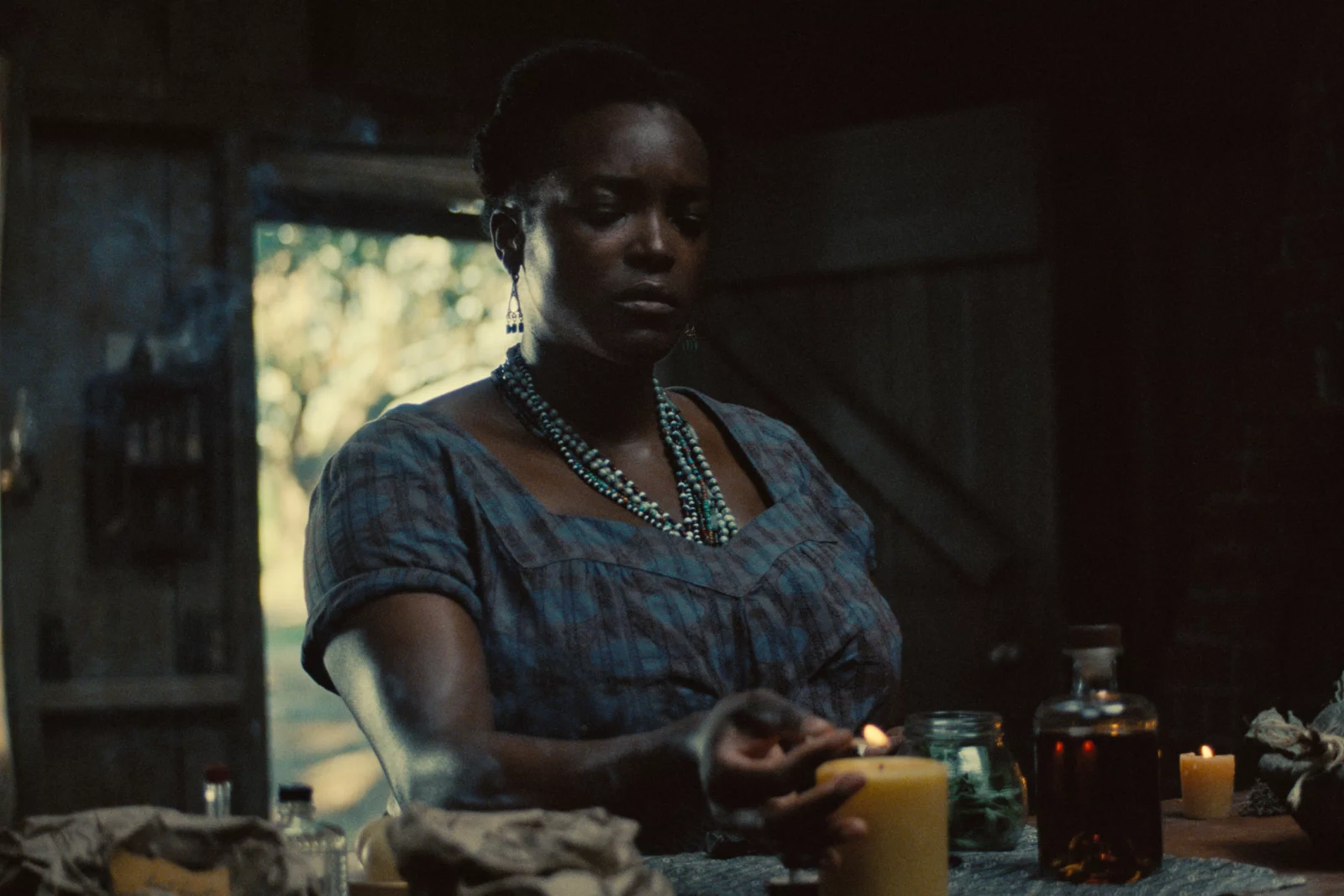
As a narrative steeped in Black Southern gothic tradition, *Sinners* centers on male characters like Sammie Moore, whose guitar skills evoke the ancient storytelling traditions of African griots. However, the film’s emotional core lies in its depiction of women—represented by characters like Annie (Wunmi Mosaku)—whose insights and actions drive the story forward.
The film powerfully encapsulates the interplay between music and empowerment, connecting historical grievances with musical expressions. The blues, in particular, emerges as a substantial thematic element, signifying both story and cultural resonance.
“Blues is the music of Hoodoo,” says historian Yvonne Chireau.
Chireau’s insights enrich the understanding of Hoodoo traditions, which are woven into the fabric of the film through music and spiritual practices. The intersection of ancestral memories and contemporary challenges forms a potent backdrop for the characters’ struggles.
Women as Agents of Change
The concept of “Conjure Feminism,” as defined by scholars Kinitra Brooks, Kameelah L. Martin, and LaKisha Simmons, further illuminates the film’s narrative arc. Women like Annie embody the protective and empowering roles necessary for survival in a brutal world. This is poignantly expressed through her decisions and the tools she provides to confront their oppressors.

The character Mary (Hailee Steinfeld), who exists in a complex racial identity, also attempts to bridge divides through love and loyalty, illustrating the intricate layers of value and sacrifice within the community. Yet, her fate serves as a warning about the perils of navigating these spaces.
The Illusion of Wealth
Throughout *Sinners*, themes of economic value intersect with deeper moral questions. Annie’s critique of Smoke’s “blood money” reflects a broader commentary on the illusion of wealth, especially within marginalized communities where currency is often devalued. This critique resonates with historical injustices, calling attention to the systemic issues that persist today.
A Cinematic Triumph
Coogler’s film transcends binary narratives by embracing diversity in both storytelling and representation. The inclusion of various cultural influences illustrates the interconnectedness of different communities and highlights the importance of collaboration in overcoming adversity.
This multilayered approach underscores the significant contributions of Black women and the broader cultural context of the Mississippi Delta, challenging outdated notions of racial and gender binaries. As the film unfolds, it becomes a powerful narrative of resilience, unity, and the reclamation of agency.
In conclusion, *Sinners* stands as a profound exploration of identity, community, and resistance, crafted with artistic brilliance and cultural sensitivity. This narrative encourages a reflection on our current realities while celebrating the rich tapestry of Black Southern heritage.
