


Bihar Election Strategies: Youth and Women in Focus
As Bihar prepares for its Assembly elections, traditional caste dynamics continue to shape the political landscape. However, the manifestos from the ruling National Democratic Alliance (NDA) and the opposition Mahagathbandhan reveal a strategic shift towards engaging two significant demographic groups: the youth and women.
Youth Engagement and Employment Initiatives
The NDA’s manifesto, known as the Sankalp Patra, emphasizes job creation, pledging to generate one crore jobs over the next five years. Furthermore, the alliance plans to establish a mega skill center in each district, highlighting its ambition to position Bihar as a hub for global skill development.
In parallel, the Mahagathbandhan’s manifesto, titled “Tejashwi’s Pran,” spearheaded by RJD leader Tejashwi Yadav, promises a permanent government job to a member of every family lacking employment. Additionally, the opposition aims to create 1.25 crore jobs within five years, coupled with unemployment allowances of Rs. 2,000 for unemployed graduates and Rs. 3,000 for jobless postgraduates.
Challenges of Unemployment
Both alliances recognize joblessness as a critical issue, particularly among younger voters. Observers note that while Chief Minister Nitish Kumar has improved infrastructure, he has fallen short in curbing unemployment and reducing out-migration. Tejashwi has capitalized on this sentiment, targeting job creation as a focal point of his campaign.
The youth demographic, accounting for approximately 53% of Bihar’s 7.45 crore voters, has expressed dissatisfaction, particularly in light of recent protests over alleged irregularities in job examinations.
Women’s Empowerment Strategies
In addition to youth outreach, both coalitions recognize the influential role of women voters. The NDA’s approach includes various welfare schemes, highlighting the Rs. 10,000 already transferred to 1.21 crore women under the Mukhyamantri Mahila Rojgar Yojana. Their goal is to create one crore “Lakhpati Didis,” women who earn a minimum of Rs. one lakh annually, with initiatives aimed at transforming some into “Crorepati Didis” through loan provisions.
Conversely, the Mahagathbandhan proposes the Mai Bahin Maan Yojana, ensuring monthly financial assistance of Rs. 2,500 for eligible women. Additional promises include ensuring free travel on state-run buses and a commitment to regularize rural workers under the “Jeevika Didis” program.
The Electoral Landscape
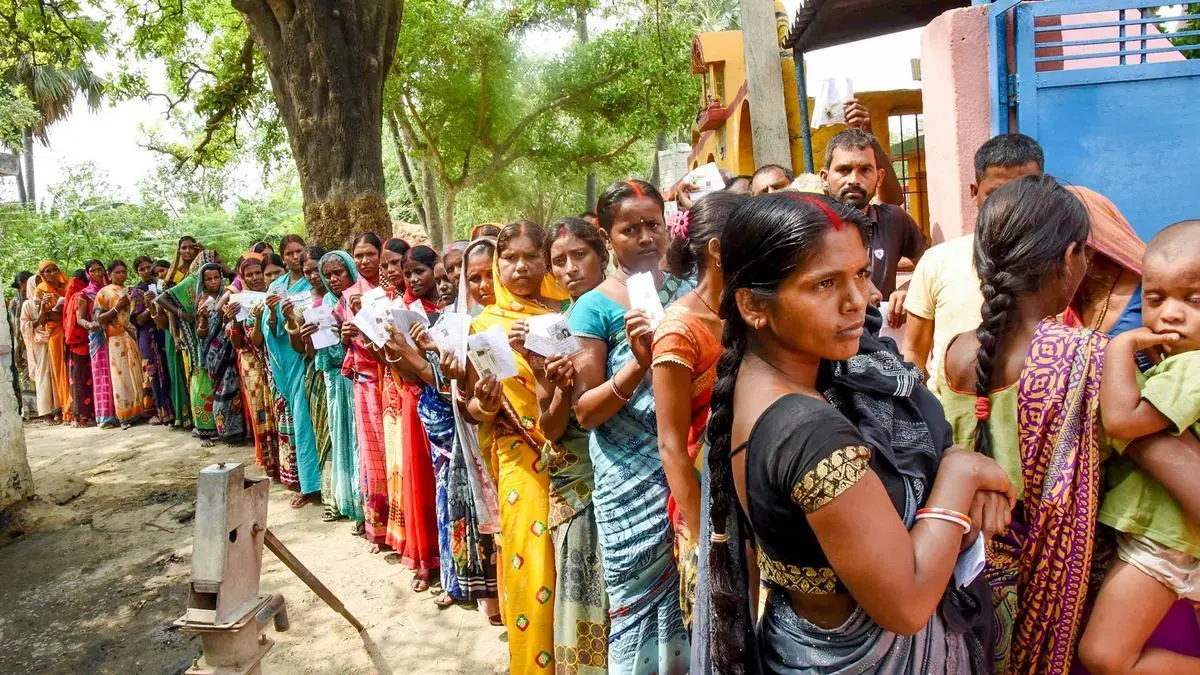
Women represent a formidable constituency, comprising about 47% of the electorate. Recent elections have demonstrated higher voter turnout among women compared to men. In the last Assembly election, 59.69% of female voters participated, compared to 54.45% of male voters.
Nitish’s longstanding women-centric policies and financial support have established a loyal voter base. However, the INDIA bloc faces the challenge of persuading women voters that they can offer better opportunities and support compared to the NDA.
Conclusion: Addressing Socio-Economic Realities
Both political alliances are addressing pressing socio-economic issues in their manifestos, including promises for free healthcare, agricultural infrastructure investments, and pension schemes. The NDA aspires to usher in what it calls an “industrial revolution,” while the opposition emphasizes a Minimum Support Price guarantee for farmers.
As the elections draw near, the focus remains on whether these strategies will resonate with the electorate, particularly amid a backdrop of perceived economic distress and widespread aspirations for a more promising future in Bihar.
