


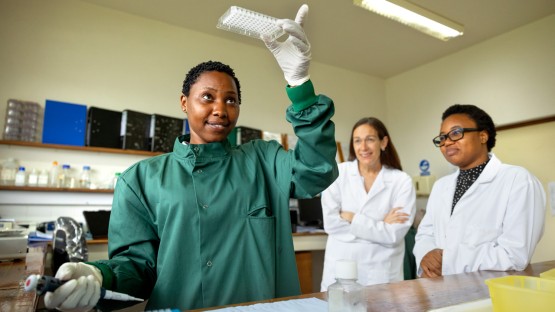
Research Efforts on Female Genital Schistosomiasis (FGS)
Loyce Mhango, a lab technician at the Mwanza Intervention Trials Unit (MITU), is analyzing samples from women affected by schistosomiasis, specifically S. haematobium, which is known to cause significant reproductive health issues in women. By measuring the presence of antigens in blood serum, her work is targeted at understanding the cellular and molecular impacts of FGS on the female genital tract.
The primary objective of this research is to explore how FGS continues to affect women even after receiving praziquantel treatment. This medication effectively eliminates the adult worms but does not resolve the lesions caused by the eggs that remain in the body. As stated by Maganga, one of the lead researchers, “Once patients are given the drugs, the lesions don’t resolve, because the drug mainly kills the worm – not the eggs.”
The Study’s Hypothesis
The research team hypothesizes that S. haematobium eggs impair cervical immunity and lower the count of antiviral immune cells, leading to disruptions in the epithelial barrier of the genital tract. Maganga suggests that these disruptions could lead to ongoing symptoms of FGS and render women more vulnerable to viral infections, such as herpes simplex virus type 2.
Research Methodology
The study involves 180 women, half of whom have been diagnosed with FGS. They will receive praziquantel treatment and will be monitored over a one-year period to assess the recurrence of symptoms. The research team will collect genital mucosal immune cells from these women to evaluate changes before and after they receive treatment.
Additionally, the researchers aim to explore the molecular mechanisms that lead to the deterioration of epithelial cells in women with FGS. They will also examine the correlation between FGS and the frequency, intensity, and duration of herpes simplex flare-ups to validate if FGS exacerbates susceptibility to other viral infections.
Significant Findings and Implications
In a recent publication led by Maganga, the researchers highlighted that women infected with schistosomes have a higher susceptibility to HIV compared to men and are at an increased risk of mortality from HIV. Fitzgerald, a senior researcher, remarked, “It was not well understood that these parasitic infections change the person’s immune system, so that maybe they’re not fighting off viruses well, and how important that is. It’s a new paradigm.”
The research is also aimed at enhancing local research capabilities in Tanzania. The team is developing a rapid urine test that could be used in rural health centers, allowing for quicker diagnosis of schistosomiasis. As Downs, a prominent researcher, noted, “We could know within the hour if a woman is infected.”
Challenges and Barriers
Early findings indicate that women suffering from FGS frequently avoid seeking treatment and are more prone to persistent infections of human papillomavirus (HPV), which can lead to cervical cancer. Notably, women with FGS are observed to have a significantly lower likelihood of becoming pregnant within a year of follow-up, underscoring the profound effects of this condition.
Potential Treatment Methods
The researchers are exploring the combination of praziquantel with other medications such as ibuprofen to address FGS. Their goal is to modify how the immune system responds to reduce inflammation and promote healing. Downs emphasized, “We’re not looking for big, expensive unrealistic treatments, but some simple, practical things that could help women heal.”
Conclusion
The findings from this ongoing research not only illuminate the effects of FGS but may also provide insights into similar parasitic infections impacting women’s health globally. The potential development of effective, accessible treatments can significantly benefit women’s reproductive health in regions hardest hit by schistosomiasis.
