


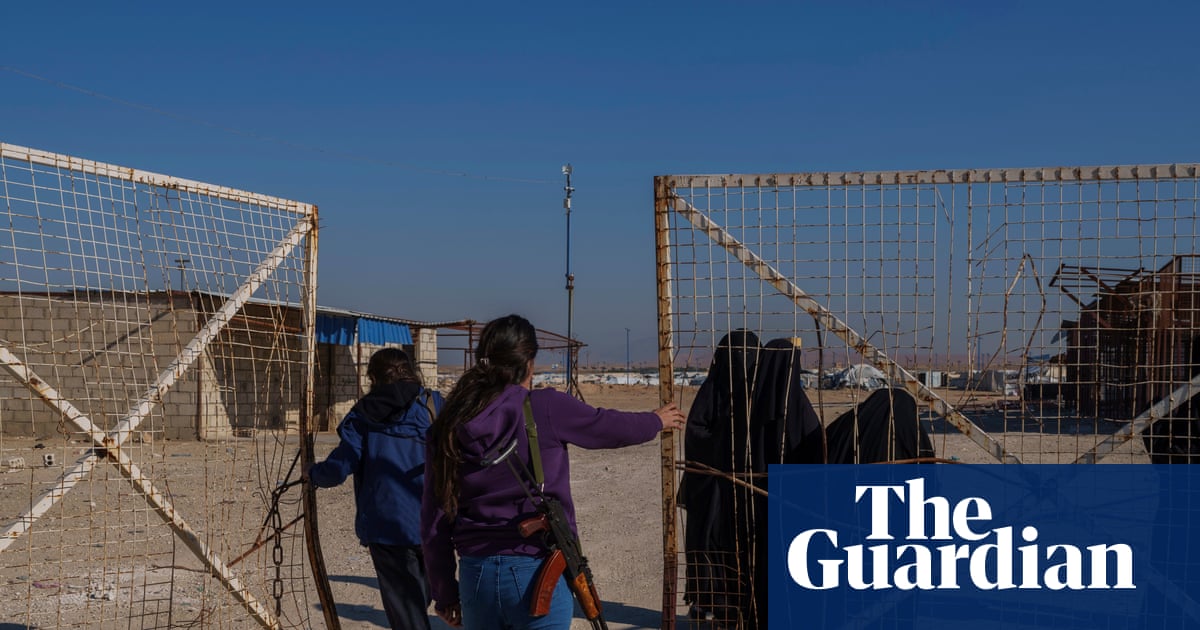
Two women from Australia, along with four children, have successfully escaped from the Al-Hol detention camp in Syria and made their way back to Victoria. This development has rekindled discussions regarding the Australian government’s responsibility to repatriate its citizens from conflict zones.
Details of the Escape
The individuals, whose identities and ages have not been disclosed by the Guardian, managed to travel over 500 kilometers from Al-Hol before crossing into Lebanon. Upon their arrival in Beirut, they acquired Australian documentation and underwent rigorous identity and security checks. Subsequently, they returned to Australia via a commercial flight last week.
Current Situation of Australians in Syrian Camps
Approximately 40 Australians remain detained in various camps in northern Syria, predominantly comprising children and their mothers, many of whom are connected to deceased or incarcerated Islamic State militants. Notably, 34 Australians—14 women and 20 children—are held in the Roj camp, some since 2019, with several children born in captivity. These detainees have not faced any charges or warrants for arrest to date.
Implications of Informal Escapes
Sources suggest that the recent escape was perilous, particularly for the children involved. It was noted that the women encountered legal challenges in Lebanon while trying to traverse the border. Experts argue that government-coordinated repatriations are significantly safer, allowing for essential support systems to be established for returnees and for security agencies in Australia to be prepared for their reintegration.
Conditions in Detention Camps
The conditions in these camps are dire, characterized by severe food shortages, health crises, and rampant violence. A recent report from the U.S. State Department labeled the security situation as “volatile” and highlighted a prevailing health emergency. Organizations like UNICEF have reported that available services in these camps are inadequate and overstretched, contributing to severe psychological trauma among the displaced youth, many of whom are particularly vulnerable to radicalization.
Calls for Repatriation
There has been increasing pressure on the Australian government from families and advocacy groups to facilitate the return of its citizens. Although some repatriation measures have been taken in the past—such as eight orphaned children in 2019 and another group in October 2022—the response has generally been limited. A recent court case aimed at compelling the government to act concluded without a legal obligation found, although the ruling indicated that repatriating citizens could be straightforward if there was political will.
International Perspectives
The United States, which sponsors much of the security operations in Northeastern Syria through local Kurdish-led forces, has publicly encouraged countries like Australia to repatriate their nationals. As noted in a congressional report, the U.S. believes that repatriation is the only long-term solution to the humanitarian challenges in these camps. While the U.S. has previously offered assistance for such operations, it has not confirmed if a formal offer remains available for Australia.
Government Response
In response to the evolving situation, an Australian government spokesperson remarked on the increasingly unstable conditions in Syria, emphasizing that assistance for repatriation will not be provided. Security agencies assert they are prepared to handle any individuals who return independently, having monitored these cases for some time.
Next Steps and Community Reactions
The discussion around potential repatriation continues, with law enforcement in New South Wales recognizing the complexity of the issue. Meanwhile, authorities in Victoria are coordinating with state and federal agencies to facilitate the reintegration of returning citizens, emphasizing the importance of safety and community welfare.
