Unraveling Ancient Gender Dynamics Through Genomic Analysis
June 27, 2025
Research Overview
A comprehensive study led by Dr. Eline Schotsmans from the University of Wollongong (UOW) has provided an in-depth look at the burial practices and gender dynamics of a Neolithic society from approximately 9,000 years ago. The research focuses on skeletal remains excavated at the UNESCO World Heritage Site of Çatalhöyük in Türkiye, where the genomes of over 130 individuals were analyzed.
Groundbreaking Discoveries
Published in the journal Science, this monumental study aimed to decode genetic footprints left by ancient communities. According to Dr. Schotsmans, “By illuminating the genetic footprints of ancient societies, we are not only redefining our understanding of human history, but also gaining unprecedented insights into the rich cultural traditions that shaped civilisations.”
Çatalhöyük: A Historical Context
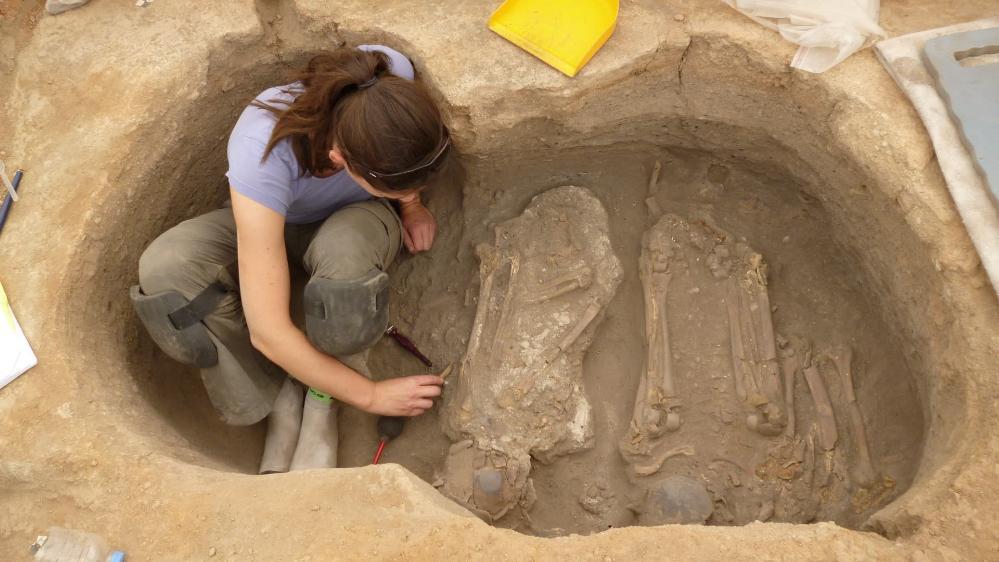
Çatalhöyük, inhabited from 7100 BC to 6000 BC, is a significant archaeological site often considered among the world’s first urban centers. Researchers were able to extract DNA from 131 skeletons found in grave pits beneath the floors of mudbrick houses, revealing critical information about family structures and burial customs.
Findings on Burial Practices
Initially, individuals were typically buried alongside family members. However, the research unveiled shifts in these practices over time, indicating that many deceased individuals were not biologically related. Where genetic ties were observed, they predominantly followed the maternal lines, suggesting a matrilocal system where husbands moved to their wives’ households.
The Role of Women in Ancient Society
Dr. Schotsmans’s interdisciplinary research, merging archaeo-anthropology with forensic sciences, highlights the significance of females within these ancient societies. Notably, items buried with infants and children denote their cultural importance. Previous studies on burial gifts had failed to determine gender distinctions in grave treatments, but advancements in genetic analysis now allow for precise sex identification even in juvenile remains.
Cultural Perspectives and Implications
Dr. Schotsmans emphasized the need to challenge potential Western biases regarding societal lines of descent. “We need to move away from our Western bias that assumes all societies are patrilineal. Many cultures, including some Indigenous Australian groups, pass identity, land rights, and responsibilities through the mother’s line — a matrilineal system,” she stated. This finding offers essential insights into the gender dynamics and cultural constructs of ancient civilizations.
About the Research Publication
The paper titled ‘Female lineages and changing kinship patterns in Neolithic Çatalhöyük’, co-authored by Eren Yüncü, Mehmet Somel, and Eline Schotsmans, is now available in Science.
Visual Insights